
When it comes to today’s hottest pop culture trends generating huge economic value for Thailand, “BL series,” or Boys’ Love (BL), are impossible to ignore. They are not only popular in Thailand but have also gained massive popularity across Asia and around the world. There is no denying that this genre has transformed many aspects of Thai society, especially attitudes toward gay men and the LGBTQ+ community.
But one question often debated within the community is: How accurately do these series reflect the real lives of gay men? Are the worlds of BL and real gay life parallel lines that will never meet, or are they gradually merging? Today, Quicky takes you deeper into the influence of BL series on Thai gay society, exploring both the positive side and the darker aspects we need to be aware of.
In this article
The Beginning of BL Series in Thailand
More than a decade ago, “Yaoi” was still a small subculture found mainly on online forums, in underground novels, and translated Japanese manga. Today, BL series have fully entered the mainstream. Global streaming platforms compete for licensing rights, BL actors become ambassadors for luxury brands, and fan meetings are even held in stadiums.
“BL series are no longer just entertainment. They are a form of Soft Power
that exports Thai culture and raises awareness of gender diversity in Thai society.”
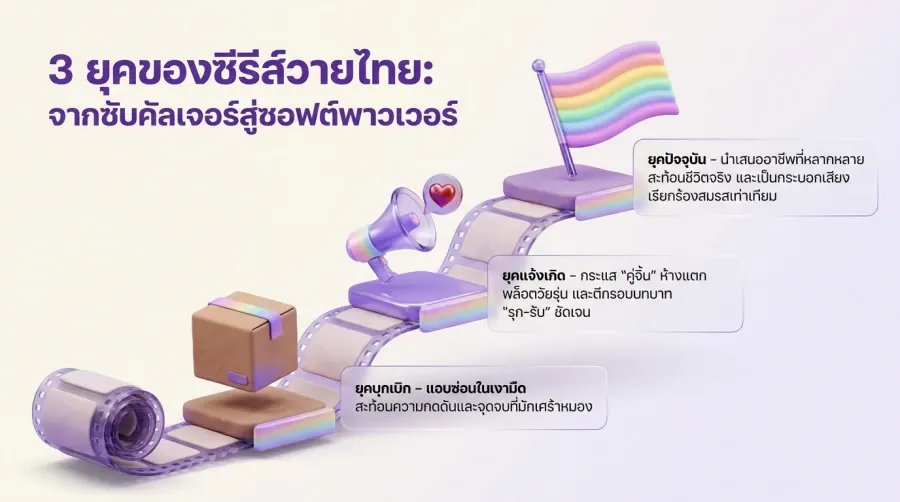
The Evolution of Thai BL Series: From the Beginning to Global Soft Power
Era 1: The Pioneering and Hidden Era
During this era, stories about gay men were often hidden in indie films or short dramas, usually with tragic endings that reflected the pressure of a society that had yet to accept homosexuality. Gay characters often faced suffering and hardship or were simply used for comic relief. This kind of love was still seen as unusual or abnormal.
Era 2: The Rise of BL and On-Screen Couples
This was a major turning point, as BL series adapted from online youth novels began entering the mainstream market. Popular plots often revolved around high school or university life, such as romances between seniors and juniors. This era created the “on-screen couple” phenomenon, packed fan events, and the rise of the “Y-girl” fandom. However, characters were still often defined by clear top-bottom roles, with the classic line: “I don’t like men. I only like you.”
Era 3: The Present Era of Diversity and Real Life
Entering 2026, Thai BL series have grown rapidly in both production quality and storytelling. We are now seeing BL series exploring the medical world, mafia, business, and even crime investigations. More importantly, they increasingly address social issues, advocate for marriage equality, and bring BL closer to real gay life. Characters are also portrayed as proudly accepting their own sexuality.
🏳️🌈 Read More – How Has Thai Gay Society Changed in the Digital Age Over the Past 10 Years?
Why Does Everyone Fall in Love with BL Series?
There are several reasons why this type of content resonates with viewers, especially BL fans and modern audiences:
- Actor Chemistry and Good Looks: There’s no denying that appearance is the first thing that attracts viewers.
- A Dreamlike Story: Overcoming Obstacles and Finding Love Beyond Gender
- Building Fan Communities: Sharing excitement and shipping couples has become a form of social activity.
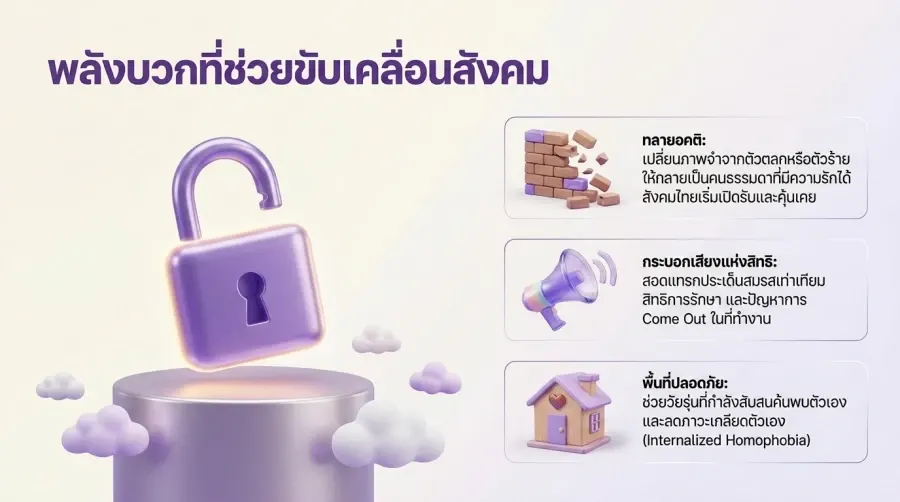
The Positive Influence of BL Series in Driving Thai Society Forward
1. Breaking Down Prejudice and Building Familiarity
In the past, gay characters in Thai dramas were often portrayed as comic relief, flamboyant friends, or villains with unhappy endings. BL series introduced a new image: gay men can be leading characters, successful people, or simply ordinary people who fall in love. As a result, Thai society has gradually become more familiar with same-sex relationships and started seeing love between men as something normal.
2. A Voice for Equality
In recent years, especially in 2026, many BL series have begun incorporating serious social issues into their stories, such as marriage equality, healthcare rights, and the challenges of coming out at work. These topics raise awareness among fans and encourage them to become allies in supporting equal rights for the real LGBTQ+ community.
3. A Safe Space for Teenagers Discovering Themselves
Voices from Real Life: When “BL Series” Meet “Gay Life”
“BL series helped my mom understand me better.” — Nat (pseudonym), 21-year-old university student
“My mom used to be quite against gay relationships, but after she started watching BL series because of her coworkers, she gradually became more open-minded. She saw that love between two men could be sweet and warm too. When I decided to come out, she simply said, ‘I just hope you find someone who takes good care of you, like in the series.’ That really lifted a huge weight off my shoulders.”
“I’m tired of people assuming that all gay men have to be good-looking or have perfect lives.” — Boy (pseudonym), 32-year-old office worker
“I admit that BL series have helped people outside the community become more accepting of us, but sometimes they also create unrealistic beauty standards. Gay characters in BL series are often fair-skinned, fit, wealthy, or exceptionally smart. But when you compare BL with real gay life, there are many ordinary-looking people who work hard just to make ends meet and struggle through everyday life. We’d like to see BL series tell more stories about ordinary people too.”
“It’s a business that uses our gender and sexuality as a selling point.” — Jay (pseudonym), LGBTQ+ rights advocate
“Sometimes I feel that society values ‘on-screen couples’ played by straight men more than real gay people. When a BL series comes out, everyone rushes to support it. But when gay people face discrimination in the workplace, few people dare to speak up for them. I wish the joy people feel on screen could extend to equality in real life too.”
These perspectives show that while BL series serve as a bridge to greater understanding, some gaps still remain for society to learn from and bridge.
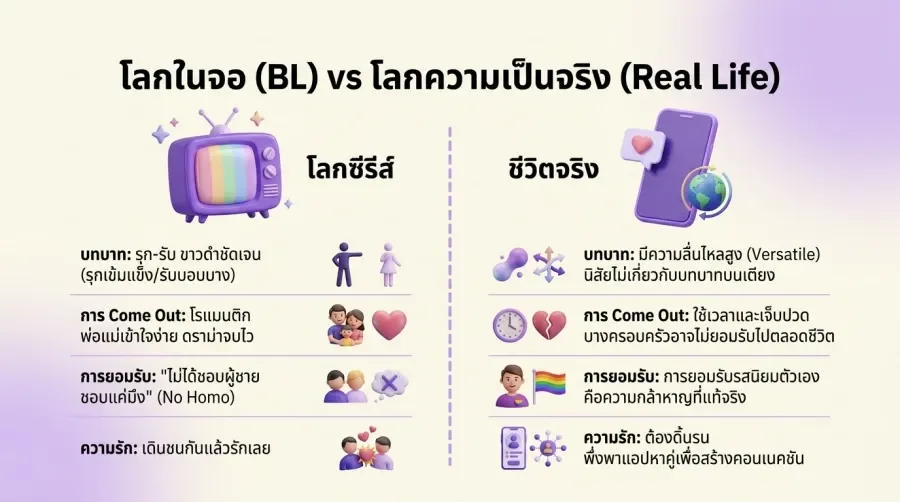
BL vs. Real Gay Life: How Similar or Different Are They?
Despite its many benefits, every coin has two sides. One classic issue often discussed is stereotyping. Let’s take a clear look at the differences between the world of BL series and real gay life through the table below.
| Topic | The World of BL Series | Real Gay Life |
|---|---|---|
| Top-Bottom Roles | Clearly divided into rigid roles (the top must be bigger and stronger / the bottom must be smaller, delicate, and affectionate) | Roles are highly fluid. Many people are versatile, and body type or personality does not always determine their role in bed. |
| Coming Out | Often romanticized, with parents easily understanding and accepting it. Even when there is conflict, it is usually resolved within one episode. | It can be a painful and lengthy process, and some families may never accept it. |
| Social Environment | Everyone around them is understanding and supportive, while close friends are often BL fans who help bring the couple together. | It ranges from understanding friends to social environments still filled with prejudice, harsh teasing, and workplace discrimination. |
| “I don’t like men. I only like this one person.” | A popular “No Homo” phrase used to downplay the character’s gay identity and make them appear more “pure and innocent.” | In real life, gay men are men who are attracted to other men. Accepting your own sexual orientation is an act of true courage. |
| Love and Dating | They bump into each other, drop their books, help pick them up, and instantly fall in love. | You rely on gay dating apps, send messages, get ghosted, meet up, and sometimes have disastrous dates (but with Quicky, it might actually turn out great!) |
The Power of the Pink Economy: How BL Series Drive the Economy and Gay-Friendly Spaces
| The Rise of LGBTQ+ Friendly Spaces |
|---|
| As BL series became more popular, many cafés, restaurants, and even hotels began promoting themselves as safe and welcoming spaces for LGBTQ+ people. Valentine’s Day promotions for same-sex couples also started appearing, something rarely seen in the past. This has made it easier and more comfortable for gay couples to be themselves together in public. |
| Brands Are Paying More Attention to Gay Men |
|---|
| As BL actors become ambassadors for cosmetics, skincare, and fashion brands, more companies are marketing directly to men who take care of themselves and to gay consumers. This has led to a better understanding of their lifestyles and specific needs, from fashion to sexual health. |
🏳️🌈 Read More – Gay-Friendly Places in Bangkok: Updated LGBTQ+ Hangout Spots for 2026
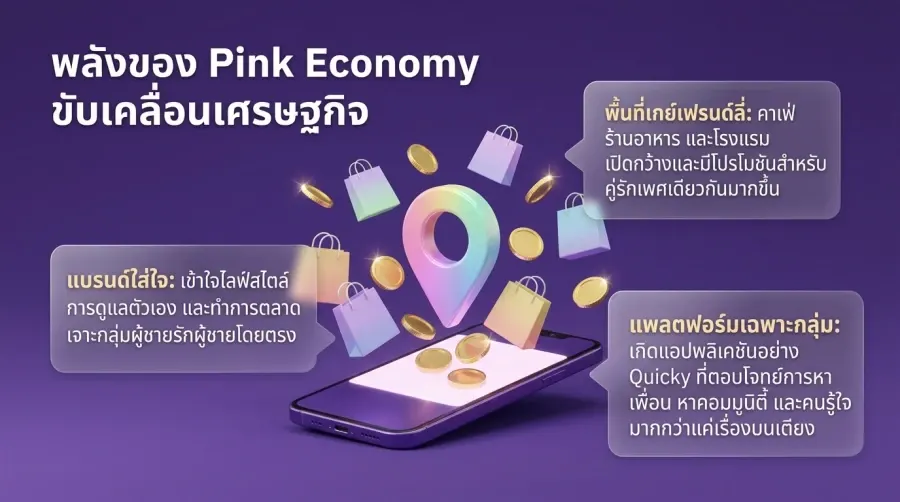
Apps and Platforms Designed for Specific Communities
Points to Consider: When BL Series Become a Double-Edged Sword
Forcing Top-Bottom Roles in Real Life
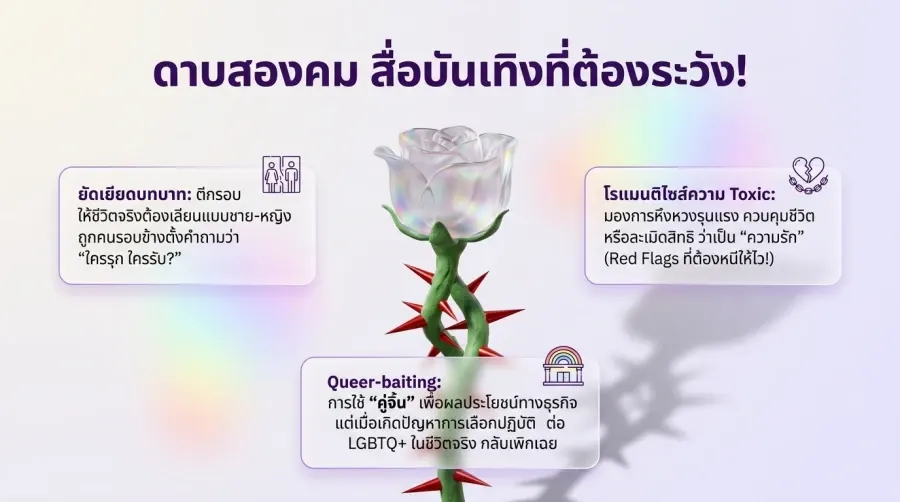
Gay men in real life are often asked by people around them—especially female friends who are into BL series—questions like, “Are you a top or a bottom?” or “Who’s the top in your relationship?” These questions reflect stereotypes influenced by BL series, as if gay relationships must imitate heterosexual relationships. In reality, relationships between men are far more fluid, diverse, and complex than these simple roles suggest.
Toxic Relationships Disguised as Romance
Older BL series—and even some today—often feature scenes involving force or coercion, excessive jealousy, or invasion of privacy, portraying these behaviors as “I did it because I love you.” This can be dangerous because young viewers may mistake these toxic behaviors for signs of true love. In real life, whether you encounter them on a dating app or offline, they are major red flags to get away from quickly!
🏳️🌈 Read More – Dating App Red Flags You Shouldn’t Ignore!
Queer-baiting and Exploiting the LGBTQ+ Community
The BL industry is a business driven by money and investment. It often uses the “on-screen couple” strategy (Queer-baiting), where two male actors behave as if they were a real couple to please fans and sell products. However, once enough profit has been made, or when someone actually comes out as LGBTQ+, they may not receive the same level of support. Worse still, some actors may even express homophobic or discriminatory attitudes in real life.
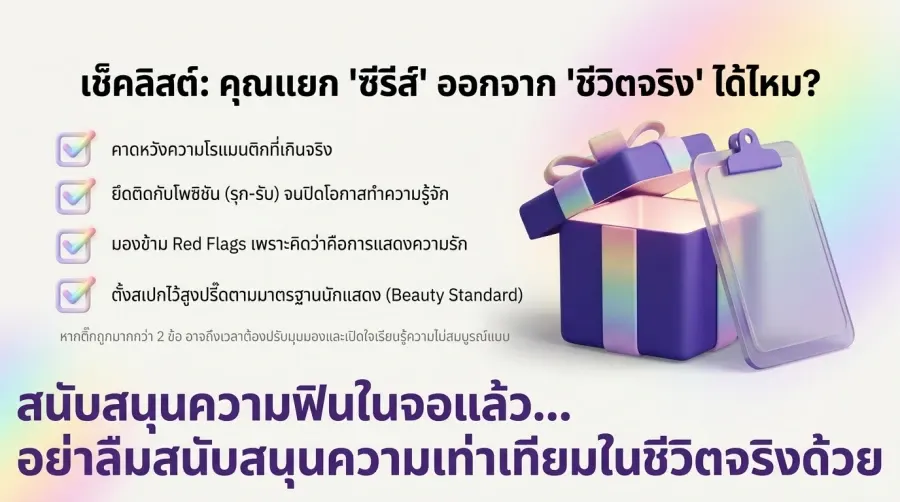
Checklist: Can You Separate “BL Series” from “Real Life”?
To prevent media stereotypes from harming real-life relationships, we invite both BL fans and gay people to check whether they have any of the following behaviors:
- [ ] Unrealistic romantic expectations: Feeling frustrated because your partner isn’t generous, romantic, or madly in love like a BL series lead.
- [ ] Fixated on sexual positions (Position): Refusing to get to know someone you genuinely like simply because they don’t fit the top-bottom role you expect.
- [ ] Ignoring Red Flags: Believing that constant phone checking out of jealousy or forcing you to do things you dislike is a sign of deep love.
- [ ] Setting impossibly high standards: Refusing to give anyone on dating apps a chance because they don’t look like top actors.
If you checked more than 2 items, it may be time to adjust your mindset, reset your expectations, and open yourself up to the imperfect human reality of the real world.
FAQ: Frequently Asked Questions About BL Series and Thai Gay Society
Question: Do gay men actually watch BL series?
= Absolutely! Although some stories may feel unrealistic, many gay men still watch BL for entertainment, attractive actors, or simply to enjoy cute, heartwarming moments that offer a little escape from real life.
Question: Do BL series really help society become more accepting of LGBTQ+ people?
= Yes, significantly, especially in terms of visibility. BL series give gay people more representation in the media and portray them as ordinary, multidimensional people rather than simply comic relief as in the past.
Question: How can I find a handsome and caring boyfriend like in a BL series?
= In real life, a guy probably won’t trip and accidentally kiss you, but you can increase your chances of meeting someone great who matches your style by keeping an open mind and trying the swipe-right feature on a safe app like Quicky.
Question: Why don’t some gay men like being asked whether they’re a “top” or “bottom”?
= Because what happens in bed is private, and sexual preferences do not define a person’s personality or worth. Asking someone you’re not close to about this can be considered an invasion of privacy.
Conclusion: How to Watch BL Series with Understanding and Truly Support the LGBTQ+ Community
BL series are neither villains nor 100% heroes. They are simply a form of “entertainment” that does its job well by bringing happiness to viewers. What truly matters is how we, as the audience, consume media with awareness and critical thinking.
For LGBTQ+ people and the Thai gay community, we can use the popularity of BL series as a bridge to help others understand us better. When people misunderstand something based on what they see on TV, we can calmly explain the reality to them.
For BL fans, if you love the characters on screen, don’t forget to extend that same love, understanding, and respect for human rights to gay and LGBTQ+ people in real life.
Because in the end, no matter what kind of love it is—whether in a series or in the real world—everyone simply wants someone to hold their hand and walk beside them through life.
Ready to write your own real-life BL story? 🌈
Stop fantasizing and meet someone real! Whether you’re looking for someone to chat with, share your lifestyle, or find a serious boyfriend, try Quicky—the gay social app that truly understands Thai users. Free to download, easy to use, safe, and scam-free!
Start chatting today before the line gets too long, queen! ✨