
Different levels of outness can create a very specific kind of tension in a gay relationship. One partner may be fully open with friends, family, coworkers, and social media. The other may be out only to close friends, not at work, not to family, or not in public at all. That difference does not automatically mean one person is braver, more honest, or more committed. Outness is shaped by safety, culture, family, money, career, housing, religion, immigration, and personal readiness. Still, different levels of visibility can affect a couple deeply. The question is not whether both partners must become equally out. It is whether the relationship can make room for both people without one partner feeling pressured and the other feeling erased.
In this article
Different Outness Levels Are Often About Safety, Not Commitment
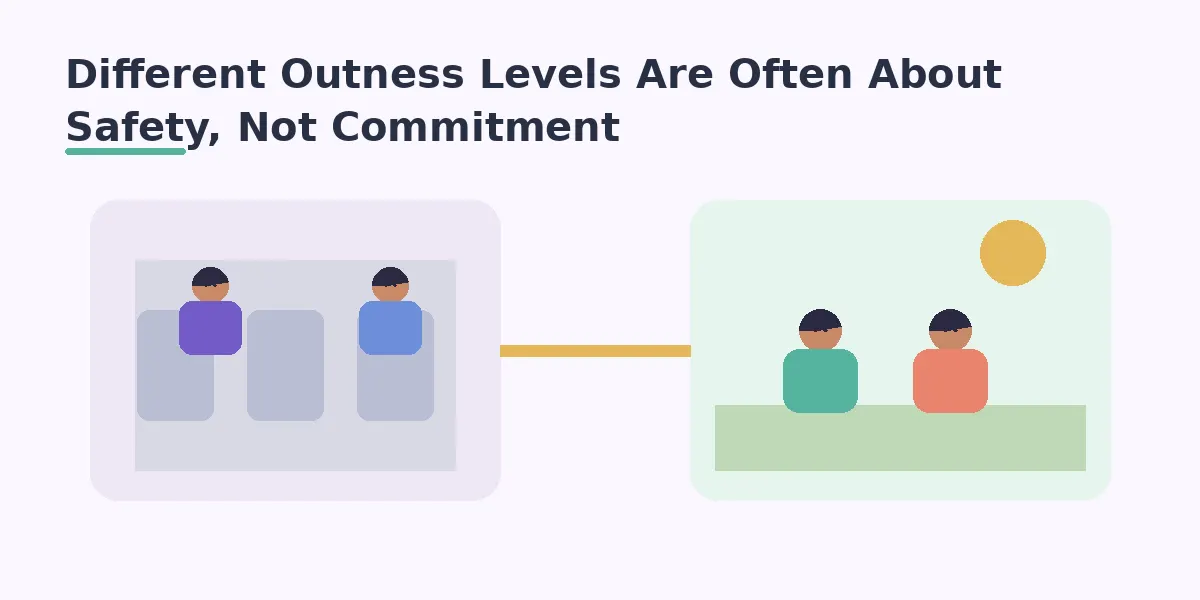
It is easy to read outness as a measure of love: “If he were serious about me, he would tell his family,” or “If he respected me, he would hold my hand in public.” Sometimes hiding a relationship does reflect low commitment, but sometimes it reflects realistic risk. A person may fear losing housing, work, family support, immigration stability, or physical safety. In other cases, the risk is emotional rather than material: rejection, family rupture, or becoming the center of gossip in a close community.
Research on same-gender couples shows that outness is complex and can affect relationship satisfaction, but it does not singularly determine it. It can function as identity expression, a resilience strategy, and a way of managing minority stress. That means couples need more detail than “out” or “not out.” Ask where the risk actually exists and what it costs each partner to live within that limit.
Clarify Where Each of You Is Out—and Where You Are Not
“Not fully out” can mean many different things. Someone may be open with friends but not parents. He may be open socially but not at work. He may post his partner online but avoid public affection. Another person may be private everywhere but still introduce his partner honestly to the people who matter most. The exact map matters because vague labels create vague resentment.
Have a practical conversation. Which friends know? Which relatives know? What happens at weddings, holidays, work events, or neighborhood gatherings? Is the relationship acknowledged in public conversation? Are there situations where one partner has to be described as “a friend”? You are not building a surveillance chart. You are trying to understand what daily life will actually require from both of you.
Name the Cost of Being Hidden Without Forcing Disclosure
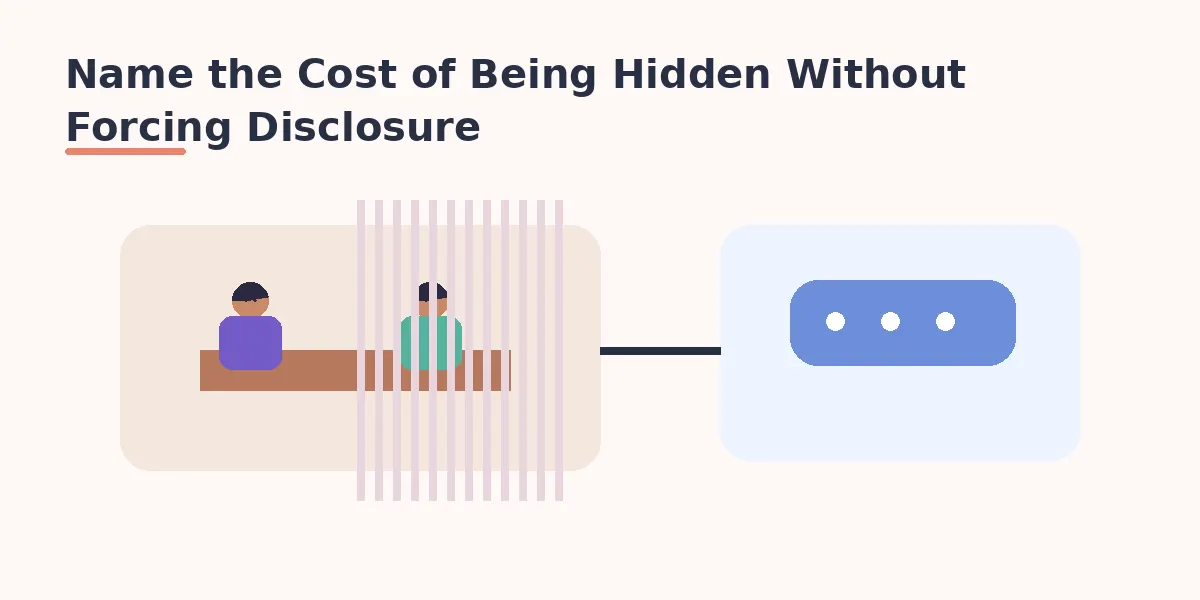
The less-out partner deserves autonomy over his coming-out process. At the same time, the more-out partner deserves honesty about the emotional cost of being hidden. Both can be true. If you are excluded from family events, unable to appear in photos, asked to avoid affection in every public setting, or repeatedly introduced as a friend, you may begin to feel that the relationship has no social existence.
Say that cost directly without turning it into an ultimatum. “I understand why work is not safe for you, but I feel lonely when I have to disappear around everyone in your life” is more useful than “If you loved me, you would come out.” The first statement gives information. The second turns vulnerability into a test. The goal is to make the hidden cost visible enough that both partners can problem-solve around it.
Ask Whether the Relationship Is Moving or Permanently Frozen
A temporary difference in outness may feel very different from a permanent one. Someone who says, “I am not ready to tell my parents yet, but I want to work toward it,” is describing movement. Someone who says, “This can never change, and I do not want to discuss how it affects you,” is describing a fixed structure. Neither position is automatically wrong, but the couple needs to know which reality they are choosing.
This matters especially when you are looking for a serious gay relationship and real commitment. Seriousness does not require identical timelines, but it does require enough shared future to make sacrifice meaningful. If one person imagines eventually being recognized as a partner and the other imagines permanent invisibility, the conflict is not only about outness. It is about incompatible futures.
Build Specific Boundaries for Family, Work, Friends, and Public Life
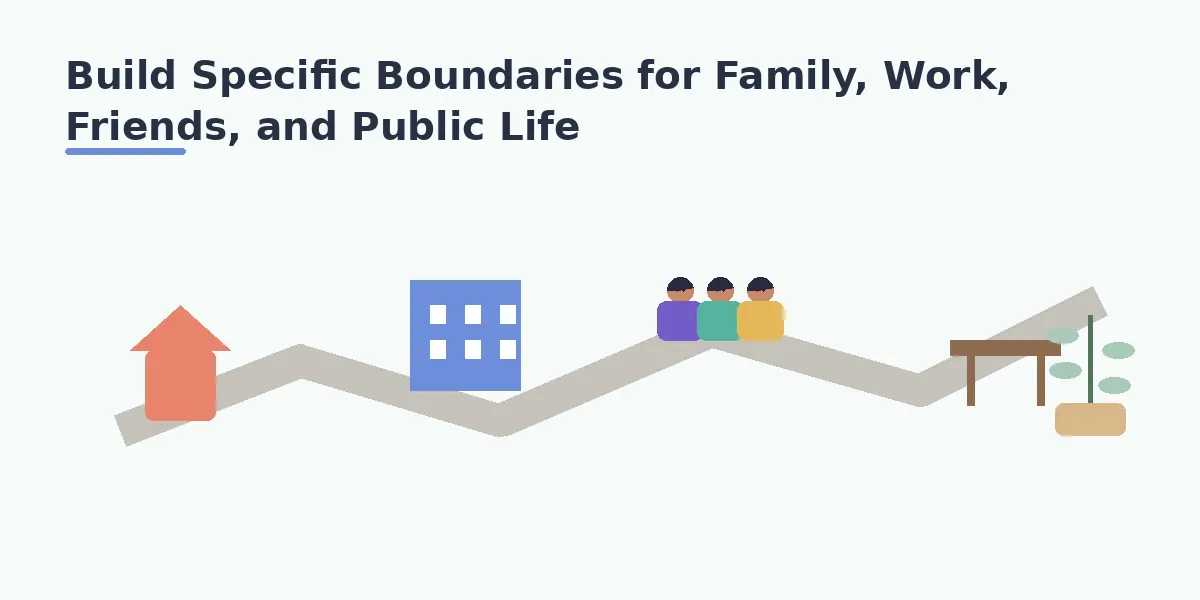
Different settings may need different agreements. A couple can be private at one partner’s workplace while fully open with friends. They can attend family events with a specific introduction that feels truthful enough without creating a confrontation. They can agree on what social media is comfortable. They can decide where affection feels safe and where discretion makes sense.
Specificity matters because broad rules create resentment. “Never post me” can feel controlling if there is no discussion. “Do not tag me in public posts because my employer follows my account” gives a reason and a boundary. Couples often do better when the less-out partner can explain the risk and the more-out partner can explain the emotional impact. Then the rule becomes collaborative rather than unilateral.
Do Not Make the More-Out Partner Carry All the Secrecy
Sometimes the more-out partner ends up doing extra emotional labor to protect the less-out partner. He edits photos, monitors language, remembers who knows what, avoids mentioning the relationship, lies to relatives, or changes his own behavior in spaces where he would normally be open. Over time, that can feel like being pushed back into a closet that is not his.
The less-out partner should take responsibility for his own boundaries where possible. He can explain what is safe, decide what story he will tell, and handle conversations with his family or coworkers rather than asking his partner to improvise the secrecy. This reduces the sense that one person’s fear has become the other person’s full-time job.
Consider the Difference Between Privacy and Erasure
Privacy is a choice about who gets access to your life. Erasure is when a partner’s existence is denied in places where the relationship should matter. A private couple may rarely post online yet still acknowledge each other honestly to close friends, family, doctors, landlords, or important community members. An erased partner is expected to disappear whenever the relationship becomes socially inconvenient.
The distinction is important because many couples genuinely prefer privacy. The problem is not low visibility by itself. The problem is when visibility is controlled in a way that leaves one partner feeling replaceable, unofficial, or ashamed. Ask whether the current arrangement protects both people or only protects one person at the expense of the other.
Questions Gay Couples With Different Outness Levels Should Ask
These questions can turn a vague conflict into a practical conversation.
- Where is each of us currently out, and where are we not?
- What are the real risks behind each boundary?
- Which situations make one partner feel hidden or erased?
- Is our current arrangement temporary, evolving, or permanent?
- Who is responsible for explaining boundaries to friends, family, or coworkers?
- What public affection or social media behavior feels safe enough for both of us?
- What would make the more-out partner feel recognized without forcing disclosure?
These questions do not require the same answers. They require enough honesty that both partners know what they are consenting to.
Use an Outness Compatibility Check Before You Get More Serious
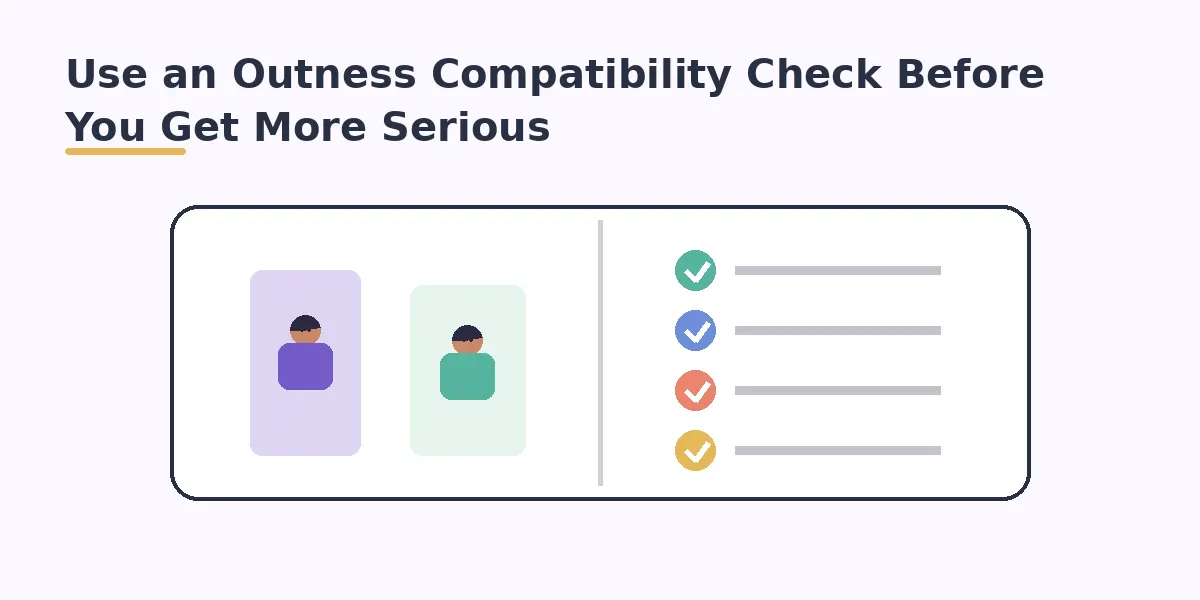
| Area | Ask each other | A workable sign |
|---|---|---|
| Family | How will I be introduced and included? | The plan is respectful even if disclosure is limited |
| Work | What risks exist around colleagues or employers? | Boundaries are explained, not imposed without context |
| Friends | Who knows about us? | At least some shared social space feels real |
| Public life | Where does affection feel safe? | Both partners can participate without chronic fear or resentment |
| Social media | What can be posted or tagged? | Expectations are specific and mutually agreed |
| Future | Is the current level of outness expected to change? | Timelines may differ, but the future is discussable |
| Emotional cost | Who is sacrificing what? | Neither partner’s needs disappear completely |
The table is not a demand for equal outness. It is a check for equal respect.
When Different Levels of Outness Stop Working
The relationship may become unsustainable when one partner cannot tolerate any visibility and the other cannot tolerate being hidden. It may also stop working if disclosure becomes a weapon: one person threatens to out the other, or the less-out partner uses fear to control the more-out partner’s friendships, posts, or identity. Those are not simple preference differences.
Research on gay male couples has also found that being out to parents can bring relationship benefits such as not having to hide the relationship and being included in family events, although family reactions vary widely. The point is not that every couple must disclose to parents. It is that social recognition can become a real relationship need, and couples should take that need seriously rather than dismissing it as vanity.
Different Outness Levels Can Work When Both People Remain Visible to Each Other
Different levels of outness can work. They work best when the couple understands the risks behind the difference, names the emotional cost honestly, and builds boundaries that protect both partners rather than only the more vulnerable one. The less-out partner needs autonomy over disclosure. The more-out partner needs freedom from being silently pushed back into hiding.
What matters most is whether the relationship itself can stay real. Both people should know where they stand, what the current limits are, and whether those limits can evolve. If the couple can protect safety without erasing commitment, different outness levels do not have to become a permanent fracture. They can become one of the many differences a serious relationship learns to negotiate with care.
References
- PubMed — Outness and relationship satisfaction in same-gender couples: Qualitative research showing that outness can shape identity, resilience, stress management, and relationship satisfaction without determining it by itself.
- PubMed — Gay male couples: the importance of coming out and being out to parents: Study of gay male couples examining how disclosure to parents and inclusion in family life can affect the couple relationship.