

Who doesn’t want to scroll through a dating app and find “the one”? Whether you’re into Western guys, cute Asian guys, bears, or sporty types, a handsome profile and great body can make you instantly hit like or send a message. But wait! While looking for true love—or simply someone to chat with—dating apps can hide a serious threat: the “Catfish.” Today, Quicky takes a closer look at gay catfishing and shares 5 red flags you need to remember to avoid getting scammed and losing your money, time, and feelings.
In this article
What Is Gay Catfishing and Why Is It More Dangerous Than You Think?
In the online world, “Catfish” doesn’t mean the fish. It refers to creating a fake identity by stealing someone else’s photos, information, or stories to deceive people on dating apps or social media.
Why Is Gay Catfishing So Common?
In the gay community, looks and body type are often the first things that attract attention. Scammers or people with bad intentions may steal photos of models, OnlyFans creators, or foreign influencers to create attractive profiles and lure unsuspecting users.
“Falling for someone behind a screen doesn’t hurt as much as discovering the truth—that person never really existed.” — The golden rule of dating apps
Their motives can range from loneliness and seeking attention to serious crimes such as Romance Scams, where victims are tricked into sending money, or fake investment schemes. That’s why knowing their tactics is so important.
Types of Dating Apps Where Gay Catfish May Be Hiding
Many people wonder where these scammers usually hide. The answer is: “Anywhere loneliness exists and strangers can meet.” No matter how secure a dating app is, scammers often find ways around its safeguards. Understanding different types of platforms can help you avoid getting scammed. Common platforms include:
- Global Dating Apps
- These platforms have huge global user bases. Gay catfish often pose as “successful professionals” or “foreign businessmen,” using photos of luxury lifestyles, sports cars, and fine dining to attract people looking for stability or long-term relationships.
- Location-Based Dating Apps
- These niche platforms focus on quick meetups or finding nearby people with similar interests. Scammers often rely on attractive looks, using stolen profile photos showing six-packs, muscular bodies, or sexy poses. They typically start with flirty messages and quickly bring up 18+ topics to lower the victim’s guard and gain trust fast.
- Asian Community-Focused Dating Apps
- These platforms are popular across Asia, where gay catfish often pose as “Korean oppa” types or cute, gentle-looking Asian guys. Their profiles may seem warm and friendly, but some are cross-border scammers using fake photos to build trust before persuading victims to invest in crypto or suspicious financial platforms.
No matter which platform you use, the golden rule is: never trust someone just because their profile photo is your type or their lifestyle looks too good to be true. Those attractive photos can be saved from the internet and turned into a fake profile in less than a second!
📌 Read More – How to Tell If a Gay Dating App Is Safe? 5 Things You Should Never Ignore
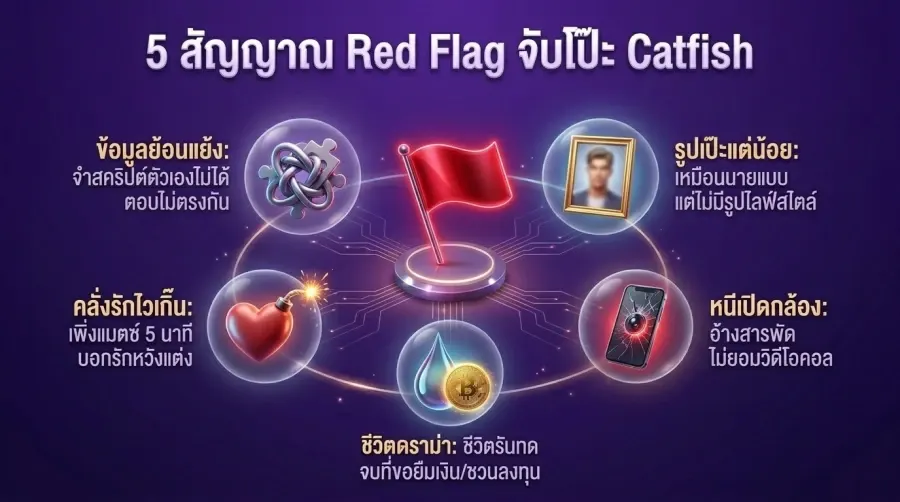
5 Warning Signs to Spot Before Getting Scammed on Gay Dating Apps
Don’t want to end up heartbroken over a guy who isn’t even real? Check these 5 signs now and see if the person you’re talking to matches any of them!
His Profile Looks Perfect, but You Can’t Find Any Other Photos
This is the most basic warning sign! His profile photo looks almost too perfect—professional quality, perfect lighting, and defined abs. But his gallery has only 1–2 photos, with no everyday shots, friends, pets, or meals. Even if there are more, they may all come from the same photo set taken from the internet. If you see this, be cautious—it could be a fake profile.
Gay Catfish Often Avoid Video Calls
“My camera is broken.”
“I’m shy. Maybe another time.”
“I’m with my family right now, so I can’t video call.”
This is a classic Catfish excuse! As the relationship develops and you ask for a video call to confirm they match their profile, they’ll often make excuses to avoid turning on the camera. Some may agree but call in the dark or use voice only. Remember, in the 5G era when almost everyone has a smartphone, refusing to video call for months is a major red flag!
Dramatic Life Stories or Get-Rich-Quick Offers
Be careful if your match suddenly starts sharing dramatic life stories—such as a sick mother needing urgent surgery, a lost wallet abroad, or a failing business—only to eventually ask to borrow money. Another common scam involves posing as a wealthy businessman, showing off an investment portfolio, and inviting you to invest through suspicious apps with “guaranteed” profits. These are classic scam patterns that have cost many gay dating app users serious money.
Gay Catfish Love at First Sight: Obsessed After Just 5 Minutes
You’ve been matched for less than a day, but they’re already saying, “You’re the one,” “I only want you,” or “Let’s plan our future together.” This is called Love Bombing—overwhelming someone with excessive affection and attention to make them feel special and gain their trust quickly. Once you become emotionally attached, they may start asking for money or other benefits.
Inconsistent Personal Details and Suspicious Answers
When you talk to someone, you normally remember their basic details, right? But scammers may be chatting with dozens of people at once—or even using bots—so they often forget their own stories. Today they say they work in Silom, tomorrow their office is in Asoke, or they claim to have graduated in the US but barely speak English. Try asking the same question again later. If the answers don’t match, that’s a major red flag!

Inside the Psychology of Gay Catfishing: Why Smart People Still Fall Victim
We often hear about well-educated people, executives, or tech-savvy young adults getting scammed and losing hundreds of thousands or even millions. It’s not about being foolish—it’s about the “psychology of deception.” Scammers are trained to break down our emotional defenses through these psychological tactics:
| Attractiveness Halo Effect |
|---|
| Psychologically, when we see someone attractive, we often assume they are also kind, honest, and successful. This bias is difficult to avoid. That’s why scammers use flawless, handsome profile photos to create instant attraction and lower a victim’s guard before the conversation even begins. |
| The Vulnerability of Loneliness |
|---|
| These people are often excellent listeners. They let you open up about life problems, work stress, or the loneliness you may experience as an LGBTQ+ person and feel unable to share with your family. Then they become your “Safe Zone,” offering constant support and sending sweet messages every morning and night, making you feel, “Finally, I’ve found someone who truly understands me.” |
| Love Bombing Technique |
|---|
| A rapid and intense flood of affection can trigger the brain’s dopamine reward system, making victims constantly anticipate messages from the scammer. When strong romantic emotions affect judgment, rational thinking may weaken. As a result, when the scammer asks to borrow money or suggests an investment, the victim may transfer money without thinking it through. |
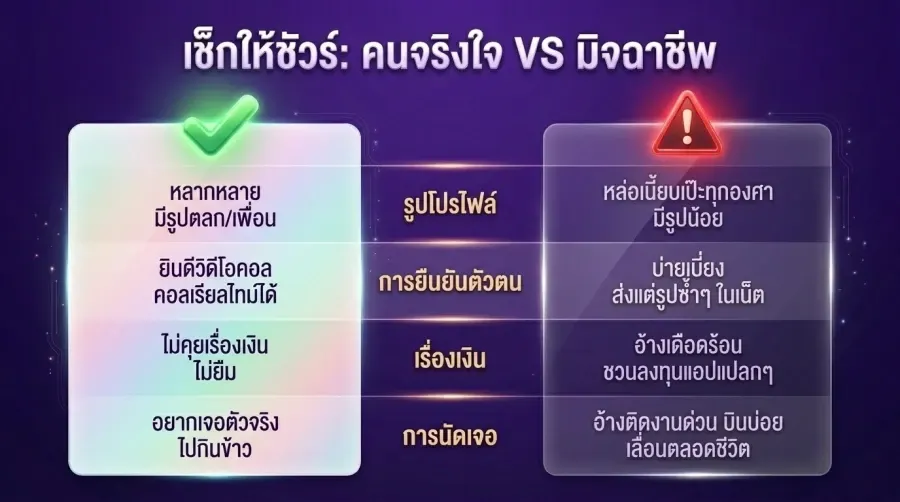
Genuine Match vs Gay Catfish
| Behavior / Signs | Genuine Match | Gay Catfish Threat |
|---|---|---|
| Profile Photo | A variety of photos, including candid shots, group photos, and funny pictures | Looks flawless in every photo, has very few pictures, and none with friends |
| Identity Verification | Willing to video call and send real-time photos (e.g., a photo of their lunch) | Avoids turning on the camera and repeatedly sends attractive photos that can be found online |
| Length of Conversation | Takes things slowly and gets to know each other naturally | Falls in love way too fast, calls you “babe” within 3 days, and already talks about marriage |
| Money / Investments | Doesn’t talk about money, borrow money, or ask you to invest | Claims to be in financial trouble or constantly asks you to invest through suspicious apps |
| Meeting in Person | Wants to meet up, have a meal, or watch a movie once you get along well | Always claims to have urgent work or be traveling abroad and keeps postponing the meetup |
📌 Read More – Serious Gay Dating vs Finding Someone to Chat With: Know Your Goal Before You Start
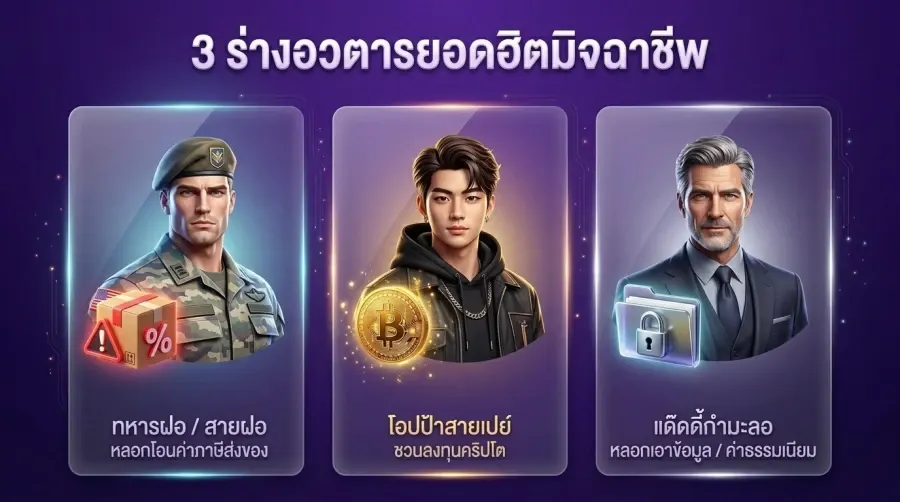
3 Case Studies: The Most Common Scams on Gay Dating Apps
Case 1: The Handsome American Soldier
- Plot
- The profile shows a handsome, muscular Western man in military uniform, or someone claiming to be an oil rig engineer working in the Middle East or a war zone. After chatting for a while, he’ll start saying, “I want to move to Thailand and build a life with you.”
- The Outcome to Watch Out For
- He’ll claim he sent you expensive gifts, a diamond ring, or a large amount of cash to Thailand, but the package is “stuck at customs.” Then he asks you to transfer money for taxes or fees to release it. Once you pay, he disappears!
Case 2: The Wealthy Crypto Investor
- Plot
- This type usually appears as a handsome Asian “oppa,” often using photos of attractive Chinese, Taiwanese, or Korean men. The profile looks extremely wealthy—designer clothes, supercars, and a luxurious lifestyle. He’s polite and never gets sexual, but the conversation gradually shifts to questions like, “How do you manage your finances?” or “I just made a profit from this portfolio.”
- The Outcome to Watch Out For
- He won’t ask to borrow money directly. Instead, he’ll persuade you to download a crypto trading app—which is actually a fake platform created by scammers. At first, you may see profits and even successfully withdraw money, building your trust and encouraging you to invest larger amounts. But when you try to withdraw a large sum, the account gets locked and he disappears. This is one of the most financially damaging scams on gay dating apps today!
Case 3: The Fake Big Spender
- Plot
- He opens with an extravagant offer like, “I’m looking for someone to take care of. I’ll give you 50,000 baht a month. Interested?” His profile makes him look like a mature, successful gentleman.
- The Outcome to Watch Out For
- Before sending your “monthly allowance,” he may claim you need to pay an “account opening fee” or “relationship deposit,” or trick you into giving your ID and credit card details for illegal transactions.
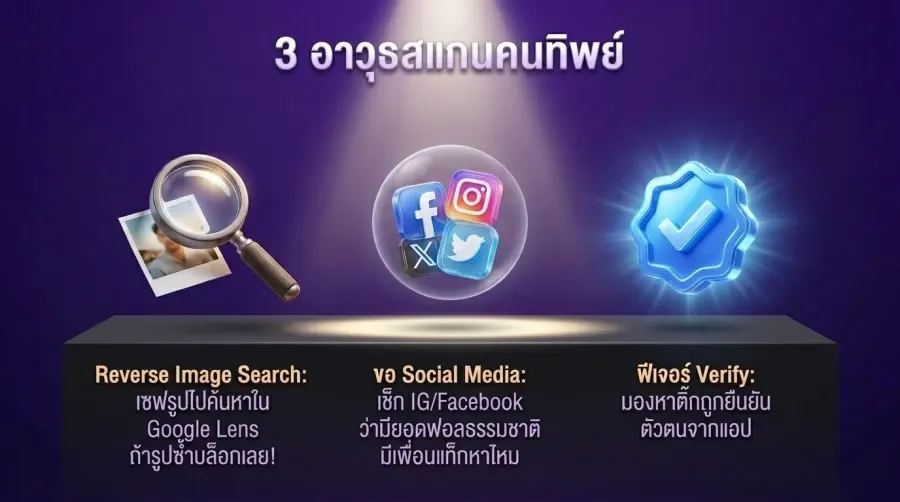
Tools and Background Checks to Avoid Getting Scammed
The best protection is a healthy dose of curiosity! If something feels suspicious, channel your inner Detective Conan and try these tools:
- Reverse Image Search: Run their profile photo through Google Lens or other popular image search tools. If the same photo appears across multiple websites or matches a foreign model’s Instagram account, block them!
- Check Other Social Media: Ask for their Instagram or Facebook. A genuine account usually has natural-looking followers, tagged friends, and comments from people they know—not an account that was created just last month.
- Use the App’s Verify Feature: Many gay dating apps offer a blue checkmark (Verified Profile) or other verification badges showing that the app has checked the user’s face against their profile photo. While it’s not 100% foolproof, it can greatly reduce the risk of encountering a gay catfish.
📌 Read More – Safe Gay Websites vs Sites to Watch Out For: A Checklist Before You Use Them
What Should You Do If You Realize You’ve Been a Victim of Gay Catfishing?
If you’ve reached this point and realized, “Oh no, I might be talking to a scammer,” or you’ve already transferred money, don’t panic. Stay calm and follow these steps:
Stop Sending Money, Stop Contact, and Block Immediately
Cut off all contact. Don’t message, insult, or threaten them by saying you know it’s a scam, as this may alert them and cause them to delete the account. Instead, block and report the profile to the app to help prevent them from scamming others.
How to Collect Evidence
Screenshot and save everything! Keep their profile, your entire conversation from the beginning—especially messages involving deception or requests for money—transfer receipts, bank account numbers, the name of the receiving account holder, and any website links they tricked you into clicking. The more evidence you have, the easier it will be for the police to investigate.
Don’t Be Ashamed to Report It If You’re Scammed on a Gay Dating App
Many LGBTQ+ people may feel embarrassed or hesitate to report a scam because they fear being judged or feel ashamed about being deceived on a dating app. Put that thought aside—the scammer is the criminal, and you are the victim. Gather all your evidence and report the case to Thailand’s Cyber Crime Investigation Bureau (CCIB), or file an online police report through the Royal Thai Police’s official online reporting service.
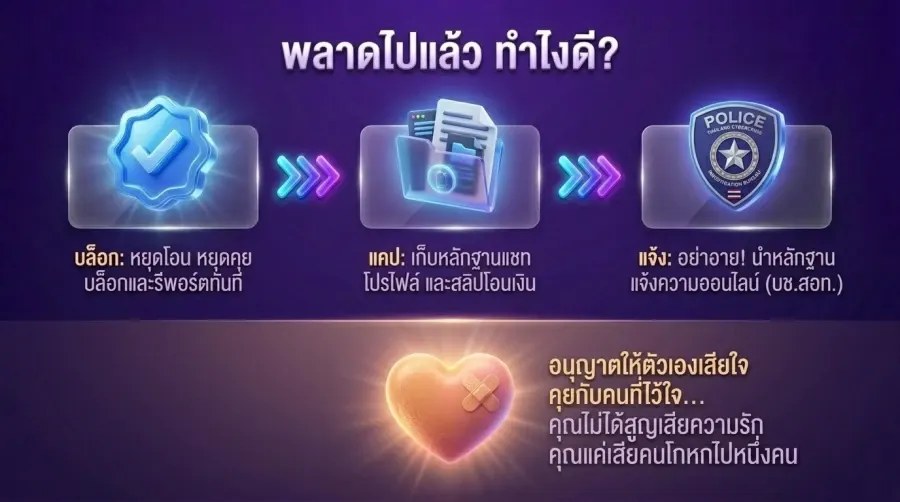
How to Heal After Being Scammed on a Gay Dating App
If you’ve just realized that you were a victim of a scam, the first thing to remember is: “Don’t blame yourself.” These scammers often operate in organized groups, use carefully designed psychological scripts, and may have teams supporting the deception. It’s understandable not to spot the scam immediately. Feeling shocked, hurt, anxious, or even losing trust in love can all be natural emotional reactions. Here are some ways to cope and begin healing:
- Allow Yourself to Feel Sad: Cry if you need to and let your emotions out. Don’t keep your anger or embarrassment bottled up. Accepting what happened is the first step toward moving forward.
- Talk to Someone You Trust: Keeping everything secret because you feel embarrassed can make the stress worse. Reach out to a close friend or family member who will listen without judging you. They can help you find a solution or even go with you to report the scam.
- Take a Break from Social Media and Dating Apps: Consider temporarily deleting the apps and spending more time in the real world. Exercise, meet up with friends, enjoy your favorite food, and give yourself some space away from the negative memories tied to your phone.
- Remember, It’s a Lesson, Not a Stigma: This experience of being scammed on a gay dating app can become your radar for spotting red flags and protecting yourself in the future. You didn’t lose love—you simply lost someone who lied to you.
How to Use Dating Apps Safely, Happily, and Worry-Free
There’s nothing wrong with looking for true love or a healthy relationship online. Dating apps are simply tools that help us meet new people. What matters is staying alert every time you match with someone or start a new conversation.
Always remember that scammers often prey on our “loneliness” and “expectations.” They know we want to hear sweet words and meet attractive people with impressive profiles. So don’t rush to trust someone completely or send them money until you’ve met in person and spent enough time getting to know each other in the real world.
Hopefully, Quicky’s 5 warning signs today will help protect you as you explore gay dating apps with more confidence, fun, and safety—without having to worry about getting scammed. Good luck, and may every right swipe lead you to someone genuine, true to their profile, and honest!
Ready to Find the Right Person in a Safe Community?
Download Quicky, the Gay Dating App That Understands You Best
Strict Profile Verification—Say Goodbye to Catfish!