
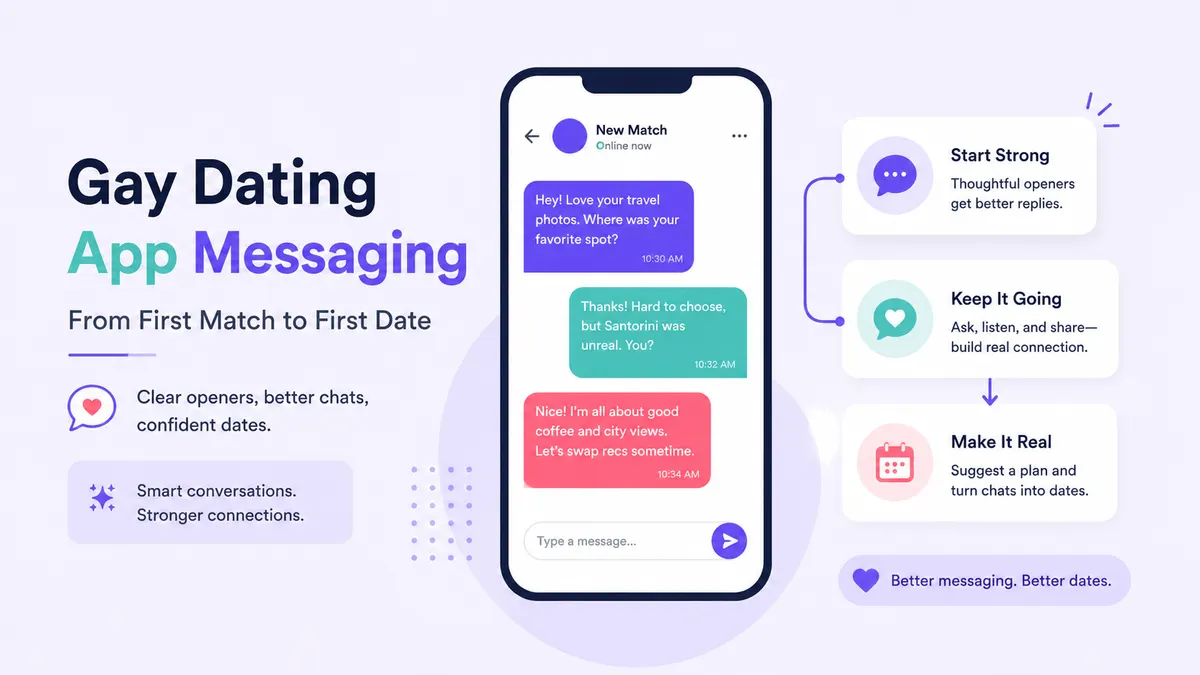
A match is only the beginning. The conversation that follows often decides whether two people actually meet. Gay dating app messaging works best when talking feels easy, interesting, and safe enough to continue. You do not need perfect jokes, instant replies, or a carefully performed personality. You need attention, reciprocity, timing, and enough clarity to move from online chemistry toward a real-world date. On Quicky, a good match can become meaningful when both people have room to show who they are. This guide covers the journey from first message to first date, including openers, pacing, flirting, boundaries, invitations, and signs that a conversation is ready to move offline.
In this article
What Gay Dating App Messaging Should Accomplish
The goal of messaging is not to entertain someone forever. It is to discover whether there is enough mutual interest and comfort to continue. Early messages should reveal small pieces of personality without turning the chat into an interview. A useful exchange usually contains something specific, something personal, and an easy opening for the other person to respond. You also want to notice the balance. Does he ask questions back? Does he introduce new topics? Does he react to the details you share? If one person has to carry every exchange, the issue may not be the wording. It may simply be a mismatch in effort or interest. Treat messaging as a bridge to knowing someone, not a test you have to pass.
Start With a Message That Gives Him Something to Answer
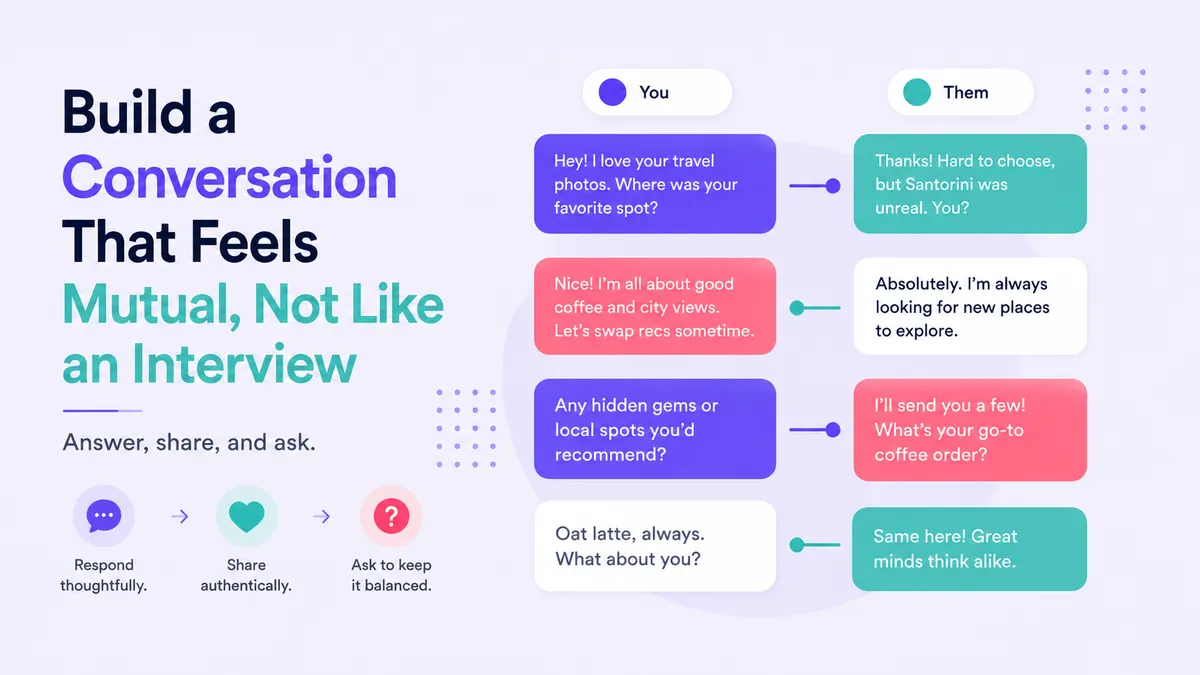
A first message should make replying easier than ignoring it. That is why a profile detail is usually more useful than a generic greeting. Mention a place in a photo, a hobby in his bio, a pet, a film, a gym routine, or another detail that gives the conversation a direction. The message does not need to be clever. It only needs to show that you noticed something about him. Quicky already has a focused guide to starting a gay chat with a stronger first message; the next step is learning how to keep the reply moving.
- Too empty: “Hey.” It gives the other person all the work.
- Too intense: A long paragraph about attraction or relationships before you have exchanged a few lines.
- More useful: “That ramen place in your photo looks good. Is it actually worth the queue?”
- Playful: “Your dog looks like he decides who you are allowed to date. Am I right?”
- Interest-led: “You mentioned weekend cycling. What route do you keep going back to?”
Open-ended questions help because they invite more than a yes-or-no answer. The Gottman Institute also recommends open-ended questions for better dating conversations and genuine curiosity. Its dating guidance supports a simple idea that works just as well in app messaging: being interested in someone is usually more effective than trying too hard to appear interesting.
Build a Conversation That Feels Mutual, Not Like an Interview
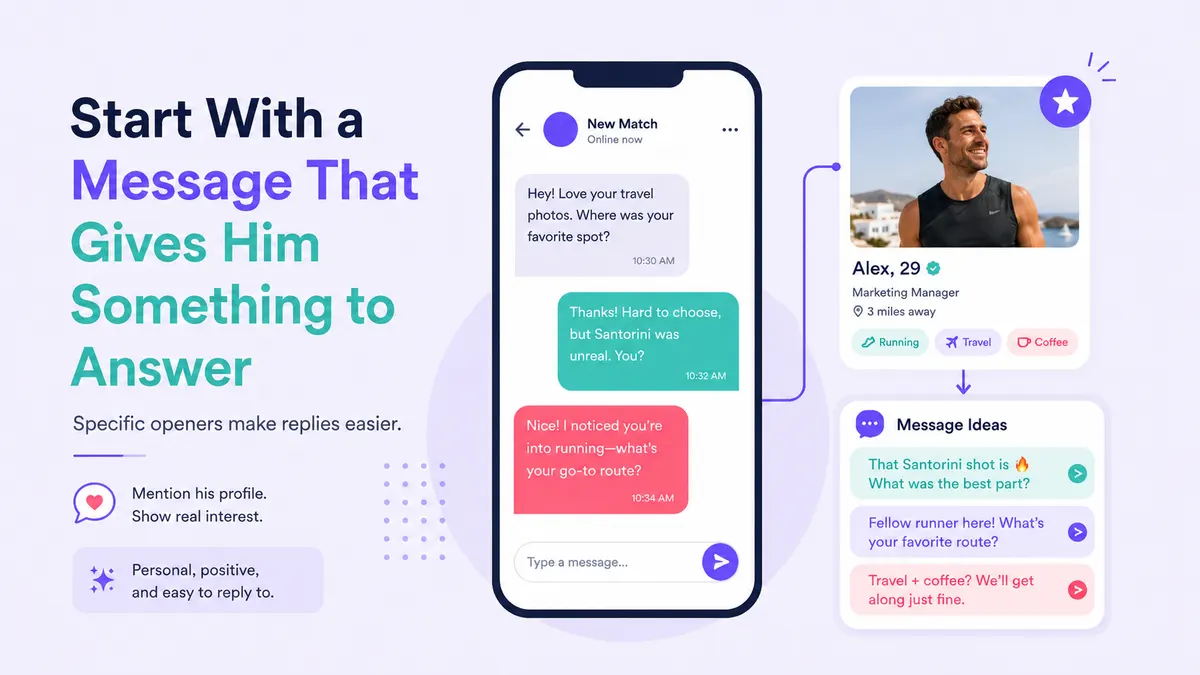
After he replies, avoid the question-answer-question pattern for too long. A conversation feels more natural when you answer, add something about yourself, and then give him a way to continue. If he says he spends Sundays cooking, do not immediately ask five questions. Share something too: “I keep trying to make decent pasta and somehow create enough food for six people. What is your reliable Sunday dish?” That creates exchange instead of interrogation.
Look at the pattern rather than one short reply. Some people are brief texters, especially during work or travel. What matters is whether the overall conversation shows reciprocity. Does he respond to the parts of your message that reveal personality? Does he ask anything back? Does he introduce new topics? Quicky’s guide on how to chat with gay matches online has more examples for maintaining momentum and recovering when a conversation goes quiet.
Read the Pace Without Playing Reply-Time Games
There is no universal correct reply time. Fast replies can feel exciting when both people are engaged, while slower messaging can work perfectly well for busy schedules. Problems begin when timing becomes a performance. Deliberately waiting hours to look unavailable can flatten a conversation that was naturally flowing. At the same time, sending repeated follow-ups because someone has not replied can create pressure. Use the existing rhythm as your guide. If both of you have been replying every few minutes, enjoy it. If messages arrive a few times a day, that may simply be the pace that fits both lives.
Respectful texting also includes digital boundaries. Love is Respect notes that people can have different expectations around texting and what they feel comfortable sharing digitally. Its guidance on respectful texting is useful even early in dating: having access to someone through an app does not mean you are entitled to constant access to his time.
Flirt Clearly Without Pushing the Conversation Too Fast
Flirting helps a match feel different from a new friendship, but it works best when it leaves the other person room to participate. Compliments about style, humor, taste, expression, or a specific photo can create more conversation than repeating that he is attractive. Sexual messages can be welcome when both people clearly want that direction, but assuming sexual interest too quickly can shut down a match that might otherwise develop.
Build the tone gradually. A playful compliment can become more direct if he responds in the same spirit. Confidence is not the same as pressure. “You look great in that suit” is a compliment; repeatedly asking for more photos after he changes the subject is pressure. Love is Respect describes digital boundaries as including communication frequency, privacy, social media, and what people feel comfortable sharing online. Those boundaries can change, but they should change through mutual comfort rather than assumption.
From Match to First Date: Messaging Goals by Stage
The best next message depends on where the conversation is. Use this table as a practical guide rather than a rigid timetable.
| Stage | Main goal | Useful message style | What to avoid |
|---|---|---|---|
| Just matched | Create an easy opening | Specific comment + simple question | Generic greetings with no direction |
| First conversation | Test mutual curiosity | Answer + share + ask | Rapid-fire interview questions |
| Good momentum | Build personality and flirtation | Stories, humor, light compliments | Oversharing to impress |
| Clear mutual interest | Check real-world compatibility | Schedule, area, preferred date style | Chatting indefinitely |
| Planning the date | Make the meeting easy | Specific place, day, and approximate time | “We should meet sometime” |
| Before the date | Confirm practical details | Short confirmation | Constant check-ins |
How to Ask Him Out Without Making It Weird
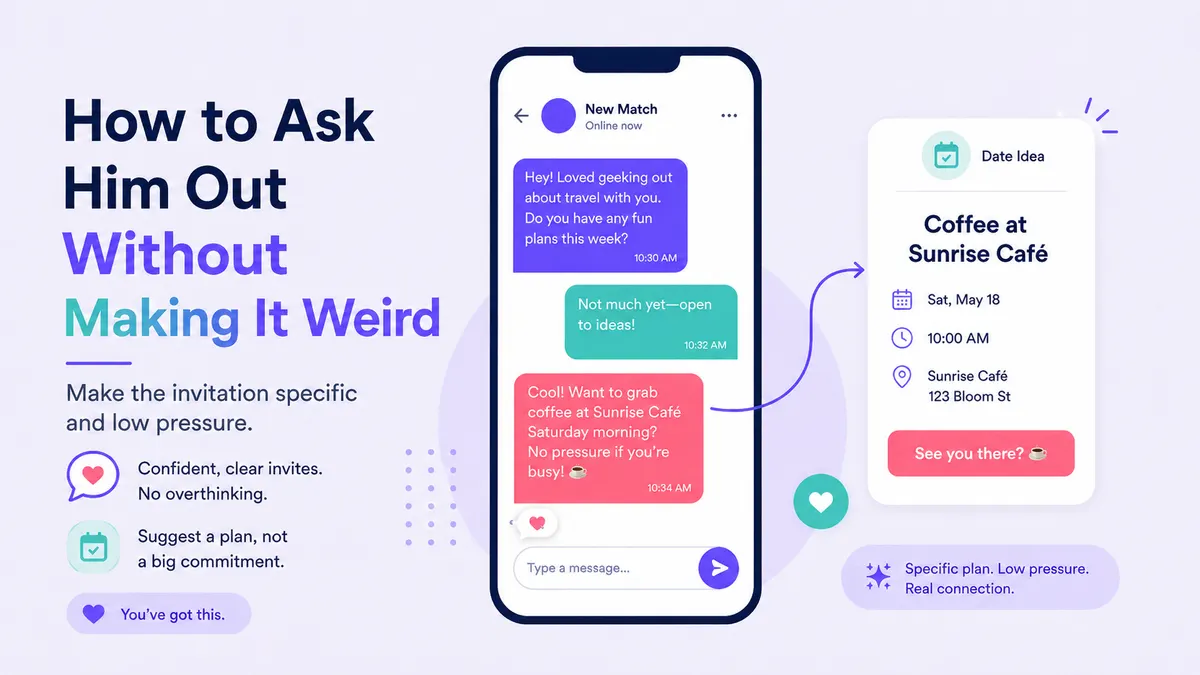
If the conversation has energy, do not wait for a magical moment. A good invitation is specific enough to answer but relaxed enough to decline. “I’m enjoying this. Want to continue it over coffee this weekend?” works because the intention is obvious. Better still, add one practical option: “I’m free Saturday afternoon if you want to grab coffee around Ari.” He can say yes, suggest another time, or decline without decoding what you mean.
You do not need a certain number of messages first. Look for readiness instead: he replies consistently, asks questions, shares details voluntarily, and seems comfortable when the conversation becomes a little more personal. If he responds positively to meeting, move into practical planning rather than continuing to sell the date. Choose a public place, agree on a time, and keep the first meeting simple enough that either person can extend it if things are going well.
- Direct: “We’ve been talking about coffee for three days. Want to actually get one on Saturday?”
- Shared interest: “You sold me on that bakery. Want to test your recommendation together?”
- Low pressure: “I’d be up for meeting in person if you are. I’m free Sunday afternoon.”
- Busy schedules: “This week looks chaotic for both of us. Want to pick something for next week?”
Gay Dating App Messaging Safety Before Meeting
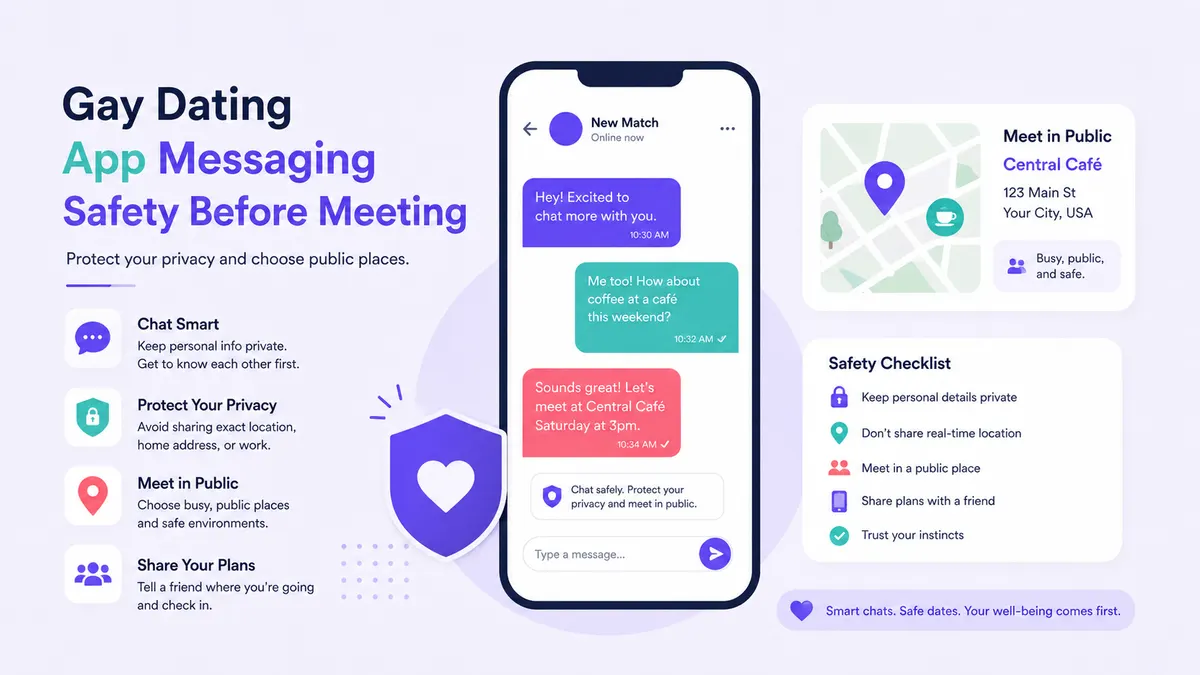
Good chemistry should not require giving up basic privacy. Before a first date, avoid sharing information that would make you uncomfortable if the match disappeared tomorrow. That can include your exact home address, work access details, passwords, financial information, or intimate photos you do not genuinely want to send. You can also keep the conversation on Quicky until you feel comfortable moving elsewhere. A request for another contact method is not automatically suspicious, but you do not owe anyone more access to your digital life.
When you decide to meet, choose a public location, arrange your own transportation, tell someone you trust where you will be, and keep control of your phone and belongings. Quicky has a dedicated first-date safety guide for gay dating with a fuller checklist. Safety does not need to make dating feel fearful. It simply gives you more control while you decide whether the person you enjoyed messaging is someone you also enjoy meeting.
Messaging Mistakes That Kill Good Momentum
- Turning every pause into rejection. People work, travel, sleep, exercise, socialize, and sometimes forget to reply.
- Sending repeated messages to force an answer. One natural follow-up can be fine; several unanswered messages usually add pressure.
- Mirroring disinterest forever. If both people intentionally reply less to avoid seeming keen, a promising conversation can disappear.
- Making sexual escalation the only form of flirting. Attraction can also grow through humor, attention, anticipation, and personal conversation.
- Trying to sound universally attractive. A harmless opinion or preference gives someone more to connect with than perfectly neutral answers.
- Ignoring mismatched intentions. Better messaging cannot remove a real difference in relationship goals.
- Chatting for weeks because asking feels risky. When interest looks mutual, a respectful invitation often gives more clarity than another hundred messages.
From First Match to First Date, Clarity Beats Performance
The strongest gay dating app messaging rarely sounds like a script. It sounds like two people making it easier to know each other. Start with something specific. Share as much as you ask. Let the pace reflect real life instead of invented texting rules. Flirt in a way that leaves room for mutual enthusiasm. When the conversation has enough energy, suggest a real meeting instead of chasing certainty through endless messages. Quicky can help you make the match, but the useful next step is still human: pay attention, communicate clearly, and notice whether effort comes from both sides. A first date only needs to answer one question: do we want to keep getting to know each other?
FAQ About Gay Dating App Messaging
What should I message first after matching with a guy?
Use one detail from his profile and add an easy question. A specific opener gives him something to respond to and shows that you looked beyond the first photo.
How long should you message before asking for a first date?
There is no fixed number of days. Ask when the conversation feels mutual, you have enough information to feel comfortable, and both people appear interested in continuing offline.
Should I double text if he has not replied?
A single natural follow-up can be reasonable, especially if the previous conversation was engaged. If several messages go unanswered, give him space rather than trying to create a response through more pressure.
How do I know if he actually wants to meet?
Interest becomes clearer when he helps with planning. If he suggests a day, offers an alternative when busy, or engages with practical details, that is more useful evidence than enthusiastic but vague messages.
Should I move the conversation off Quicky before meeting?
Only if you want to. You can keep chatting on Quicky until you feel comfortable sharing another contact method. Moving platforms is not required for a successful first date.
Sources and Further Reading
- Love Is Respect — Respectful Texting in a Relationship: guidance on communication preferences, comfort, and digital boundaries.
- Love Is Respect — Digital Boundaries: guidance on privacy, communication expectations, and boundaries that can change over time.
- The Gottman Institute — Gottman Principles in the Dating World: practical advice on curiosity and open-ended questions during dating.