
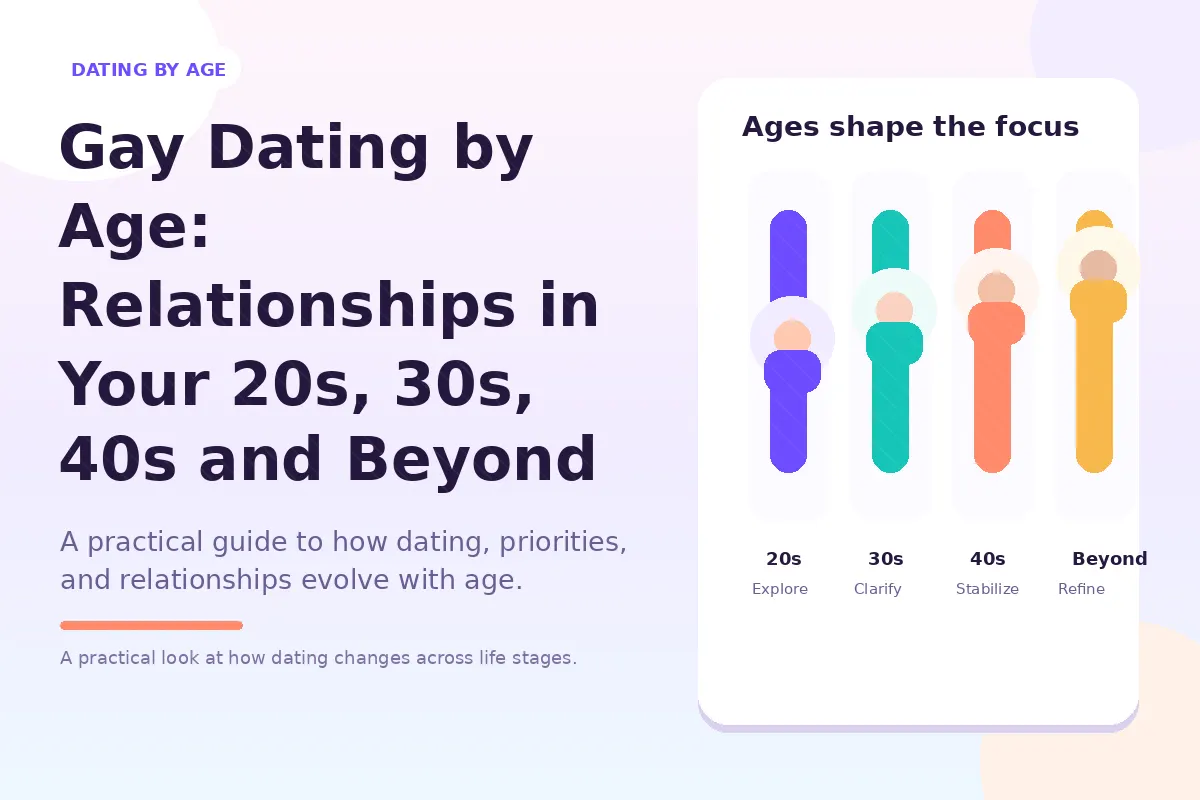
Gay dating by age is not about saying one decade is better than another. It is about recognizing that priorities, emotional patterns, confidence, and relationship needs often change over time. The way you date in your 20s may not be the way you want to date in your 30s. What felt exciting at 24 may feel draining at 42. That shift is not failure. It is growth.
Many people wonder whether there is a “best” age to find love, build a long-term relationship, or finally feel secure in dating. In reality, every stage brings both advantages and pressure points. Some decades offer openness and experimentation. Others bring stronger boundaries, better self-knowledge, and more realistic standards. The goal is not to compare ages like rankings. The goal is to understand what each stage tends to make easier or harder.
On Quicky, people often notice that age shapes not only what they want, but also how they read attention, how quickly they trust, and how much confusion they are willing to tolerate. This guide looks at gay dating by age in a practical way, focusing on relationships in your 20s, 30s, 40s, and beyond. It is not about forcing you into a category. It is about helping you date with more self-awareness in the stage you are actually in.
In this article
Why Age Changes the Dating Experience
Age does not automatically make anyone wiser, but life experience often changes how dating feels. Over time, people usually learn more about attraction, disappointment, emotional patterns, and the difference between excitement and compatibility. That means the same dating situation can feel completely different depending on when it happens in your life.
In your earlier years, dating may revolve around exploration, identity, and possibility. Later on, it may revolve more around fit, values, emotional steadiness, and how a relationship works in real life. Neither stage is wrong. They simply emphasize different questions.
This is why comparing yourself to others can be misleading. Someone in his 20s may feel behind because he wants commitment early. Someone in his 40s may feel behind because he is starting over. In both cases, the more useful question is not whether your timeline matches other people. It is whether your current dating choices match your current self.
Dating in Your 20s: Exploration, Identity, and Fast Lessons
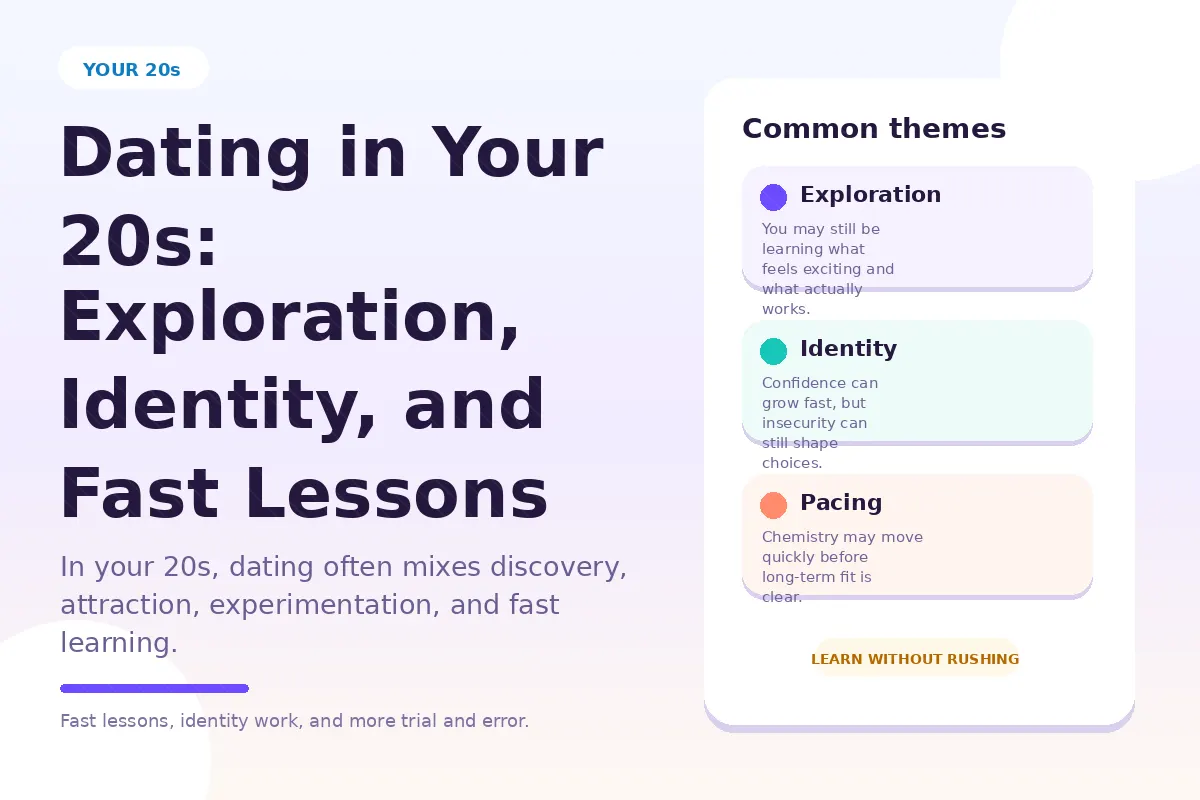
In your 20s, dating often carries a strong sense of possibility. You may still be learning what kind of attraction feels meaningful, what kind of relationship suits you, and how much of your dating life is shaped by genuine desire versus insecurity or social pressure. That can make the decade exciting, but it can also make it chaotic.
A lot of people in their 20s are also still building identity. That matters in gay dating because self-esteem, body image, outness, community belonging, and the need for validation can all influence romantic decisions. You may know what attracts you, but not yet know what actually sustains you. That gap often creates fast lessons.
This stage is not only about mistakes. It is also where many people discover their voice, learn to set early boundaries, and start noticing the difference between chemistry and compatibility. If you are in your 20s, it helps to treat dating as a place for learning without assuming every connection must become permanent.
Dating in Your 30s: Clarity, Standards, and Intentional Choices
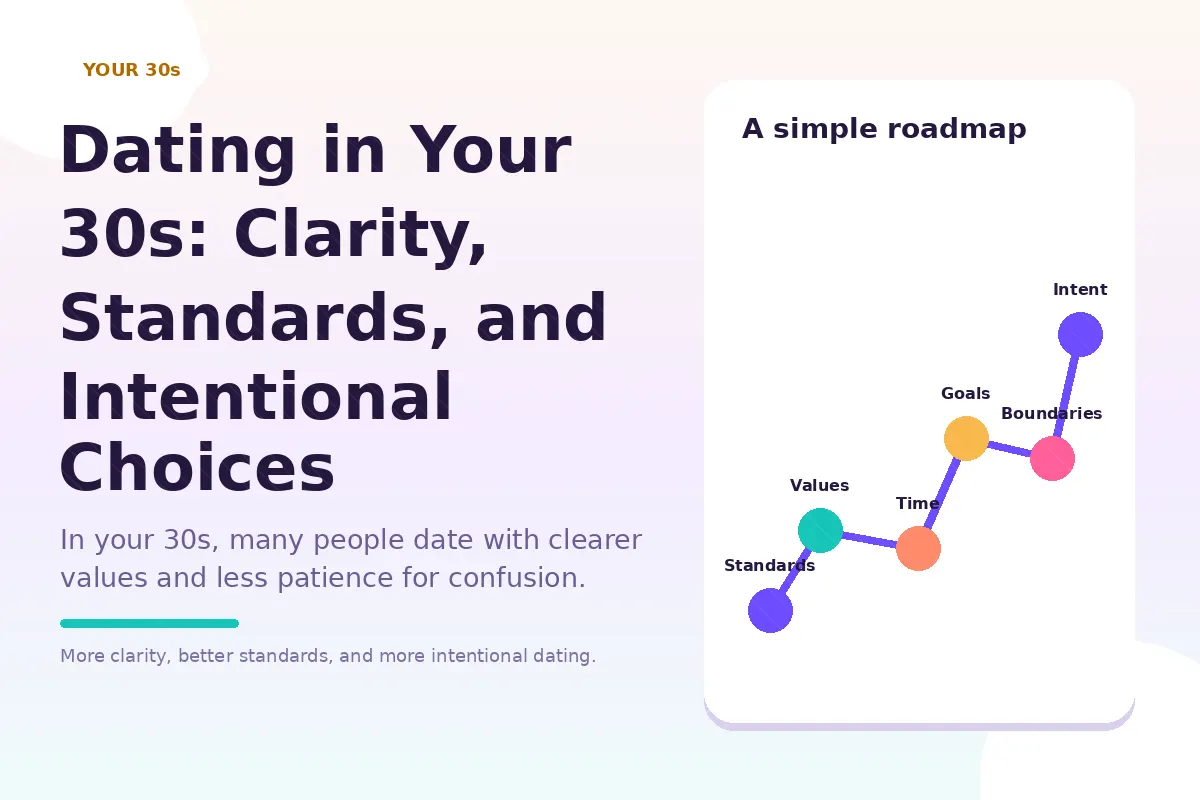
For many people, the 30s bring more clarity. You may have less appetite for mixed signals, low-effort communication, or relationships that are intense but unstable. This does not mean dating becomes easy. It means you are often more aware of what costs too much emotionally and what feels worth building.
In this stage, standards usually become more intentional. You may care more about alignment in daily life, emotional availability, lifestyle fit, and long-term goals. Attraction still matters, but it is often filtered through sharper questions. Can this person communicate? Does he know what he wants? Is he consistent? Can we actually build something functional?
The strength of dating in your 30s is that you can make clearer choices. The challenge is that clarity can sometimes harden into overprotection. Strong standards are healthy, but dating still requires openness. The best version of this decade balances wisdom with flexibility.
- You may be less impressed by charm without consistency.
- Time and energy often feel more valuable than they did before.
- You may date more intentionally, even when keeping things casual.
- Boundaries often get stronger, but vulnerability still matters.
Dating in Your 40s: Stability, Boundaries, and Real Compatibility
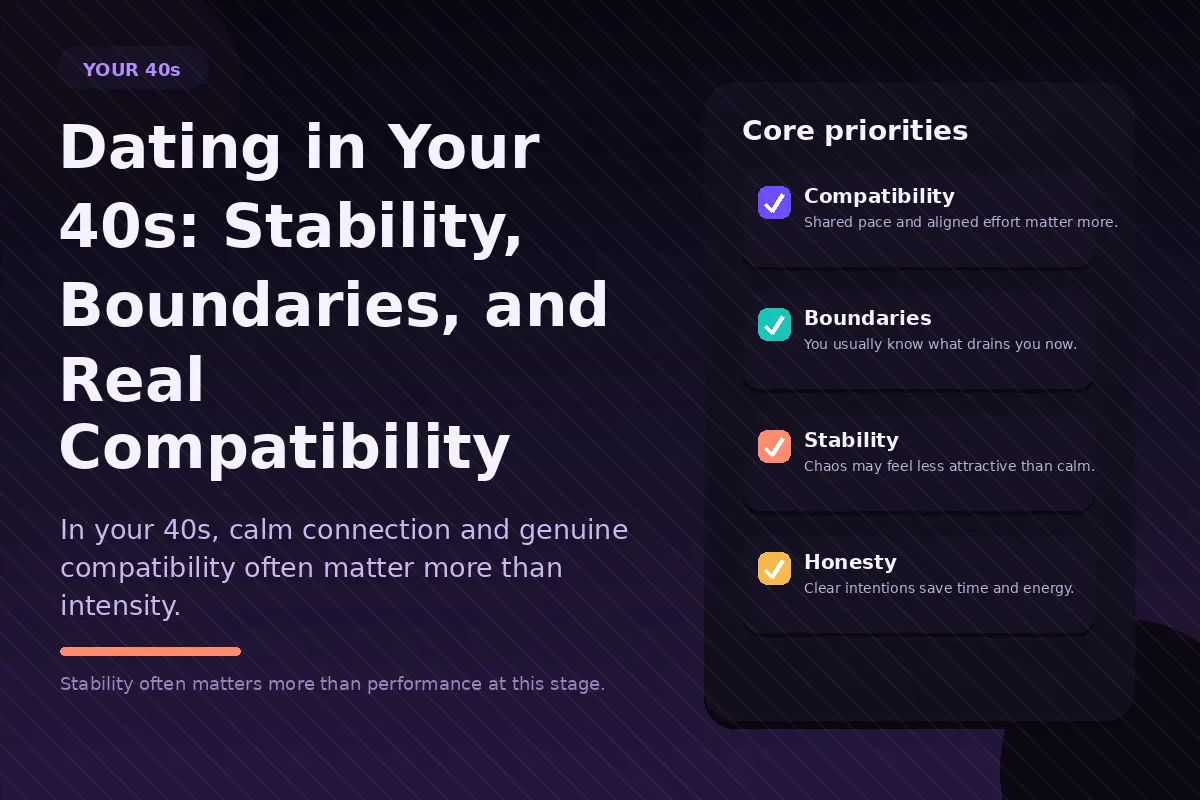
Dating in your 40s often comes with a different kind of strength. Many people are less interested in performance and more interested in peace. The ability to recognize what feels emotionally expensive can become a major advantage. You may know more quickly when someone is not aligned with your values, availability, or lifestyle.
This stage often brings stronger boundaries. That can be a gift because it protects your time and energy. You may be less willing to chase uncertainty, tolerate poor communication, or confuse unpredictability with passion. At the same time, strong boundaries should still leave room for emotional generosity. Protection is useful, but walls can block good people too.
Real compatibility tends to matter more here. That means not only attraction, but the ability to share rhythm, expectations, and day-to-day behavior. Stability becomes attractive not because life is supposed to be boring, but because steady connection often feels more valuable than drama.
Dating Beyond 40: Confidence, Reinvention, and Mature Connection
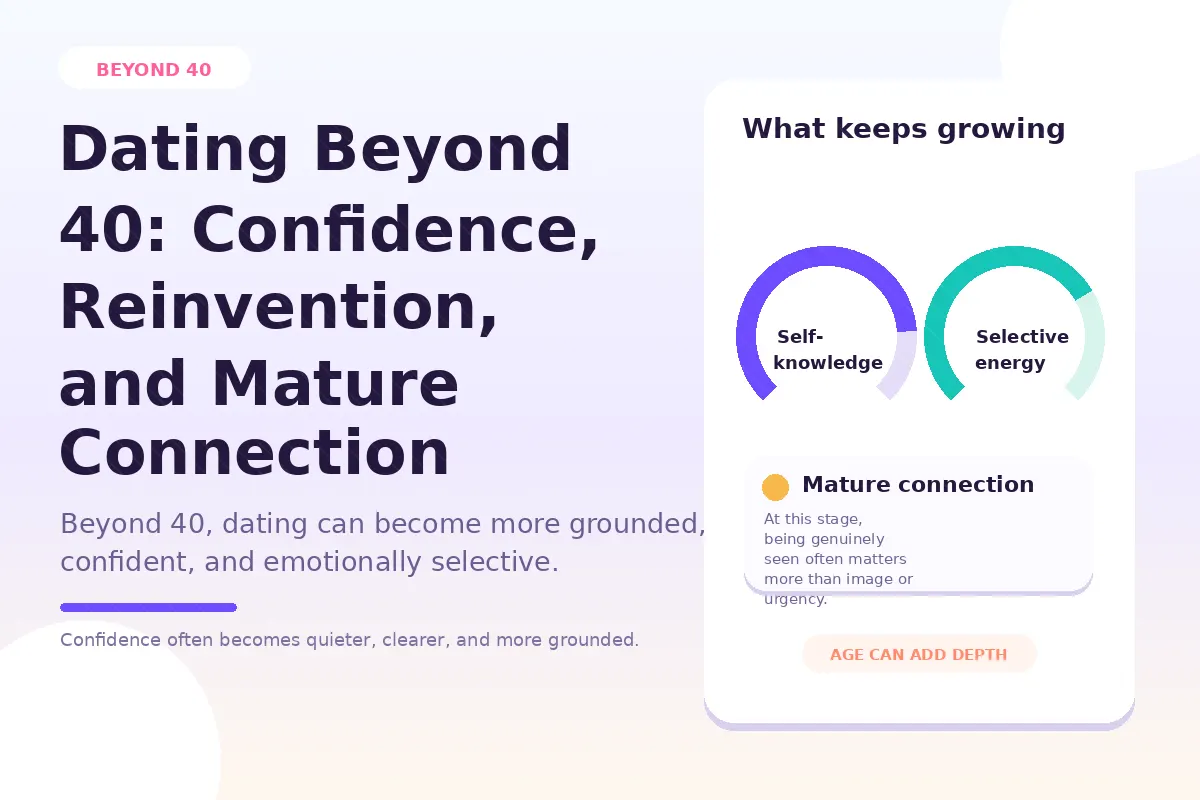
Dating beyond 40 can be one of the most grounded and rewarding stages of all. By this point, many people have developed stronger self-knowledge. They often care less about proving themselves and more about choosing well. That shift can make dating calmer, more direct, and more emotionally intelligent.
This stage can also involve reinvention. Some people are dating again after divorce, long-term partnership, relocation, grief, or major life change. Others are exploring a fuller version of themselves later than expected. That means dating beyond 40 is not only about maturity. It can also be about renewal and fresh courage.
Mature connection at this stage often depends on presence, honesty, and selective energy. You may not want many dates. You may want better dates. That selectiveness is not pessimism. It can be one of the clearest signs that you value your emotional life.
Common Challenges at Every Age
Even though age changes the emphasis, some dating struggles stay remarkably consistent. Rejection can sting in any decade. Insecurity can survive past youth. Mixed signals, unavailable people, timing problems, and fear of vulnerability do not disappear just because you get older. The form changes, but the emotional themes often remain recognizable.
Apps can intensify these patterns because they create constant comparison and endless alternatives. A person in his 20s may struggle with validation. A person in his 40s may struggle with cynicism. Both are different reactions to the same underlying problem: trying to use dating as proof of personal worth instead of as a way to build genuine connection.
The most useful response at any age is similar: keep your standards realistic, your self-respect intact, and your interpretation of dating setbacks in proportion. Age can add insight, but it does not remove the need for emotional care.
What to Look For Instead of the “Right Age”
A better question than “What age is best for dating?” is “What qualities help relationships work?” Across all decades, a few things matter again and again: emotional availability, consistency, self-awareness, the ability to communicate, and the willingness to handle conflict without turning it into chaos.
If you focus too much on age, you may miss the actual indicators of compatibility. Someone younger can be more emotionally mature than someone older. Someone older can still be unclear, avoidant, or unready. Age can influence the style of dating, but it does not guarantee character.
That is why good dating decisions usually come from reading the whole person. Pay attention to how someone behaves, how he responds to pressure, how honest he is about what he wants, and whether the relationship feels easier or harder over time.
| Stage | Common strength | Common risk |
|---|---|---|
| 20s | Openness and discovery | Confusing excitement with fit |
| 30s | Clarity and stronger standards | Overprotecting yourself emotionally |
| 40s | Better boundaries and perspective | Closing off too quickly |
| Beyond 40 | Grounded confidence and selectiveness | Assuming it is “too late” for something real |
Age Shapes Timing, Not Your Capacity for Love
Gay dating by age can help you understand why relationships feel different across life stages, but it should not become a cage. Age changes timing, emphasis, and perspective. It does not define your worth, your desirability, or your ability to build something meaningful.
Whether you are dating in your 20s, 30s, 40s, or beyond, the real task stays surprisingly similar: know yourself better, choose more carefully, and stay open enough for genuine connection to reach you. Some decades are noisier. Some are calmer. Some bring reinvention. All of them can hold real love.
The strongest dating position at any age is not perfection. It is self-awareness. When you date from that place, your age becomes context, not limitation.