
In an age where finding someone to talk to is as easy as swiping on your phone, looking for love may seem simple. But in reality, relationships are not always about romance. We often face pressure, expectations, and judgment from society, making gay mental health an important issue that is often overlooked.
We often focus on how to make others love us or how to make our profiles look attractive, forgetting that “the person whose heart we should take care of the most is ourselves.”
Gay men and stress are often closely connected, whether it comes from coming out, pressure about body image and appearance, or dealing with a toxic relationship. This article explores how to heal, take care of yourself, and become mentally stronger while opening yourself to new love with a healthy mindset.
In this article
Why Is Gay Mental Health Important?
Being LGBTQ+, especially a gay man in today’s society, may seem more accepted, but many invisible pressures still remain. Gay mental health can therefore be more vulnerable and needs special attention. We face patriarchal attitudes as well as expectations within the gay community that often value “perfection,” whether it is body shape, six-pack abs, financial status, or career. These pressures can feel like carrying a heavy weight in your heart all the time.
“Loving yourself is not selfish. It is about building a strong foundation so you do not have to seek love from people who do not value you.”
In Depth: What Causes Stress Among Gay Men?
When it comes to gay men and stress, the main causes that can affect our mental well-being can be divided into several areas:
- Body Image Pressure
- It is undeniable that social standards often pressure gay men to have fit bodies, defined muscles, or six-pack abs to appear more attractive. This can cause ongoing stress from strict dieting and intense exercise, making many forget that true beauty comes in many forms and eventually lose confidence in themselves.
- Rejection and Discrimination
- No matter how open society becomes, we may still face hidden prejudice at work, within the family, or on dating apps. Being rejected, blocked, or judged simply because of our sexual orientation and identity can cause emotional wounds and become a major source of stress.
- Dating Burnout
- The online world makes it easier to meet people, but it can also make relationships more superficial. Dealing with someone talking to multiple people, being ghosted, or having someone suddenly disappear can leave many people feeling exhausted, discouraged, and losing faith in love. This can affect mental health and make them afraid to open their hearts again.

- Family Expectations
- Home should be a safe space, but many gay men carry heavy family expectations. Some parents may still expect their children to have a traditional heterosexual family. Having to explain their identity or hide their relationships to maintain harmony at home can become chronic pressure that gradually affects mental well-being.
- Culture of Perfection
- Within our community, there is often silent competition over careers, success, and lifestyles that are expected to look luxurious all the time. The pressure to be a “socially accepted gay man” can make us afraid to fail. Chasing these unrealistic standards can create enormous stress and seriously damage our self-esteem.
- Anxiety About Getting Older
- The gay community often places particular value on youth. As people enter their 30s or 40s, many begin to face a crisis of confidence, worrying about being overlooked on dating apps or being single. These anxieties can affect mental health and lead to constant comparison with others.
- Childhood Trauma
- Many gay men grow up experiencing teasing, bullying, or rejection from people close to them. Unhealed childhood trauma can affect attachment patterns in adulthood, causing some to fear commitment or become intensely jealous and possessive, leading to toxic relationships that ultimately hurt themselves.
🏳️🌈 Read More – How Can Gay Men Come Out to Their Families and Be Understood? A Preparation Guide
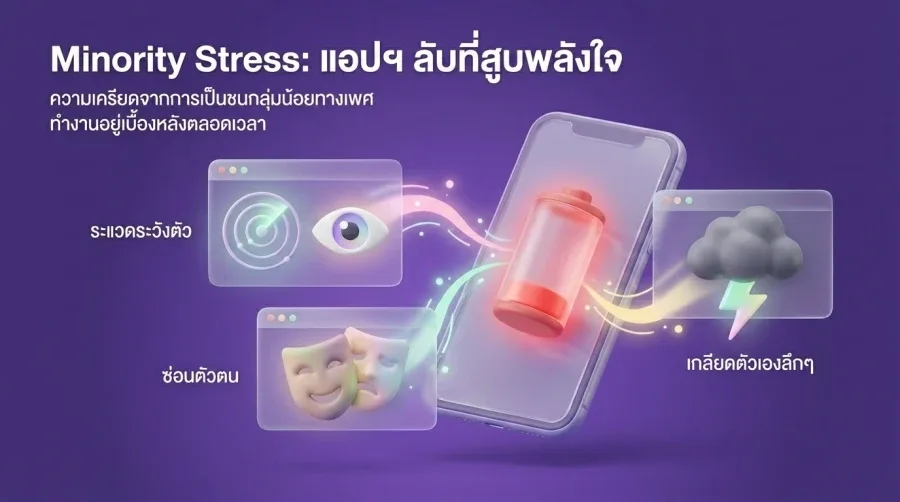
Understanding Minority Stress Theory: The Silent Factor Affecting Gay Mental Health
In psychology, one concept clearly explains “gay men and stress”: Minority Stress, or stress experienced by sexual minorities. It refers to chronic stress that does not come from work or ordinary personal issues, but from living in a society whose main structures are still based on heterosexual norms.
Imagine that from childhood to adulthood, many gay men constantly have to stay “on guard,” wondering whether they will be found out or mocked. In some social situations, they may have to wear a mask, or even unconsciously absorb society’s prejudice against gay people and turn it against themselves (Internalized Homophobia). These experiences are like apps constantly running in the background of the brain, draining the battery, consuming life energy, and gradually affecting mental health every day.
🏳️🌈 Read More – Internalized Homophobia: How to Cope With Hating Yourself for Being Gay?
When these pressures build up over time, they may appear as anxiety, depression, or various risky behaviors. Understanding that our stress may come from social structures can help us stop blaming ourselves and learn to embrace and care for ourselves more.
Gay Mental Health: Warning Signs That You’re Struggling Emotionally
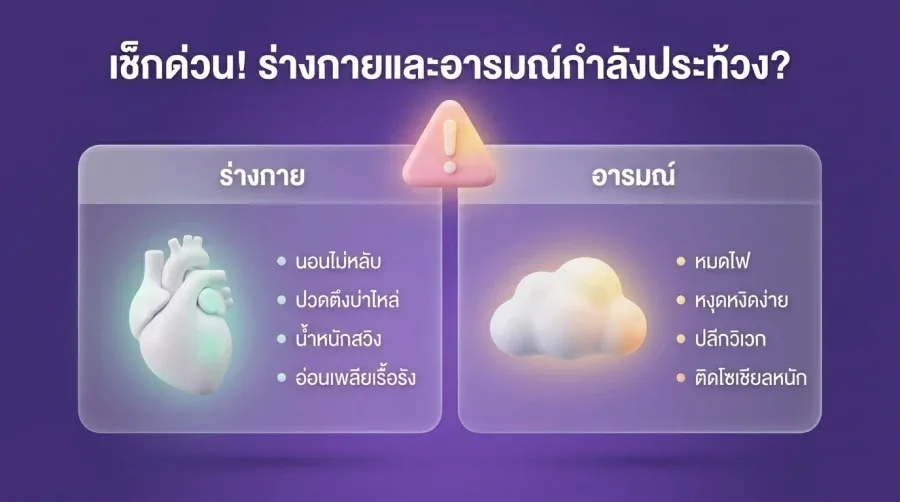
Sometimes we just keep living, working, traveling, and partying without realizing that our mind is sending warning signs. Check whether you are experiencing any of these symptoms.
| Physical Warning Signs | Emotional Warning Signs |
|---|---|
| Insomnia or excessive sleeping | Feeling burned out and no longer wanting to do things you used to enjoy |
| Headaches and neck or shoulder tension (stress-related office syndrome) | Easily irritated with rapid mood swings |
| Rapid weight loss or gain (stress eating or loss of appetite) | Isolating yourself and not wanting to see friends or socialize |
| Chronic fatigue, no matter how much you rest | Excessive use of social media or dating apps |
Learn to Love Yourself Before Loving Someone Else
“Many people try to find a partner to fill their loneliness. But the truth is, if you cannot be happy on your own, having a partner may only increase your problems and stress. Building self-worth is the key to helping you avoid becoming a victim of a toxic relationship.”
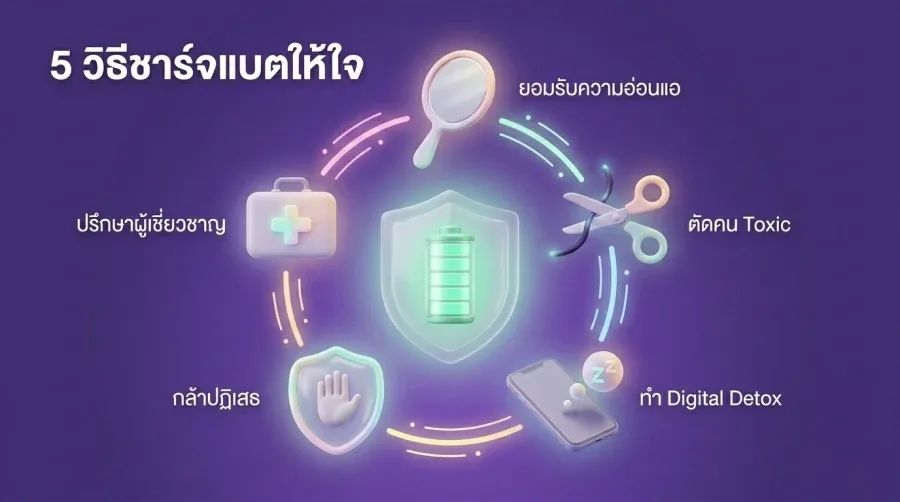
5 Ways to Strengthen Gay Mental Health and Move On to Better Things
- Accept and be honest with your feelings. You do not have to force yourself to be strong all the time. It is okay to feel vulnerable or cry sometimes. Admitting “I’m not okay today” is the first step toward healing.
- Good mental health also comes from choosing the right people around you. Spend time with positive people and distance yourself from toxic ones. Anyone who constantly criticizes your body or appearance, or makes you feel bad about yourself, does not need to remain in your life or on your social media.
- Manage your rest time and take a Digital Detox. Turn off dating apps and Instagram, and stop checking the stories of your ex or people who make you compare yourself to others. Spend some time offline, go to a café, read a book, or enjoy a good series.
- Set boundaries to protect your mental well-being. Learn to say no, whether at work or to someone you are talking to who crosses the line. If something makes you uncomfortable, say “no” directly.
- Consult a mental health professional when you feel you cannot cope. Seeing a psychiatrist or psychologist does not mean you are “crazy”; it is an important gift you can give yourself. Today, there are clinics and professionals who specifically understand sexual and gender diversity and can listen and help you find suitable solutions.
Mental Exercises: Tips for Taking Care of Gay Mental Health at Home
In addition to the 5 basic methods above, building a daily routine that protects your mental well-being is equally important. It can help prevent stress from affecting you again. Try adding these activities to your daily life:
- Organizing Your Thoughts Through Journaling
- Instead of letting anxiety keep running through your mind, pick up a notebook and write down how you feel each day. Do not worry about making it look perfect; just “move the stress from your mind onto paper.” Tracking your mood with a Mood Tracker can help you see patterns, identify what triggers your low moods, and discover what makes you happy.
- Make Your Living Space a Safe Space
- Your bedroom or home should be the safest space. When the outside world feels chaotic, keeping your home clean, adding some greenery, or creating a small relaxation corner can help reduce mental fatigue.
- Practice Self-Compassion
- When you make a mistake or get rejected by someone, instead of telling yourself “I’m not good enough,” change the way you talk to yourself (Self-talk). Treat yourself the same way you would comfort a close friend who is crying. Tell yourself, “It’s okay. I did my best today.” Being kind to yourself is one of the best ways to protect yourself from stress as a gay man.
Overcoming Limitations and Building Thriving Gay Mental Health
Ultimately, being gay does not mean that life must always be tied to pain or drama. Gay men and stress are simply one stage of life that we need to understand and overcome. Taking care of gay mental health does not mean trying to be strong all the time. It means understanding your emotions, allowing yourself to be vulnerable, and knowing how to get back up when you fall.
A lasting relationship is not about finding another puzzle piece to complete an incomplete life. It is about two complete pieces standing side by side. When you love and respect yourself enough, you develop a radar that filters out unhealthy relationships and attracts people who are ready to grow with you.
🏳️🌈 Read More – Gay Relationships: Can They Survive a Toxic Partner?
How to Manage Stress: Which Method Is Right for You?
| Stress-Relief Activities | Who is it for? | Mental Health Benefits |
|---|---|---|
| Gym / Yoga | Active people who enjoy working up a sweat | Releases endorphins and boosts body confidence |
| Write Your Feelings in a Journal | Introverts who enjoy reflection | Helps organize thoughts and release emotional tension |
| Talk with Close Friends | Social people who often feel lonely | Feel heard and realize you are not facing problems alone |
| See a Psychologist | People with chronic stress who cannot find a way out | Receive accurate and unbiased advice based on medical principles |

FAQ: Frequently Asked Questions About Gay Mental Health and Emotional Well-Being
Q: How can we tell if we are experiencing stress or just normal tiredness?
= You can tell by changes in both your body and emotions. If you feel burned out, lose interest in things you once enjoyed, have trouble sleeping, become easily irritated, or withdraw from social life for a long period until it affects your daily life, these are warning signs that your mental health needs attention, not just ordinary work-related fatigue.
Q: Can rushing into a new relationship really help with mental health problems?
= Having a supportive partner can help your emotional well-being, but it is not a lasting solution. If you cannot yet love yourself and be happy on your own, bringing someone into your life just to escape loneliness may make stress even worse. Healing yourself and building self-worth are therefore the most important first steps before starting a new relationship.
Q: What should I do if dating apps leave me discouraged and repeated rejection makes me lose confidence?
= Try taking a temporary break from dating apps or doing a social media detox. Spend time on activities you enjoy and meet up with friends to rebuild your mental well-being before opening your heart again when you are ready. Most importantly, do not tie your self-worth to matches or likes online.
Q: How can we deal with pressure from family members who do not yet accept our sexual orientation?
= The most important thing is to set boundaries to protect your feelings. If trying to explain yourself causes overwhelming stress, allow yourself to step back and keep some distance. Focus on building a happy and independent life to show that you can live a complete and fulfilling life in your own way.
Q: When should you consider seeing a psychologist or psychiatrist?
= If you have tried managing your emotions on your own but are not getting better, stress is starting to affect your work or sleep, or you are having thoughts of harming yourself, seeking professional help is the best option. Today, many clinics understand sexual and gender diversity and are ready to listen and provide appropriate mental health support without judgment.

Gay Mental Health and Relationships: How to Connect on Dating Apps
Are You Ready to Open Yourself to a Healthy Relationship with a Strong Mind?
Download Quicky today to meet the right community and people who truly click with you!