
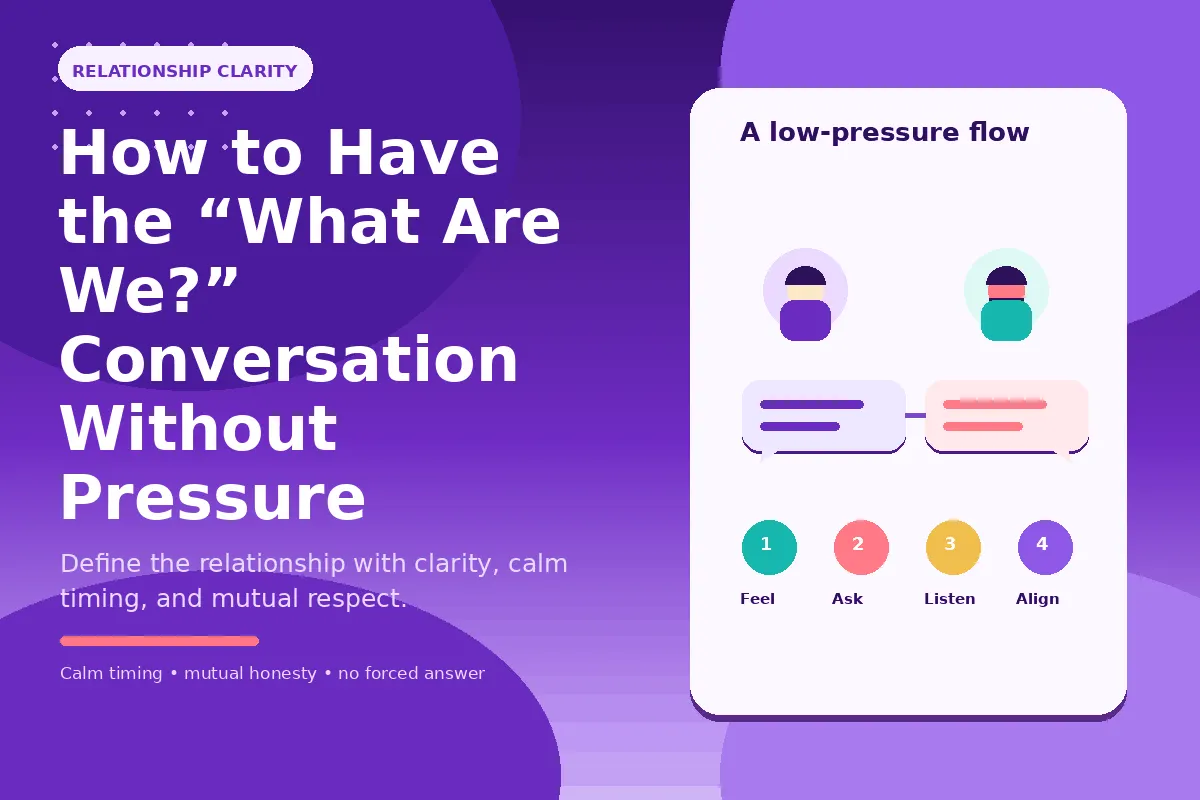
The “What are we?” conversation can feel much bigger than the words themselves. You may already be spending a lot of time together, talking every day, sleeping over, or acting like a couple without ever naming what the connection means. At some point, uncertainty starts to cost more than clarity. The challenge is bringing it up without making the other person feel trapped, tested, or forced into a label before he is ready.
If you want the broader relationship-intent context first, read Gay Dating for a Serious Relationship: How to Find Real Commitment. This article focuses on one specific moment inside that journey: how to ask where the relationship is going in a way that protects honesty on both sides.
On Quicky, conversations often start casually but can become emotionally significant before either person formally defines the connection. That is why the goal should not be to force a title. The goal is to understand whether you are building toward the same kind of relationship.
In this article
Why the “What Are We?” Conversation Feels So High-Stakes
This conversation feels risky because the answer can change the relationship. If you want something serious, asking may expose you to disappointment. If things have been comfortable and undefined, you may worry that naming the situation will ruin the ease. That fear is understandable, but avoiding the conversation does not remove the mismatch if one already exists.
What usually makes the talk stressful is not the question itself. It is the amount of meaning we attach to the response. People sometimes hear “I need more time” as rejection, or hear “I want exclusivity” as immediate pressure. A calmer conversation leaves more room for nuance.
The useful mindset is to treat the discussion as information, not judgment. You are not asking him to prove your worth. You are trying to understand whether your expectations, feelings, and direction are compatible.
Choose the Right Time for the Conversation
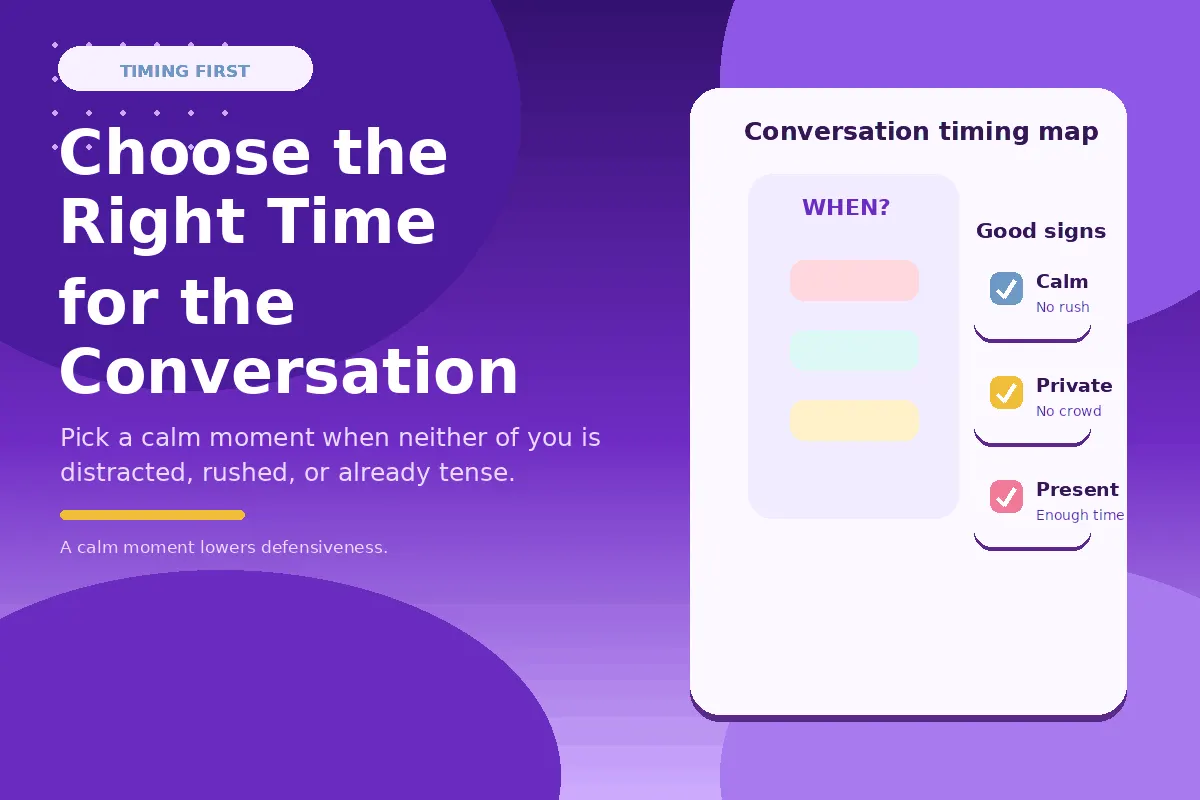
Timing can change the entire tone. Do not bring up a serious relationship question in the middle of an argument, immediately after sex, while one of you is rushing out the door, or when either person has been drinking heavily. Those moments can make the conversation feel more emotional or pressured than it needs to be.
A better time is when you are already comfortable together and have enough privacy to speak honestly. You do not need a formal appointment, but it helps if neither person feels cornered. A calm walk, a relaxed evening, or a quiet moment after spending time together can work well.
You also do not need to wait until uncertainty becomes unbearable. If the connection has clearly become important to you, that is enough reason to ask where the other person stands.
Start With Your Experience, Not an Accusation
The easiest way to make this conversation defensive is to start with blame. “Why won’t you define this?” or “You act like my boyfriend but refuse to admit it” already tells the other person that he is on trial. Even if your frustration is real, starting there can make honest conversation harder.
Instead, begin with your own experience. You might say that you have enjoyed how the relationship has developed, that you are becoming more invested, or that you want to understand whether you are both moving in the same direction. This keeps the conversation grounded in truth without assuming bad intent.
That approach also makes it easier for him to respond honestly. The purpose is not to corner him into saying the right words. It is to give both of you enough space to say what is actually true.
Say What You Feel Without Demanding a Label
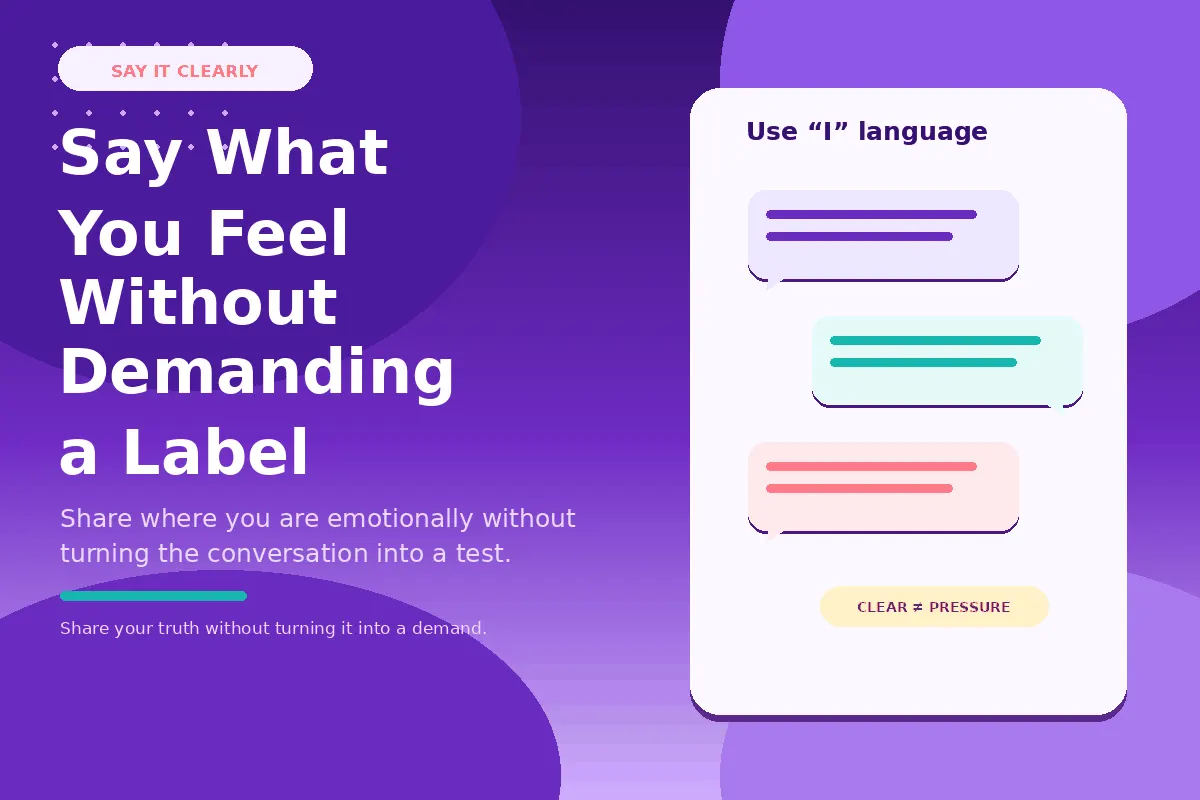
Clarity works best when it is specific. Instead of asking only, “What are we?” explain what you are really trying to understand. Are you wondering whether he is dating other people? Do you want exclusivity? Are you hoping this becomes a committed relationship? Do you simply need to know whether he sees real potential?
When you say what you want, try to avoid turning your preference into an ultimatum unless you genuinely mean it. There is a difference between “I am looking for something exclusive now” and “If you do not call me your boyfriend tonight, we are done.” The first communicates a boundary. The second creates pressure.
You can be direct and still be gentle. Healthy clarity does not require hiding your feelings, but it also does not require forcing someone to match them immediately.
Listen to What He Actually Wants
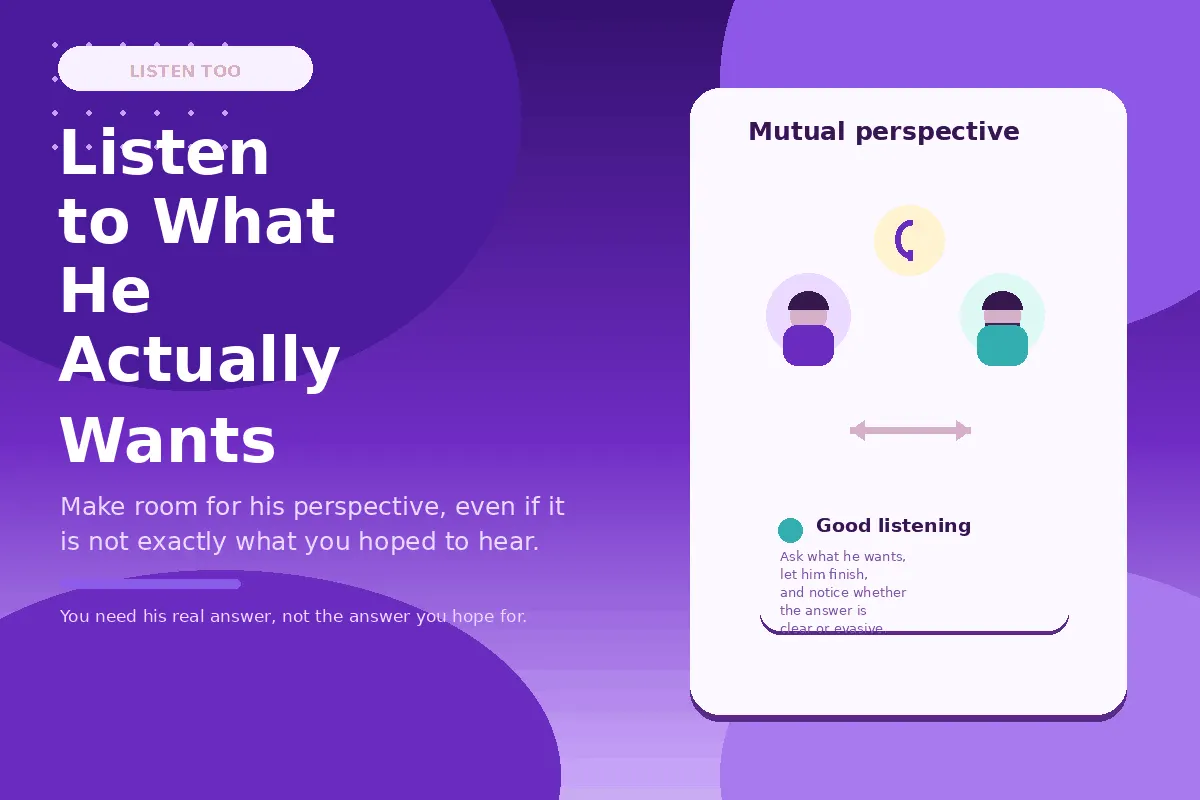
The conversation only works if there is room for his answer too. That means listening carefully instead of waiting for your turn to convince him. If he says he wants something serious, ask what that means to him. If he says he needs more time, ask what he is still trying to understand. If he says he wants to stay casual, believe the information instead of translating it into hidden potential.
Listening also means noticing whether the answer is clear or evasive. “I like you, but I am not looking for a relationship” is painful but clear. “Why do we need labels?” can be a reasonable opinion, but it may also avoid answering the underlying question. You are allowed to ask what that actually means in practice.
The goal is mutual honesty. You do not need him to say exactly what you hope for. You need enough truth to decide what is healthy for you next.
Define What Serious Means to Each of You
Two people can both say they want a serious relationship and still imagine completely different things. One person may mean exclusivity. Another may mean emotional commitment but not living together. Someone else may see marriage as the long-term goal, while his partner may never want it.
This is why labels alone are not enough. Talk about the behaviors behind the label. Are you exclusive? How often do you expect to see each other? Are you both still using dating apps? Are you comfortable meeting friends or family? How do you want to handle communication and boundaries?
You do not need to solve every future question in one night. You do need enough shared understanding that the word “relationship” is not hiding two different realities.
Decide What Happens Next Without Forcing Agreement
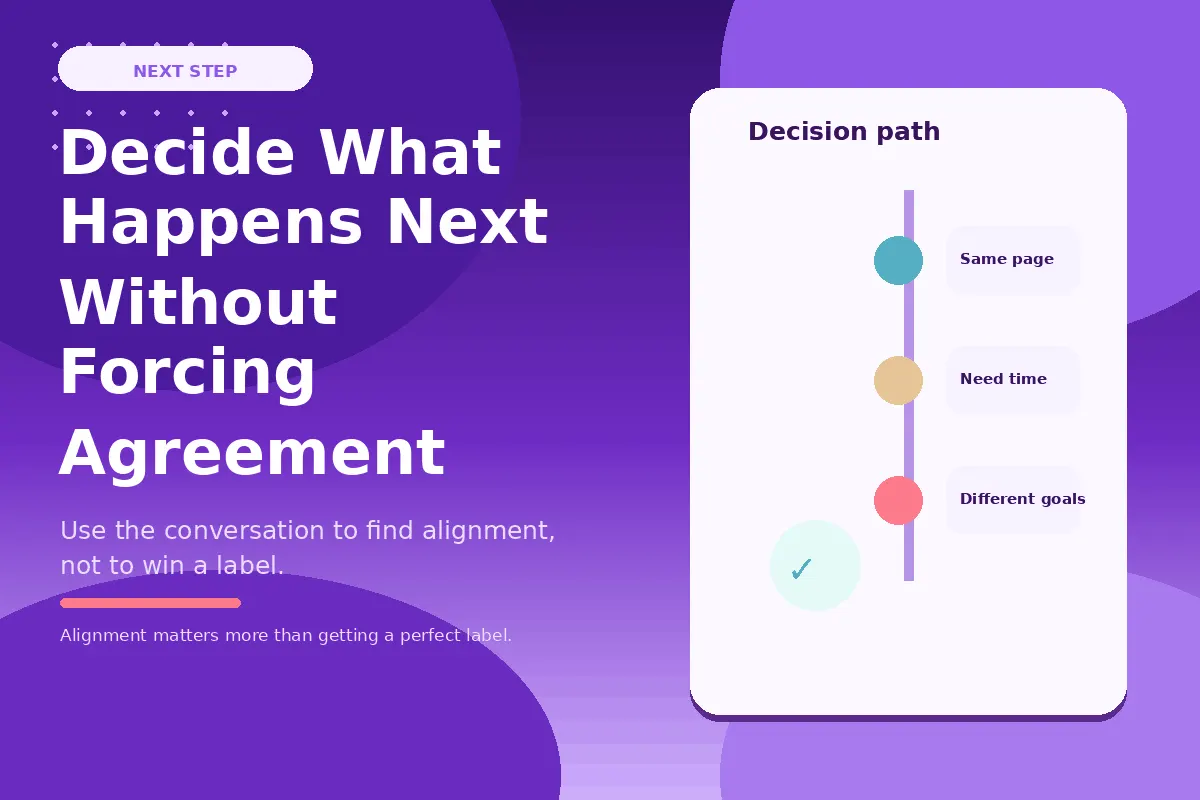
Sometimes the conversation confirms that you are on the same page. In that case, the next step may be simple: agree on exclusivity, stop dating other people, or start treating the relationship more intentionally. Other times, one person may need more time. That can work if the timeline and expectations are clear enough for both people.
Sometimes the answer reveals a real mismatch. One person wants commitment while the other wants something casual. That does not mean the conversation failed. In fact, it did exactly what it needed to do. It gave you information before more time and emotion were invested under different assumptions.
The healthiest next step is the one both people can honestly consent to. Alignment matters more than getting the relationship label you wanted.
What to Do If Your Answers Do Not Match
A mismatch does not automatically mean someone is wrong. People can care about each other and still want different things. The important question is whether the difference is temporary, negotiable, or fundamental.
If he needs a little more time and you are genuinely comfortable with that, you can agree on a reasonable period and revisit the conversation. If he clearly does not want the kind of relationship you want, waiting indefinitely usually creates more pain than clarity.
Do not shrink your needs simply to keep access to someone. At the same time, do not punish him for being honest. A respectful mismatch is still useful information. It helps both people move toward relationships that fit better.
The Conversation Should Create Clarity, Not Pressure
The “What are we?” conversation works best when it is calm, honest, and mutual. Choose a good moment. Say what you feel without turning it into a demand. Listen closely to his real answer. Then decide what the next step means for both of you.
A strong relationship does not need endless ambiguity to survive. It also does not need one perfect label to become real. What matters is whether your intentions, expectations, and behavior are moving in the same direction.
If the conversation gives you clarity, it has done its job. From there, the right decision becomes much easier to see.
References
- American Psychological Association – Happy Couples: How to Keep Your Relationship Healthy – Guidance on healthy relationship communication, including regular check-ins and open discussion between partners.
- love is respect – Boundaries & Expectations – Practical guidance on discussing expectations, limits, and relationship boundaries in a respectful way.