
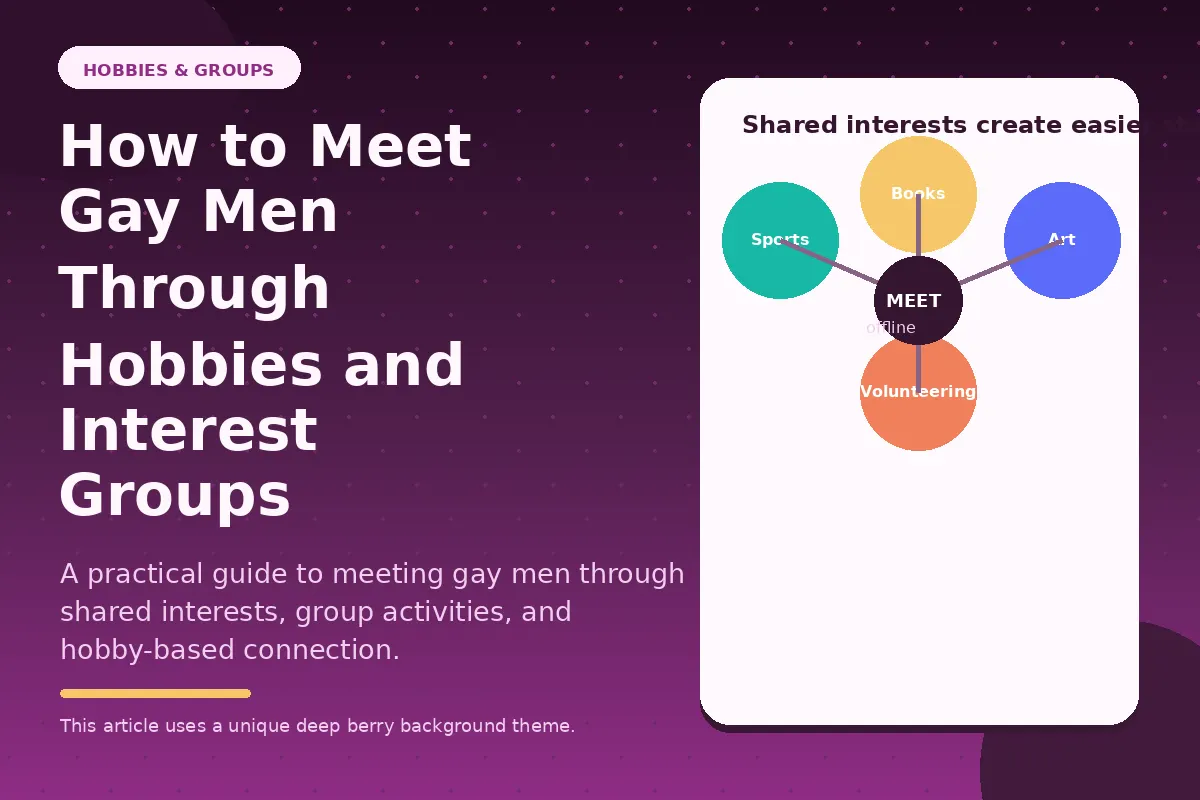
Learning how to meet gay men through hobbies and interest groups can make dating feel more natural, more grounded, and less exhausting than relying only on random matches or empty chat threads. Shared activities create a setting where conversation has context, people can get comfortable over time, and attraction can grow alongside familiarity. That does not guarantee romance, but it often creates better conditions for real connection.
If you want the broader offline context first, read How to Meet Gay Men Without Dating Apps: An Offline Dating Guide This article goes deeper into one strong offline path: meeting people through hobbies, clubs, and shared-interest communities where interaction can feel more organic and less performative.
On Quicky, a lot of people say they want a partner who shares part of their lifestyle, values, or rhythm. Hobbies and interest groups can help with that because they reveal more than attraction alone. They show how someone shows up, participates, communicates, and fits around real life. That is part of why hobby-based dating can be so useful.
In this article
Why Hobbies and Interest Groups Work So Well for Dating
Hobbies and interest groups work well because they reduce the pressure of starting from nothing. In a class, club, or recurring meetup, you already share a topic, an activity, or a goal. That makes conversation easier. It also means people are less likely to rely on generic small talk because the setting itself offers material to connect through.
These spaces also create repeat contact. Attraction often becomes clearer over several interactions, not one perfect moment. When you see someone more than once, you get a better sense of his personality, his communication style, and whether the interest feels steady or one-sided. That is valuable because it helps move dating away from fantasy and closer to reality.
Another strength is that hobbies reveal compatibility in a more natural way. You may notice whether someone is warm, reliable, playful, curious, considerate, or emotionally guarded just by how he participates. That kind of information is hard to get from a short profile or a few messages.
How to Choose the Right Hobbies and Groups
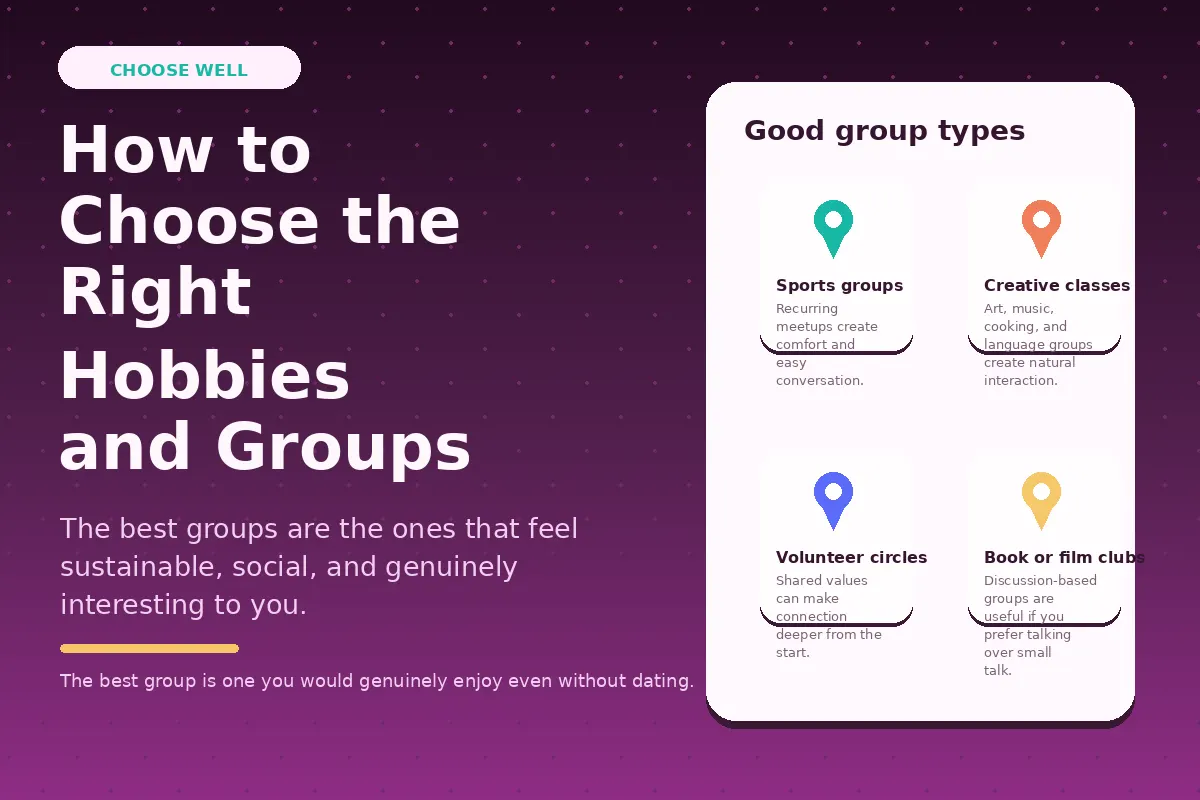
The best hobby or interest group is usually not the one that seems most strategic for dating. It is the one you would genuinely enjoy even if you never met anyone romantic there. That matters because people can usually tell when someone is present for the activity itself versus treating the group like a dating trap. Genuine engagement makes you more relaxed, more likable, and more likely to stay involved long enough for real connection to happen.
Look for groups that offer recurring interaction. Sports clubs, creative classes, book or film groups, language meetups, volunteer organizations, outdoor groups, and community-based activities can all work well. Repetition matters because it gives comfort time to build. A single one-off event may still be useful, but recurring spaces usually create stronger opportunities.
It also helps to think about what kind of environment fits your personality. If you dislike noisy competition, a calmer discussion-based group may work better than a fast-paced sports league. If you enjoy doing things with your hands, creative or skill-based classes may suit you more. The right fit makes consistency easier, and consistency is often what creates results.
- Pick a group you would honestly enjoy even without a dating outcome.
- Prioritize recurring meetups over one-time events when possible.
- Choose settings that fit your real energy and temperament.
- Let the hobby itself matter, not only the dating possibility.
How to Start Conversations in a Natural Way
One of the biggest advantages of hobbies and interest groups is that you do not need a clever opener. The setting already gives you one. You can ask how long someone has been coming, comment on the activity, mention a part you found interesting or difficult, or ask a follow-up question based on what he just said. Shared context does a lot of the work for you.
Tone matters more than trying to be impressive. A calm, warm question often works better than a dramatic attempt to stand out. The point is not to force chemistry on the spot. It is to create a comfortable conversation that can expand naturally if the other person is interested.
Because these groups often involve repeat contact, you also do not need to rush everything into one interaction. A good first conversation may simply open the door to a better second one. That slower rhythm can actually help attraction feel more grounded and less pressured.
| Conversation approach | Example | Why it helps |
|---|---|---|
| Activity-based question | “Have you done this class before?” | Easy, natural, and relevant to the moment |
| Shared reaction | “That part was harder than I expected.” | Creates instant common ground |
| Personal curiosity | “What got you interested in this?” | Moves the interaction beyond surface talk |
| Simple continuation | “That’s interesting, tell me more.” | Keeps conversation flowing without performance |
How to Turn Shared Interest Into Real Dating Momentum
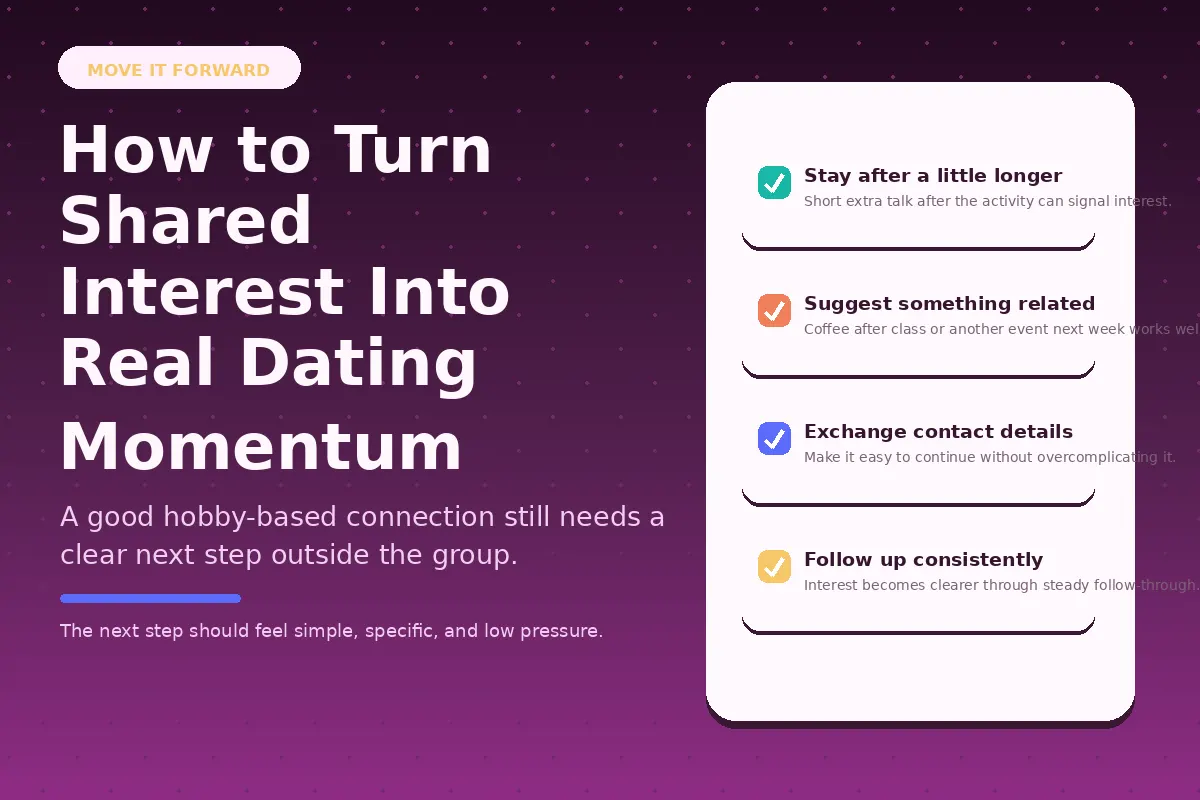
A hobby group can create the meeting, but it does not automatically create the date. If you sense mutual interest, it helps to make a gentle move toward a next step. That could mean staying to talk a little longer after the activity, suggesting coffee nearby, asking whether he plans to come again next week, or exchanging contact details so the conversation can continue outside the group.
The best next steps usually feel specific and low pressure. A shared interest makes this easier because you already have a natural bridge. You can suggest another event, a related activity, or a simple plan connected to the hobby. That often feels more organic than jumping too quickly into a highly romantic setup.
Momentum matters here. If a conversation feels good, do not assume it will automatically continue on its own. A respectful, simple invitation can turn group familiarity into one-on-one connection. That is often the moment where interest stops being just theoretical.
Common Mistakes to Avoid in Hobby-Based Dating
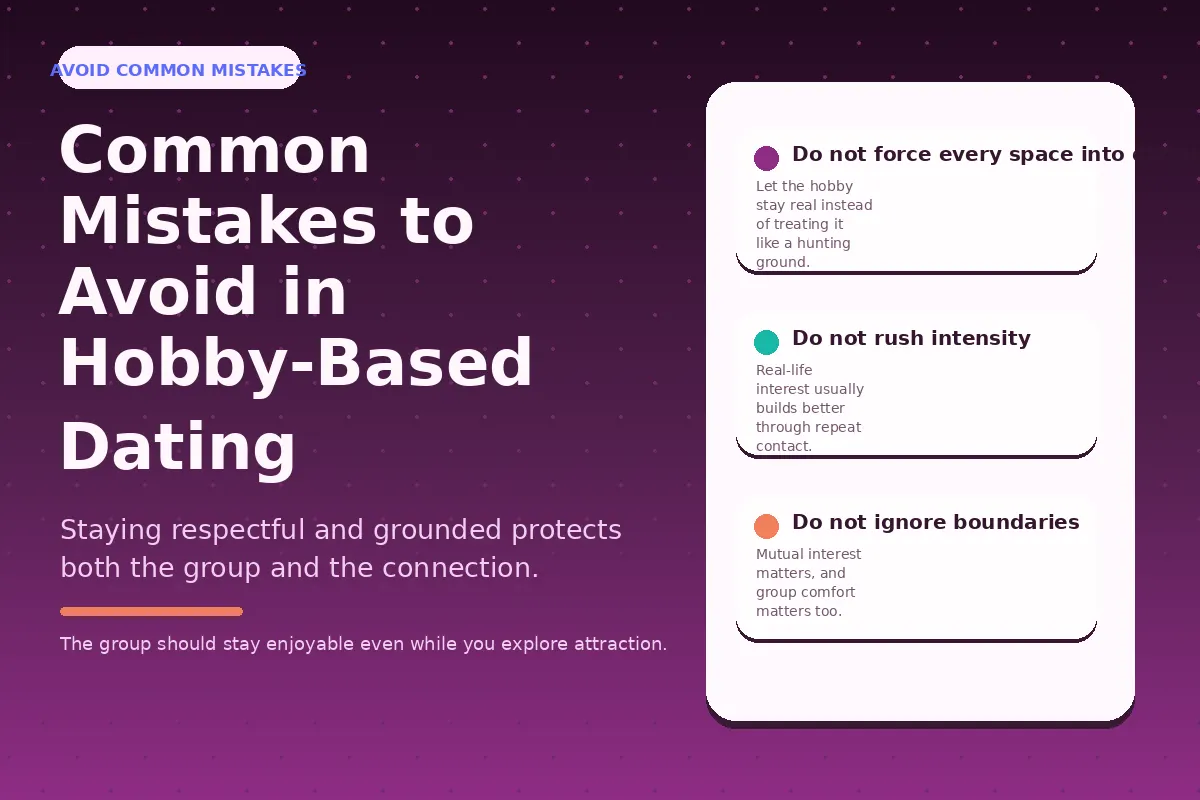
One of the most common mistakes is treating every group like a place to hunt for dates. That tends to create awkwardness for you and discomfort for others. A better approach is to let the hobby remain real. Enjoy the activity, build natural rapport, and pay attention to whether attraction actually exists.
Another mistake is moving too fast because the setting feels promising. Shared interests can create quick excitement, but that does not always mean deep compatibility. Let interest build at a healthy pace. Repeat contact is one of the advantages of hobby-based dating, so use that advantage instead of rushing past it.
It is also important to respect boundaries and group dynamics. If someone seems friendly but not romantically interested, keep the interaction comfortable. If the group is small or close-knit, protecting the atmosphere matters. Dating works better when people feel safe, respected, and not pressured.
Why Shared Interests Can Reveal Better Compatibility
Shared interests do more than give you a topic to talk about. They often reveal how two people might actually fit together. You see how someone manages time, whether he follows through, how he treats others, and whether he seems grounded or chaotic. That kind of information matters far more than surface attraction when you want something lasting.
It also becomes easier to spot whether you enjoy the same rhythm. Some people love high-energy social groups. Others prefer smaller, quieter, or more thoughtful spaces. Meeting inside a hobby helps you notice those patterns early. That can save time and make your choices more intentional.
In other words, hobbies do not just help you meet more people. They help you meet people in a setting where real compatibility has a better chance to show itself.
What to Do If Nothing Romantic Happens Right Away
Sometimes the group becomes valuable socially even if no immediate dating result appears. That is still a win. A stronger social life often improves your dating life indirectly by growing your confidence, broadening your network, and exposing you to more introductions over time. Many good relationships begin one or two steps away from the original hobby itself.
Try not to judge the experience only by whether one specific person likes you back. The point is to build a more connected life where romance has more room to happen. That approach tends to feel healthier and more sustainable than chasing instant results.
If you stay engaged, stay curious, and keep choosing spaces that fit you, hobby-based dating usually becomes easier over time.
- Let the social benefits count even when romance is slow.
- Keep showing up instead of expecting one perfect moment.
- Notice progress in comfort, not only in outcomes.
- Allow wider friendship networks to support your dating life too.
Meeting Through Shared Interests Can Lead to Stronger Connection
Learning how to meet gay men through hobbies and interest groups is not about finding a trick. It is about putting yourself in better environments for connection. Shared activities reduce pressure, create repeat contact, and reveal more about real compatibility than a fast first impression often can.
If you choose groups that genuinely fit you, start conversations naturally, and know how to turn interest into a simple next step, hobby-based dating can become one of the most practical and enjoyable ways to meet people. It also helps your social life grow at the same time.
That makes this approach useful whether you are actively looking for a relationship or simply want a healthier and more natural way to meet someone promising.
References
- CDC – Improving Social Connectedness – Official guidance on joining groups, building stronger relationships, and creating meaningful social connection in everyday life.
- National Institute on Aging – Participating in Activities You Enjoy As You Age – Official advice on staying socially engaged through hobbies, clubs, exercise, volunteering, and shared-interest activities.