
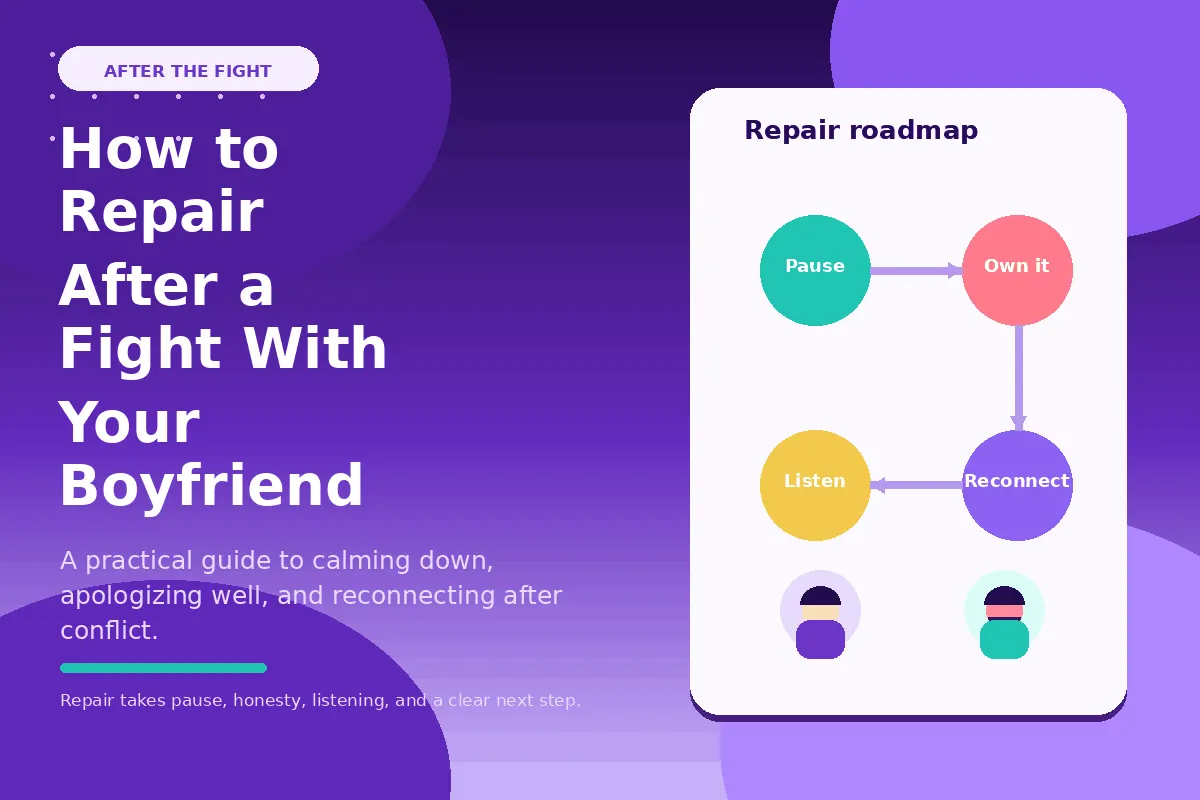
Fights happen in almost every relationship, but the real difference between stronger couples and weaker ones is often what happens after the argument. Some couples stay stuck in silence, defensiveness, or resentment. Others learn how to repair. Repair does not mean pretending the fight did not matter. It means calming the situation down, understanding what actually happened, taking responsibility where needed, and rebuilding connection in a way that makes the relationship feel safer again.
If you want the broader relationship-conflict context first, read Gay Relationship Communication: How Couples Build Trust and Handle Conflict. This article focuses on one key part of that bigger topic: what to do after the fight itself so that the relationship can move forward instead of staying bruised.
On Quicky, many people talk about conflict as if the goal is to win the argument. In reality, the more useful goal is repair. You are trying to understand whether trust can be restored, whether both people can feel heard, and whether the relationship can become more resilient instead of more fragile.
In this article
Why Repair Matters More Than “Winning”
A fight can end in many ways. One person might give up. One person might shut down. Both people might decide to move on without ever addressing the damage. None of those outcomes automatically repair the relationship. What actually matters is whether the hurt gets understood and whether the relationship feels safe enough again afterwards.
Repair matters because conflict leaves emotional residue. Even when the practical issue is small, the emotional meaning can be bigger. A fight about time, plans, texting, sex, or chores may really be about feeling ignored, controlled, dismissed, or unimportant. If the repair only covers the surface issue, the deeper wound often stays active.
That is why strong repair is not about proving who was right. It is about restoring connection honestly enough that both people can trust the relationship again.
Pause First and Lower the Heat
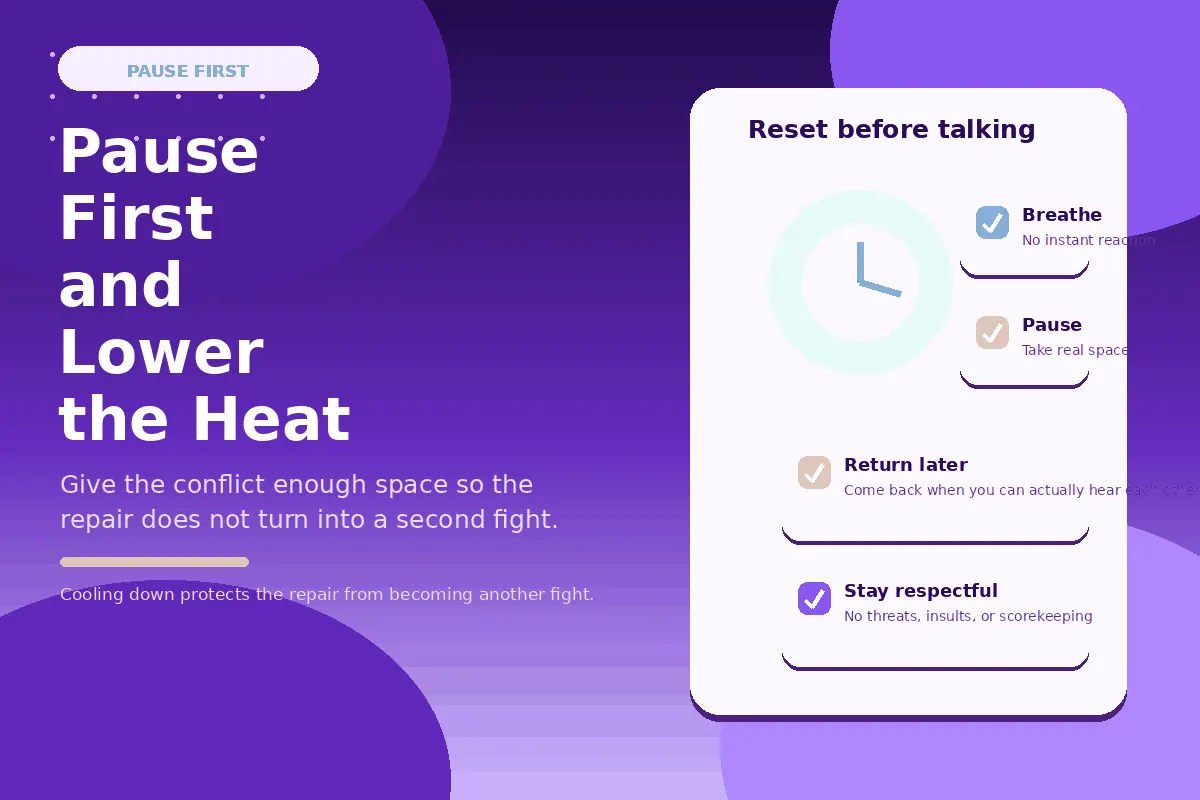
Repair usually starts badly when people try to do it too soon. If one or both of you are still flooded with anger, sarcasm, defensiveness, or panic, the conversation may simply restart the conflict. A short pause can help both people return with a clearer mind.
This does not mean disappearing, stonewalling, or punishing your boyfriend with silence. It means saying that you want to come back to the conversation when you can do it more productively. A pause works best when it is intentional and time-limited rather than vague.
During that pause, try to reduce the heat rather than rehearse your case. Breathe, walk, shower, write, or do anything that helps you become more regulated. The goal is not to erase your feelings. The goal is to make space for a better conversation.
- Take space if emotions are still too intense.
- Say when you plan to come back and talk again.
- Avoid posting, texting friends angrily, or escalating online.
- Return when you can stay respectful and present.
Take Responsibility for Your Part
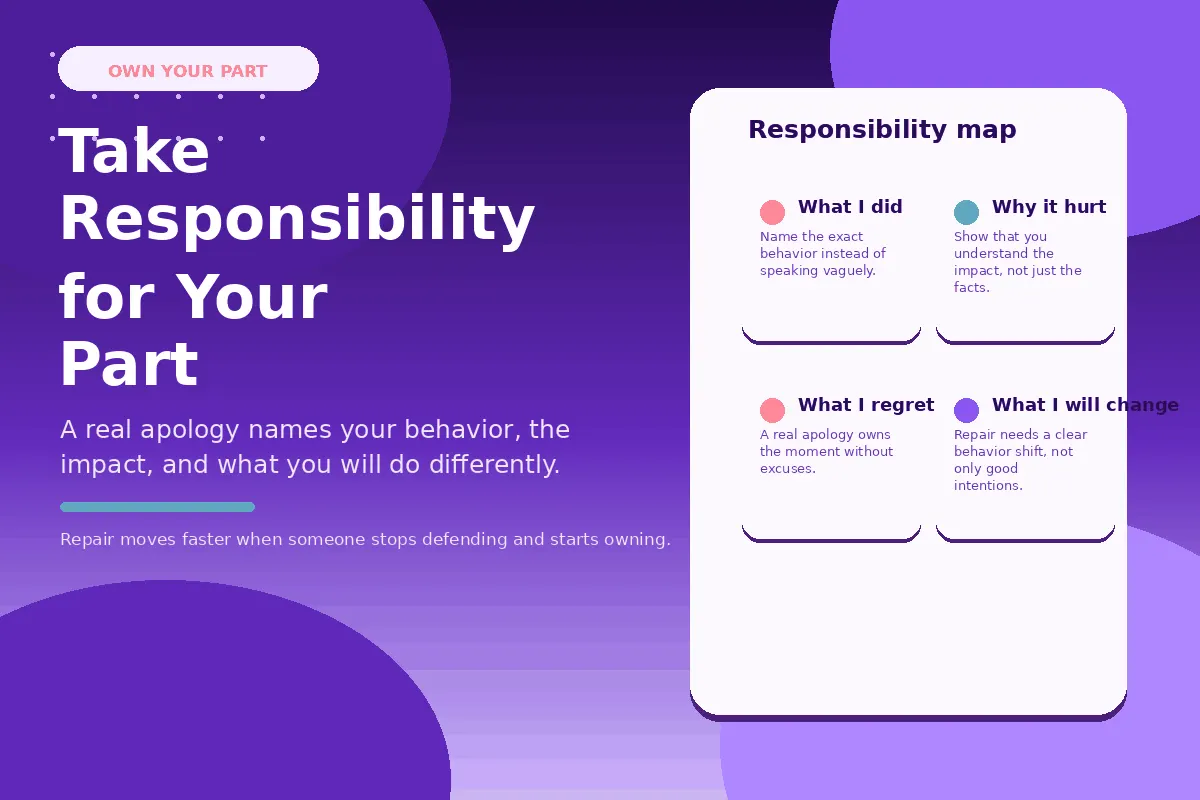
One of the fastest ways to block repair is to apologize without actually taking responsibility. “I am sorry you feel that way” does not usually repair much because it avoids your role. A more useful apology is specific. It names what you did, shows that you understand how it landed, and expresses genuine regret.
Responsibility is not the same as taking all the blame. You do not need to carry everything just to restore peace. You do need to be honest about your part. Maybe you raised your voice, got dismissive, said something unfair, shut down, or kept pushing instead of listening. Naming that clearly creates safety.
Repair also becomes more believable when you include one concrete change. If the same argument pattern keeps repeating, an apology alone may feel hollow. Specific change is what helps your boyfriend trust that the repair means something.
| Weak apology | Stronger repair language | Why it works better |
|---|---|---|
| “Sorry if you got upset.” | “I got defensive and cut you off. I can see why that hurt.” | Names the behavior and the impact |
| “Let’s just drop it.” | “I want to understand this better and not repeat the same pattern.” | Shows willingness to repair, not avoid |
| “I said sorry already.” | “I regret how I handled that, and next time I want to slow down.” | Adds accountability and change |
Listen for the Hurt Under the Argument
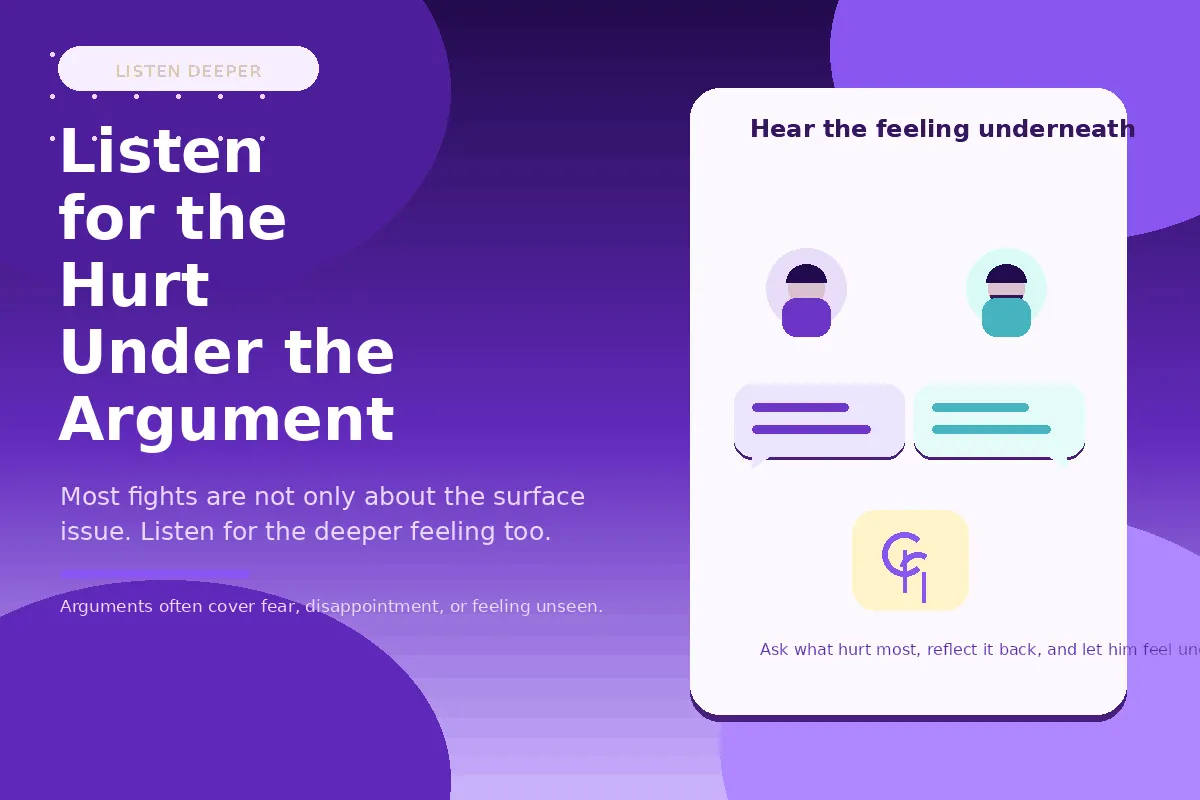
Most fights are not just about the surface issue. Underneath the argument, your boyfriend may be feeling unimportant, criticized, insecure, embarrassed, or emotionally alone. If you only answer the facts of the fight, you may miss the part he most wants you to understand.
Listening well means getting curious about the hurt underneath. Ask what landed the hardest. Reflect back what you hear. If he says he felt dismissed, do not jump straight to defending your intention. First show that you understand the experience he had.
This part matters because many people calm down once they feel understood, even before every detail is resolved. You do not have to agree with every interpretation to validate the emotional reality he is describing.
Avoid Repair Habits That Make Things Worse
Some habits feel tempting after a fight because they reduce immediate discomfort, but they often make long-term repair harder. Minimizing the issue, demanding instant forgiveness, going cold, making jokes too early, or turning the repair into another debate can all backfire.
Another common trap is scorekeeping. Once the repair conversation turns into a long list of historical complaints, the original issue gets buried and both people usually feel more attacked. Repair works better when you stay close to the actual conflict and the emotions it created.
It is also important not to force closeness before the emotional ground is ready. Physical affection, humor, or moving on can be healing, but only after the hurt has been acknowledged enough. Otherwise it may feel like pressure to skip the real repair.
Reconnect With a Clear Repair Plan
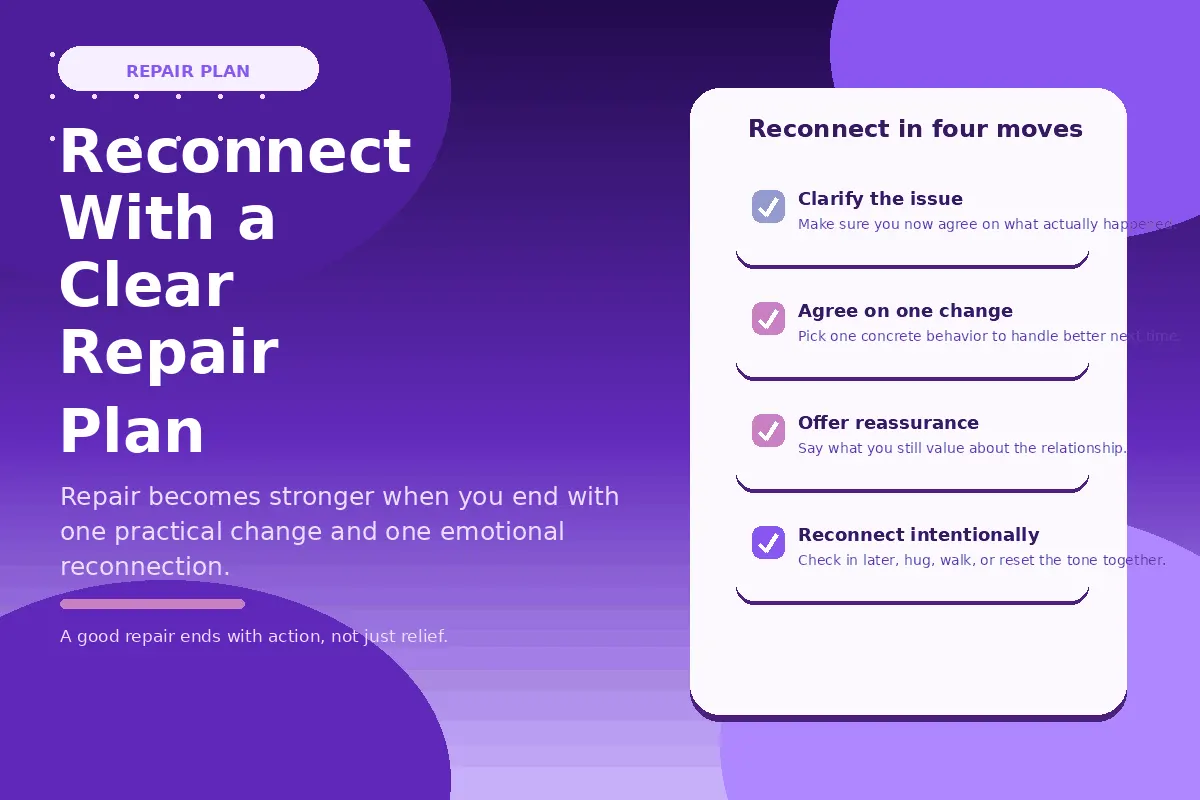
Good repair ends with more than relief. It ends with clarity. That may mean agreeing on one practical change for next time, checking that both of you understand the issue the same way, and offering reassurance about the relationship itself.
Sometimes the practical change is small but powerful. You may agree to take a pause before shouting, to stop texting through sensitive disagreements, or to ask for clarification before assuming the worst. Small shifts can interrupt bigger patterns.
Emotional reconnection matters too. That might look like saying what you appreciate about each other, hugging after the conversation, spending calm time together later, or doing a short follow-up check-in the next day. Repair is not only about stopping pain. It is also about rebuilding warmth.
- End with one specific change you both understand.
- Offer reassurance if the relationship matters to you.
- Check in later if the fight was especially painful.
- Use the repair to strengthen the pattern, not just end the tension.
What If the Same Fight Keeps Happening?
If the same conflict keeps repeating, the relationship may need something deeper than a single repair talk. Repeating fights often point to an unmet need, an unspoken expectation, a boundary problem, or a communication habit that has become entrenched.
In that case, ask not only how to repair the latest argument but what pattern keeps creating it. Are you both hearing each other? Are the expectations realistic? Is one person avoiding hard conversations until things explode? Is the relationship asking for a boundary, a system, or outside support?
Some repeated conflicts can improve with better communication. Others reveal real incompatibilities. The point of repair is not to make every problem disappear. The point is to respond honestly enough that you can see what the relationship truly needs.
Repair Is a Skill That Protects the Relationship
Learning how to repair after a fight with your boyfriend does not mean you will never argue again. It means that conflict does not automatically turn into long-term damage. The skill is in pausing before more harm is done, taking responsibility where it belongs, listening for the real hurt, and reconnecting with a clear plan.
That process will not always feel easy, especially when the fight touched something deep. Still, relationships become much stronger when both people know that conflict can lead to more honesty and closeness instead of only more fear.
The real question after a fight is not only who was right. It is whether the relationship can come back together in a healthier way. Repair is how that happens.
References
- American Psychological Association – Happy Couples: How to Keep Your Relationship Healthy – Guidance on open communication, mutual respect, and relationship habits that support healthier repair and connection.
- love is respect – Conflict Resolution – Practical guidance on resolving arguments respectfully, getting to the real issue, and handling conflict without escalating harm.