
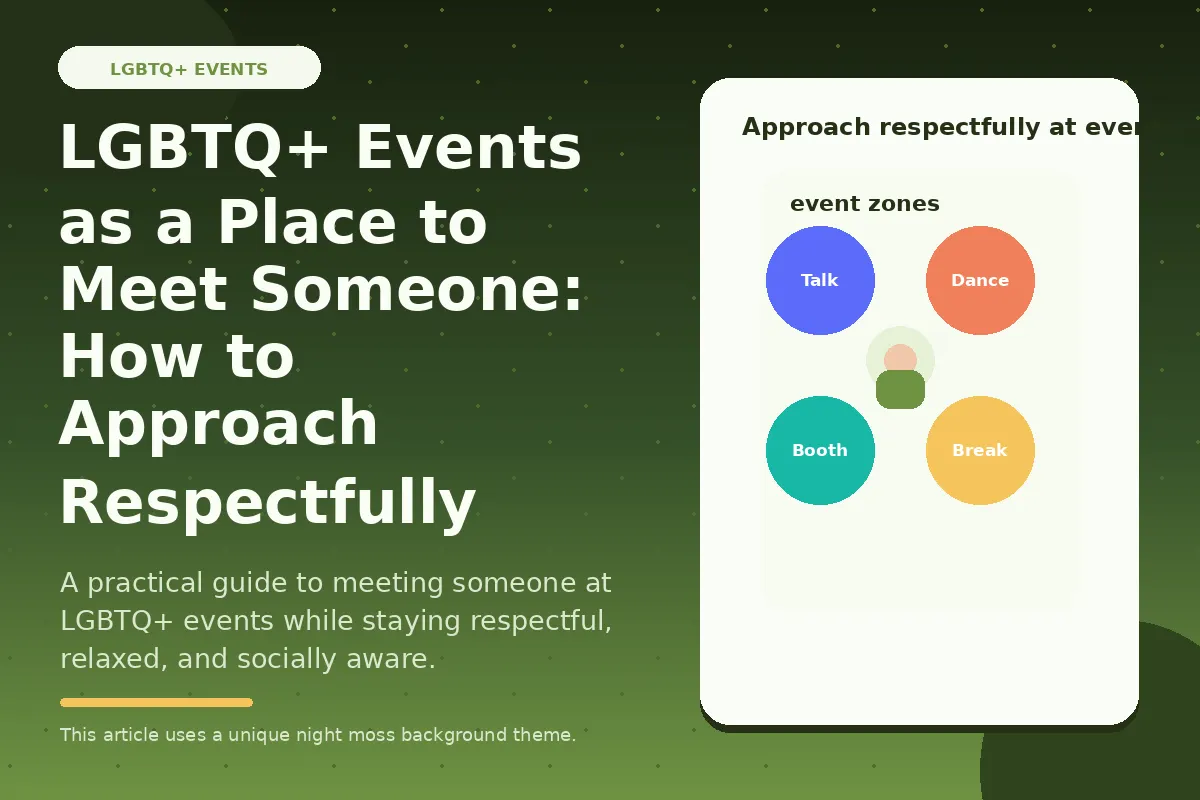
LGBTQ+ events can absolutely be a place to meet someone, but only when you approach them with the right mindset. Community events are not just dating venues. They are shared spaces with different purposes, moods, and expectations. Some are social and playful. Others are reflective, educational, political, or support-oriented. That is why respectful approach matters so much. You are not only reading one person. You are also reading the room.
If you want the broader offline dating context first, read How to Meet Gay Men Without Dating Apps: An Offline Dating Guide. This article focuses on one specific offline path: using LGBTQ+ events as a place to meet someone in a way that feels socially aware, warm, and community-minded rather than pushy or self-centered.
On Quicky, many people say they want better real-world social skills, not just more matches. LGBTQ+ events can help with that because they create organic opportunities to talk. At the same time, they can become uncomfortable when someone treats every event like a personal dating marketplace. The healthiest approach is to stay open to connection while respecting the purpose and energy of the event itself.
In this article
Why LGBTQ+ Events Can Be a Good Place to Meet Someone
LGBTQ+ events often bring together people who already share some level of community awareness, openness, or cultural familiarity. That can make conversation easier. You are not starting from total social distance. Even if you know nothing specific about the other person, you already share the fact that you showed up in the same space for some meaningful reason.
Another advantage is that these events usually offer context. A workshop, party, discussion, volunteer project, market, Pride event, film screening, or community mixer all give you something to talk about. That helps reduce the pressure of inventing a perfect opener and makes the interaction feel more natural.
At the same time, not every event is equally suited to flirting or dating. Some spaces are more social, while others are more serious or emotionally sensitive. Respectful success depends less on boldness and more on judgment. The more you understand the setting, the easier it becomes to connect without crossing lines.
How to Read the Space Before You Approach
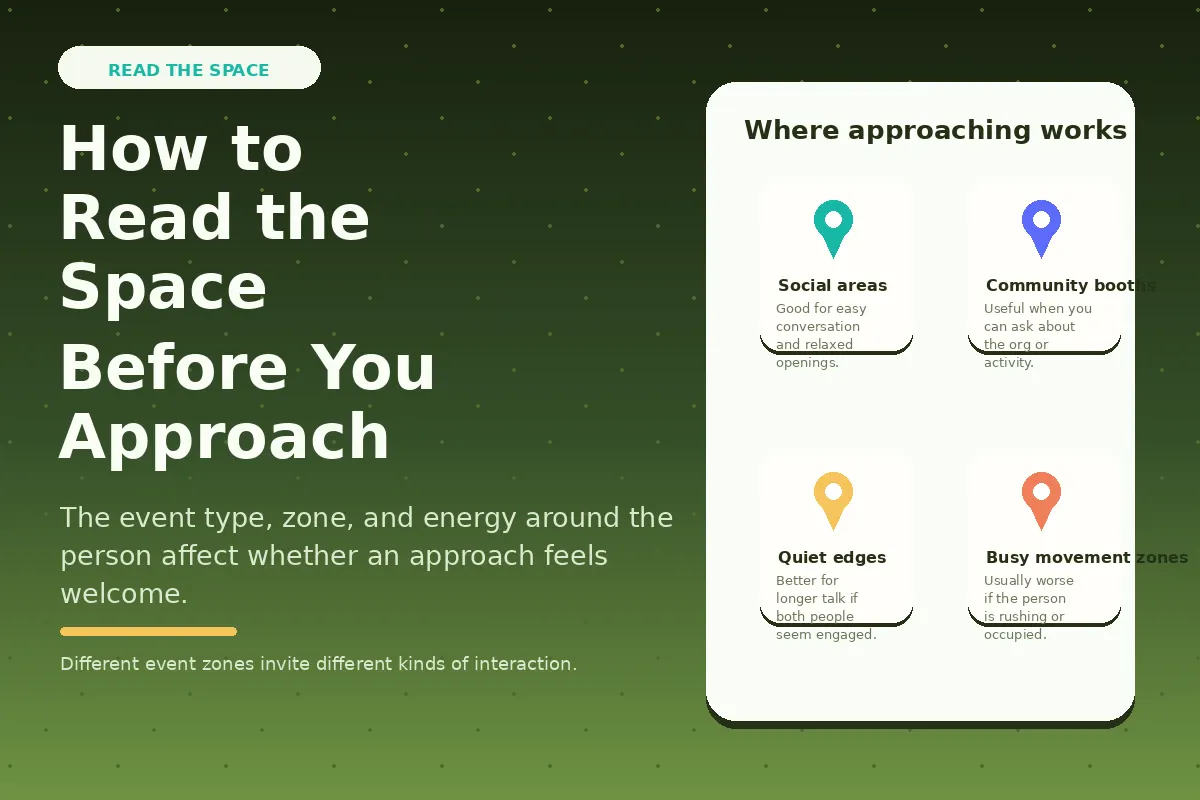
The first skill is reading the event itself. A high-energy social mixer gives very different signals from a workshop about identity, a health booth, a support event, or a memorial-focused gathering. Even within the same event, different zones have different social expectations. Someone relaxing in a social area may be much easier to approach than someone who is hurrying between booths or clearly listening closely to a speaker.
It helps to watch for practical cues. Does the person seem open, relaxed, and available for brief interaction? Are they making eye contact with people around them, lingering between activities, or casually chatting already? Or do they look busy, emotionally absorbed, or focused on another purpose? These clues matter because respectful timing often determines whether an approach feels welcome or intrusive.
Reading the space also means understanding that community events are not a blank slate for whatever you want. The event has its own norms. Approaching well begins with honoring those norms first.
- Notice whether the event is social, educational, activist, or support-based.
- Choose lower-pressure moments instead of interrupting intensity.
- Pay attention to whether the person looks available for interaction.
- Let the tone of the event shape your tone too.
How to Start a Conversation Respectfully at an Event
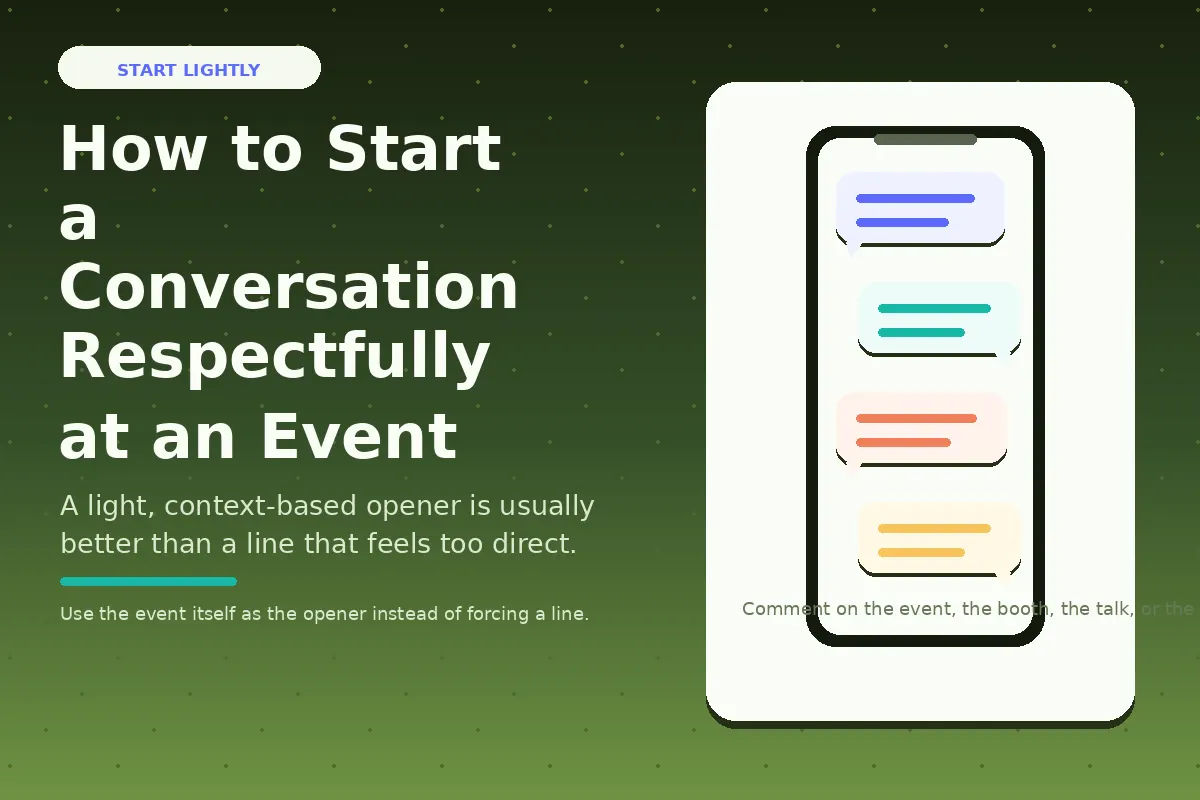
The best opener at an LGBTQ+ event is usually something simple and relevant to the moment. You can ask if they have been to this event before, comment on a booth or talk, mention something you both just experienced, or ask a low-pressure question about what brought them there. Shared context creates easier conversation than a random line.
Tone matters even more than wording. A respectful opener feels light, not entitled. It leaves room for the other person to engage or not engage. That means your goal is not to corner someone into interaction. Your goal is to open a small, comfortable door and see whether they choose to walk through it with you.
It is also helpful to keep the first exchange proportionate. If the event is fast-moving, a short and friendly conversation may be enough for now. If the interaction feels mutual, it can expand naturally. When people feel free instead of pressured, they are more likely to respond honestly and warmly.
| Respectful opener style | Example | Why it works |
|---|---|---|
| Event-based | “Have you come to this event before?” | It feels relevant and easy to answer |
| Shared observation | “That speaker was better than I expected.” | It creates instant common ground |
| Booth-based curiosity | “Do you know much about this group?” | It makes the space itself part of the conversation |
| Light follow-up | “That sounds interesting, tell me more.” | Keeps the interaction natural and mutual |
How to Handle Interest, Disinterest, and Follow-Up Well
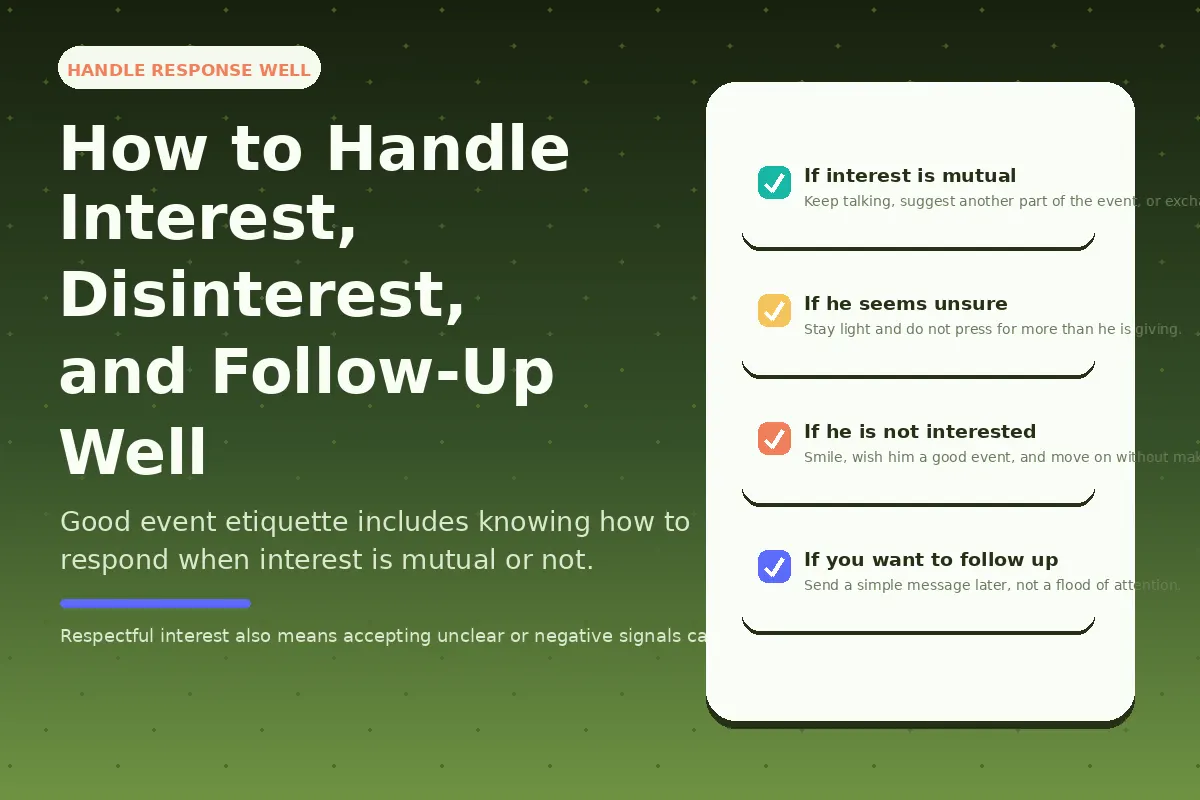
Respectful approach includes knowing what to do after the opener. If the person seems engaged, asks questions back, and stays present in the interaction, that is usually a good sign to keep talking. You might suggest walking to another part of the event together, continuing the conversation after the session, or exchanging contact details if the interaction feels solid.
If the response feels brief, distracted, or politely closed, the best move is to accept that calmly. Not every person at an LGBTQ+ event is there to meet someone. Even people who are open to connection may not be open in that exact moment. Grace matters here. The ability to back off without resentment is part of what makes you feel safe and mature to others.
Follow-up should stay simple. If you exchange contact details, one clear message later is usually enough. You do not need to create artificial intensity just because the event context felt exciting. Let the connection grow at a pace that matches what actually happened.
Common Mistakes to Avoid at LGBTQ+ Events
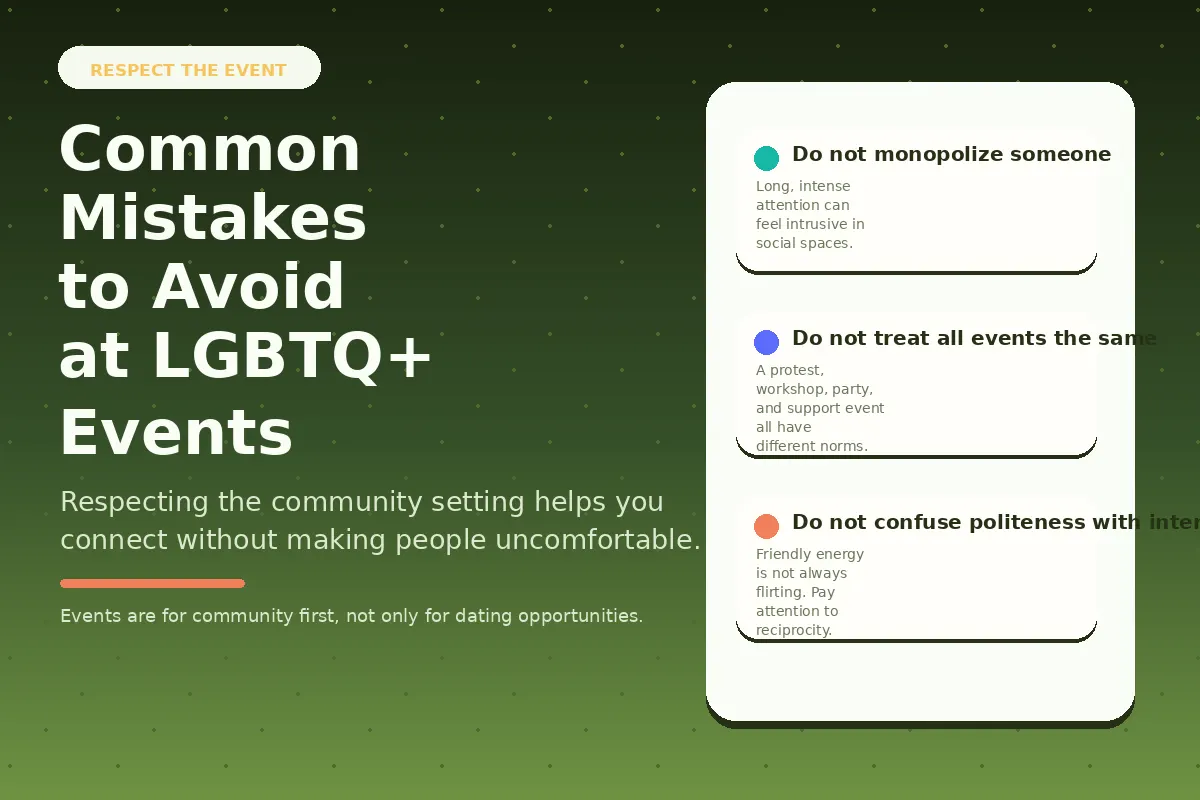
One common mistake is treating every LGBTQ+ event as if it were a dating party. That can lead to tone-deaf behavior, especially at events that are educational, emotional, or community-service oriented. Respect means recognizing that some spaces invite light flirtation while others do not.
Another mistake is monopolizing someone’s time. Even if the conversation starts well, people may still want to explore the event, meet friends, or focus on why they came. A good interaction should feel like an invitation, not an extraction of their attention.
It is also important not to mistake friendliness for romantic interest. LGBTQ+ events often create warm, affirming social energy. That is valuable, but it does not always mean flirting. The safest guide is reciprocity. If the other person is matching your energy and choosing to continue, that matters more than your assumptions.
What Respectful Approach Really Looks Like
Respectful approach is not about being timid. It is about being aware. You can show attraction without creating pressure. You can be confident without acting entitled. You can express interest while still giving the other person room to define their own comfort level.
In practice, that often looks like timing your approach well, starting lightly, listening more than performing, and responding well to whatever signal you receive. It also means remembering that the other person is not there for your validation. They are a participant in a shared space with their own reasons for being there.
This attitude tends to make you more attractive anyway. People often feel safer around someone who knows how to create ease instead of intensity.
How Events Can Support Your Broader Offline Dating Life
LGBTQ+ events can be valuable even when they do not produce an instant romantic outcome. They help you become more socially comfortable, more connected to community, and more practiced at reading real-life social situations. Those skills carry into other parts of your dating life as well.
Events also expand your network. Sometimes the person you meet is not the person you date, but he becomes part of the social world that eventually leads you to someone else. That is one reason offline connection often works differently from app dating. It creates social context, not just isolated one-to-one interactions.
When you approach events with curiosity instead of pressure, they become useful in more than one way. That usually leads to healthier and more natural results.
- Let community matter as much as dating possibility.
- Focus on comfort, observation, and reciprocity.
- Use events to build broader offline confidence.
- Remember that connection can grow through networks as well as direct attraction.
LGBTQ+ Events Can Help You Meet Someone When You Approach Well
LGBTQ+ events can be a great place to meet someone, but only when you approach them with awareness, timing, and respect. The point is not to maximize how many people you try to flirt with. The point is to create genuine connection in a shared community space without making others feel cornered or misread.
If you can read the room, start lightly, respond well to signals, and respect the purpose of the event itself, you will usually leave a better impression and have a better experience. That is true whether the interaction becomes a date, a friendship, or simply a good conversation.
Approach respectfully, stay socially aware, and let connection develop in a way that fits both the person and the space. That is what makes LGBTQ+ events a meaningful place to meet someone.
References
- CDC – Improving Social Connectedness – Official guidance on joining groups, building supportive relationships, and participating in community spaces in healthier ways.
- National Institute on Aging – Participating in Activities You Enjoy As You Age – Official advice on staying engaged through events, clubs, exercise, volunteering, and other shared-interest community activities.