
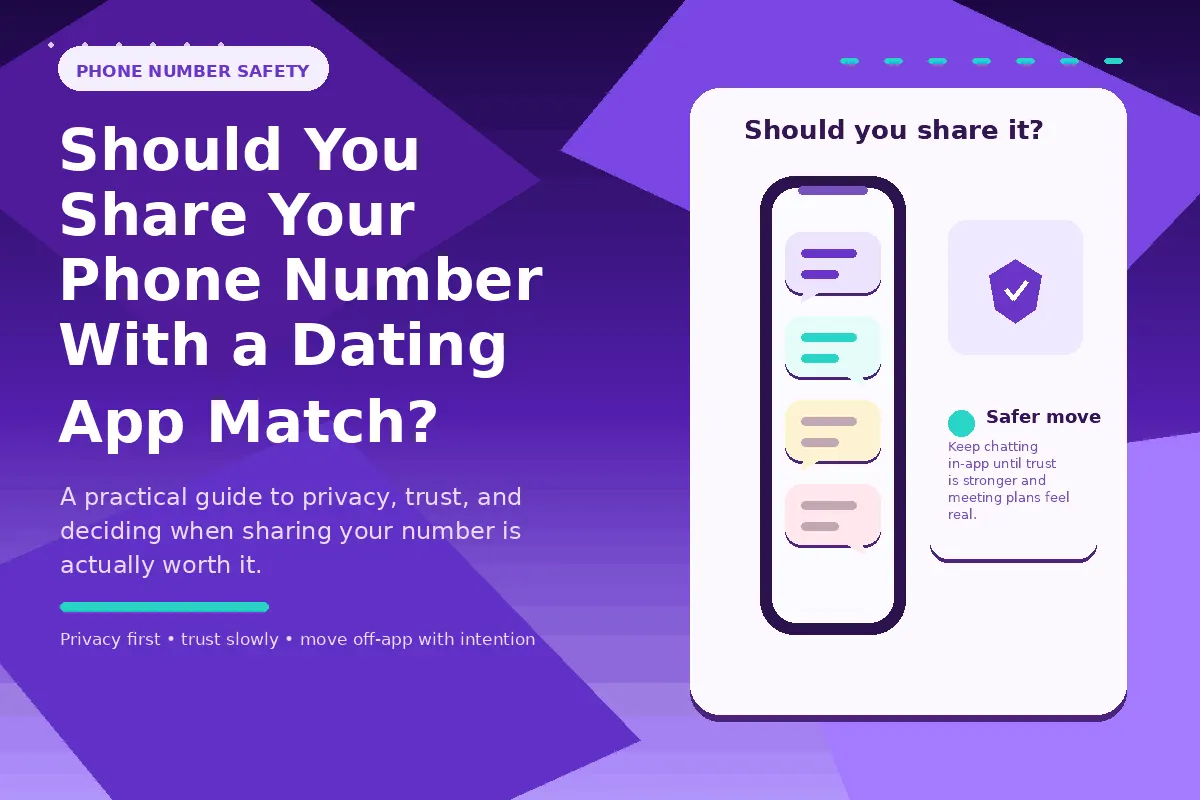
One of the most common early questions on a dating app is whether you should share your phone number with a match. Some people ask for it quickly because they prefer texting outside the app, want to set up a call, or think moving off-platform makes the connection feel more real. Sometimes that is completely harmless. Other times, sharing your number too early can expose more of your identity, weaken your privacy, and give the wrong person a new way to contact you.
If you want the broader privacy context first, read Gay Dating Privacy: How to Protect Your Identity, Photos and Location. This article focuses on one specific privacy decision inside that bigger topic: when sharing your number makes sense, when it does not, and how to protect yourself either way.
On Quicky, there is no rule that says you must give your number to prove interest. You can build attraction, momentum, and even enough trust for a first date while staying inside the app longer. The better question is not “Do people usually share numbers?” The better question is “Does sharing my number help this connection enough to justify the privacy tradeoff right now?”
In this article
Why Sharing Your Number Changes the Risk Level
A phone number feels small because most people hand it out casually in ordinary life. On a dating app, though, it can connect to much more than you realize. Depending on your digital footprint, your number may link to messaging apps, profile photos, business listings, social accounts, payment services, or other personal details. That does not mean sharing it is always dangerous. It means the step deserves more thought than many people give it.
There is also a difference between someone you have met in real life and someone who is still mostly a stranger. A match may seem warm, attractive, and consistent, but early chemistry is not the same as earned trust. Once someone has your number, he can reach you even if you stop using the app or block him there.
That is why the timing matters. The question is rarely whether you will ever share your number. The more useful question is whether this is the right stage to do it.
Why Matches Often Want to Move Off the App Quickly
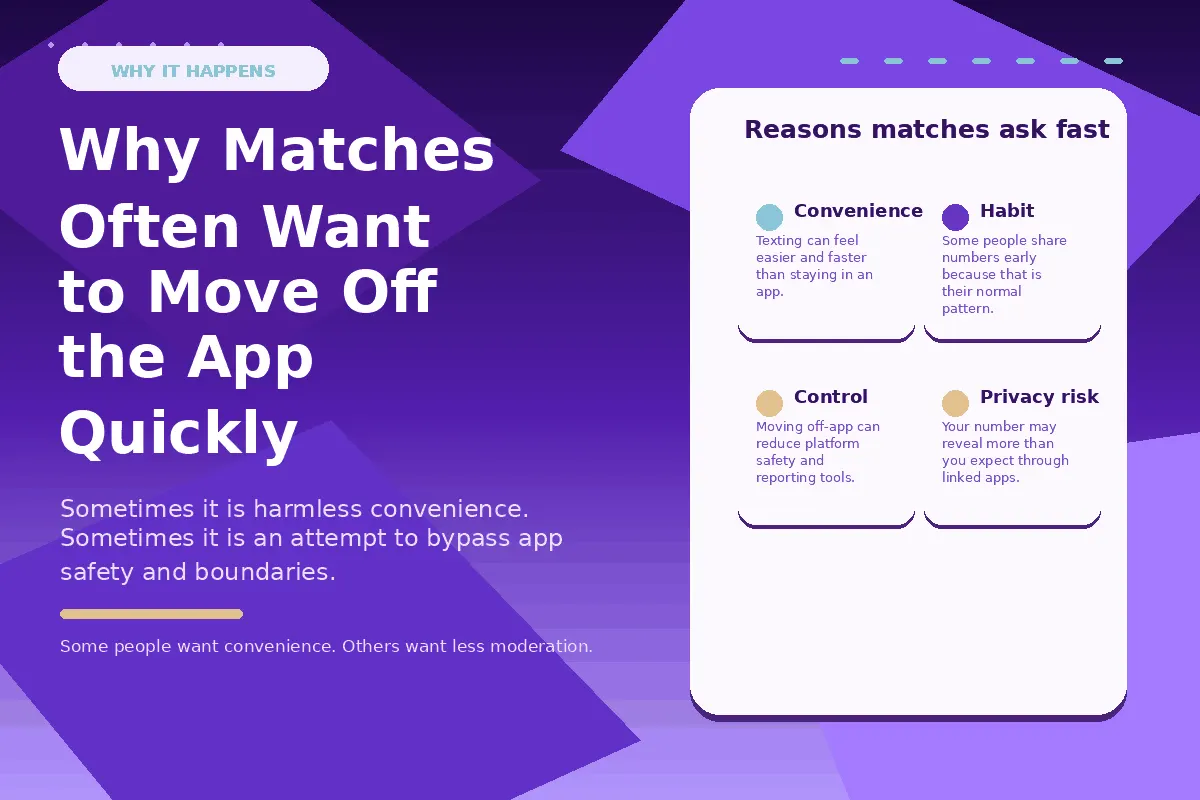
There are innocent reasons someone may ask for your number early. He may simply prefer texting, feel that app notifications are unreliable, or want a smoother conversation. Some people also see moving off-app as a sign that the interaction is becoming more personal.
Still, not every reason is harmless. Leaving the app can reduce the platform’s built-in safety features, such as blocking, reporting, and a clearer record of the conversation. It can also create pressure by making the other person feel more entitled to your time and access.
In some cases, moving off-app quickly is a way to rush intimacy before trust has formed. That does not always mean someone is malicious, but it does mean you should stay aware of the dynamic instead of assuming speed equals sincerity.
- Convenience is a common reason and may be harmless.
- Some people want faster access and fewer platform boundaries.
- Leaving the app early can reduce your privacy and control.
- Pressure to move quickly is worth paying attention to.
When Keeping the Conversation In-App Is the Better Move
In many early interactions, staying in-app is the better choice. It gives you more time to observe consistency, ask basic questions, and notice whether the conversation feels respectful. It also allows you to slow things down without giving the other person a more direct path into your personal life.
This is especially useful if the match still feels vague, if his profile information is thin, if the conversation is moving emotionally fast, or if you simply do not feel ready. You do not need a dramatic reason to keep chatting inside the app. “I prefer to stay here for a bit” is enough.
Holding that boundary is not a sign that you are cold or suspicious. It is a sign that you understand trust develops in stages. Someone who is genuinely interested can usually handle that.
Safer Ways to Protect Your Number Early On
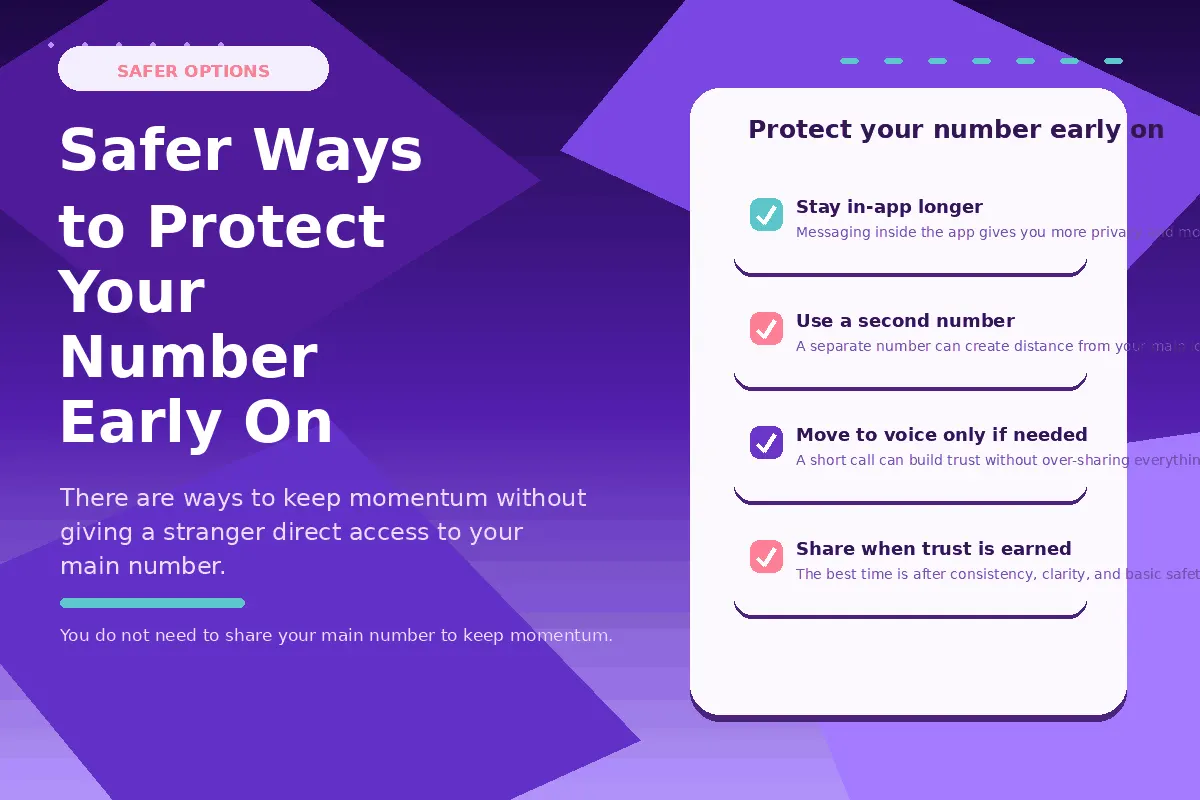
If you want to keep the connection moving without giving away your main number, you still have options. The simplest option is to stay in-app longer until you feel better informed. If a voice connection matters, you can also consider a separate number or another privacy-conscious method that keeps some distance between a new match and your main identity.
The point is not to make dating feel paranoid. The point is to keep the amount of access proportional to the amount of trust. A stranger does not automatically need the same contact privileges as someone you have already met and feel comfortable with.
It also helps to remember that boundaries can be flexible. You might share your number after a solid week of conversation, after a short call, or after setting a first date. You do not need to follow anyone else’s timeline.
| Option | How it helps | Best use case |
|---|---|---|
| Stay in-app | Keeps privacy and platform controls | Early chats or unclear trust |
| Second number | Creates distance from your main identity | When you want to text but stay cautious |
| Short call later | Builds trust before a meeting | When the match seems promising and respectful |
Signs It May Be Fine to Share Your Number
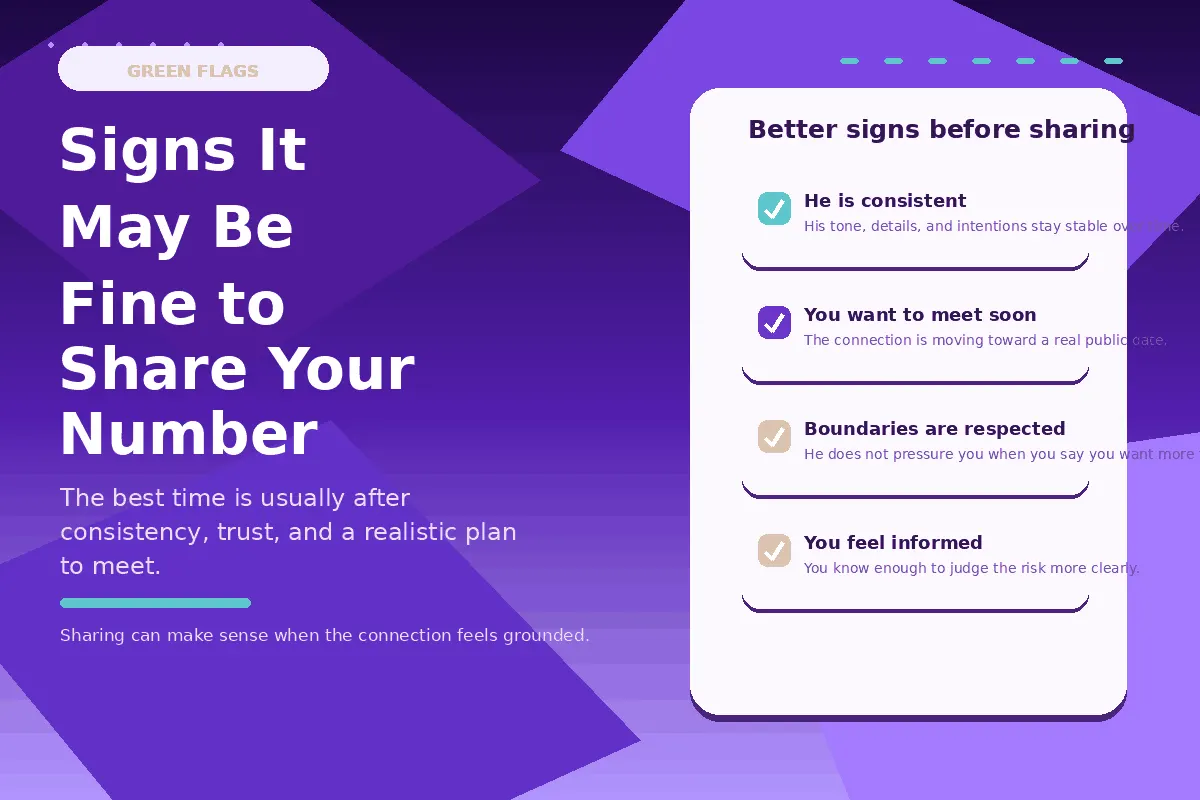
There are situations where sharing your number makes sense. A good sign is consistency. The person’s tone, story, intentions, and general behavior have stayed stable over time. Another good sign is that the conversation is moving toward something real, such as a phone call or a public first date.
Respect is another major sign. If you said you wanted more time and he accepted that without guilt-tripping you, that matters. People who respect small boundaries early are more likely to respect bigger ones later.
Your own comfort matters too. You do not need perfect certainty, but you should feel informed enough to know what risk you are taking. Sharing a number should feel like a choice, not a surrender to momentum.
Red Flags That Mean You Should Keep Chatting In-App
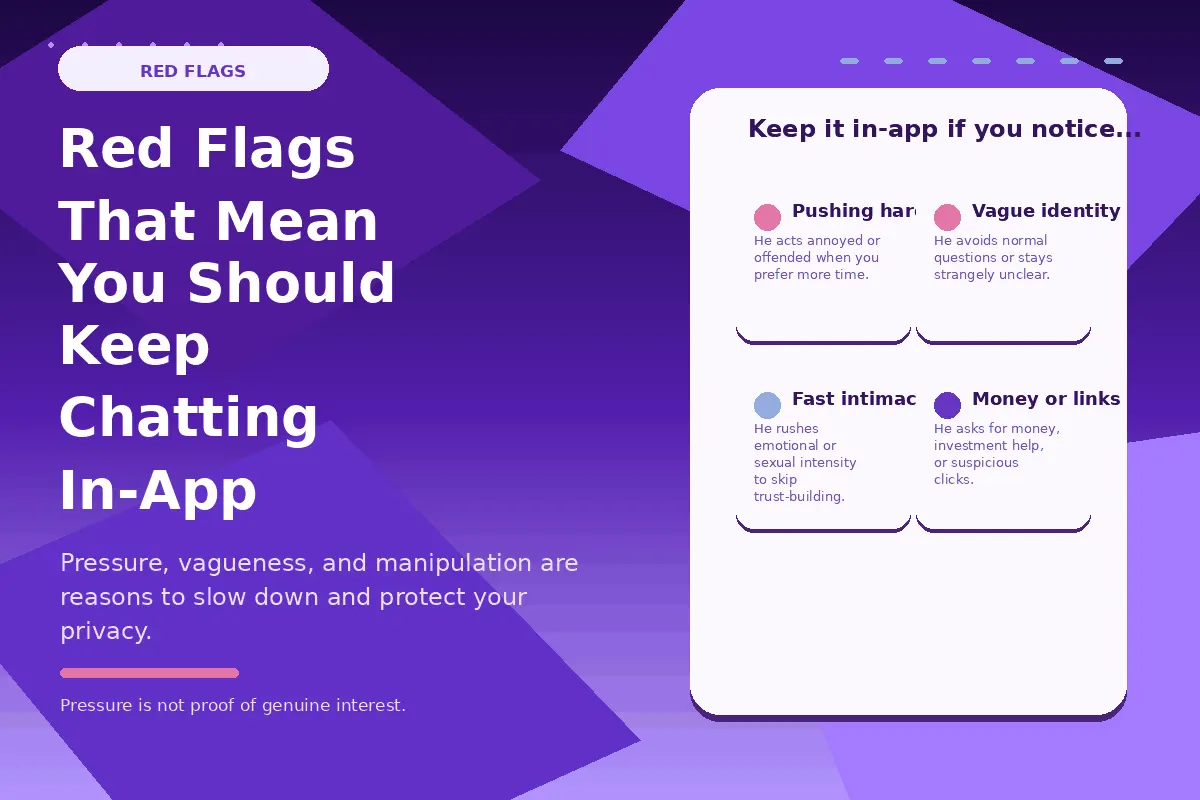
If a match pushes hard for your number, acts irritated when you hesitate, or treats your boundary like an insult, that is already useful information. Pressure often tells you more than the request itself. Someone who cannot handle a basic privacy boundary may not handle other boundaries well either.
Other red flags include vagueness about who he is, inconsistent details, suspicious links, fast emotional intensity, or any request for money or financial help. Those signs matter whether the person wants your number or not, but they are especially important when you are deciding how much access to give him.
In these situations, staying in-app is not overreacting. It is the smarter move. If the match is real and patient, a little extra caution should not ruin the connection.
- He pressures you instead of respecting your pace.
- His identity and story still feel unclear.
- He rushes intimacy before trust is built.
- He asks for money, crypto, gifts, or suspicious favors.
How to Say No Without Killing the Conversation
Many people share their number early because they worry that saying no will make them seem uninterested. Usually, you do not need a complicated explanation. A simple response works well: you can say that you prefer to stay in-app a bit longer, or that you are happy to keep talking there for now.
The key is to be clear rather than apologetic. Boundaries sound more natural when you treat them like normal preferences instead of dramatic defenses. If the other person responds well, that is a positive sign. If he reacts badly, that gives you useful information too.
Good matches usually understand that privacy boundaries are part of modern dating, especially in queer spaces where identity and discretion can still matter for many people.
Sharing Your Number Should Feel Like a Choice, Not an Obligation
There is nothing wrong with sharing your phone number with a dating app match when the timing feels right and the trust feels earned. There is also nothing wrong with waiting. The smartest choice depends on how consistent the person has been, how much personal access you want to give, and whether the connection is actually moving toward something real.
In practice, many people are safer when they wait a little longer than the other person expects. Not because everyone is dangerous, but because privacy is easier to loosen than to take back. If you do share your number, let it be because you chose it calmly, not because you were rushed into it.
That is the real standard: not whether other people do it, but whether it feels wise for this specific match, at this specific moment.
References
- RAINN – Tips for Safer Dating: Online and In-Person – Practical guidance on protecting personal information, including waiting before sharing private details like your phone number.
- FTC – What To Know About Romance Scams – Official consumer guidance on warning signs in online romance situations, including pressure, manipulation, and requests that escalate risk.