
Every June, rainbow flags can be seen waving everywhere. Brands switch their logos to rainbow colors, parties go all out, and spectacular parades bring everyone together to show off their best looks. But beyond all the fun and fabulous fashion, have you ever wondered where this celebration actually came from?
Today, we’re taking everyone on a time-machine journey to explore the history of Pride Month—a story every gay person and younger generation should know. So if anyone asks, you can proudly say: we’re not just about parties. We have an incredibly powerful history behind us!
In this article
What Is Pride? The Meaning of Pride for the LGBTQ+ Community
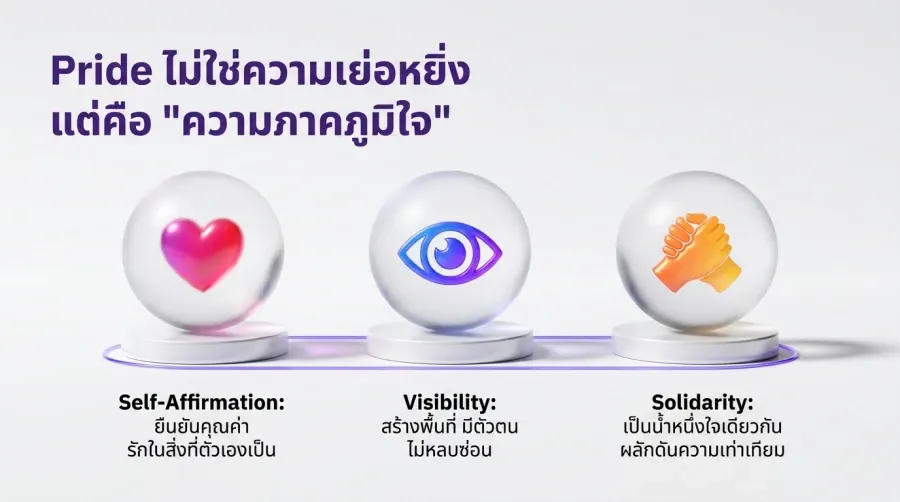
In the LGBTQ+ context, Pride does not mean “arrogance.” It means “being proud of who you are.” It is a powerful response to a society that once oppressed us and tried to portray being gay, lesbian, bisexual, transgender, or queer as abnormal, shameful, or sinful.
Pride is about brushing those prejudices aside and proudly declaring, “This is who I am, and I’m proud of who I am!”
- Self-Affirmation: Recognizing Your Self-Worth and Loving Who You Are
- Visibility: Creating Space to Be Seen in Society Without Having to Hide Anymore
- Solidarity: Community Unity to Advance Rights and Equality
The Beginning of Pride Month History: Struggles and Resistance
Many people may think that the “Rainbow Parade” began as a joyful celebration, but in fact, the history of Pride Month started with “bricks,” “glasses,” and the “anger” of people who had endured oppression and persecution for far too long.
Key Figures in Pride Month History: Without Them, We Wouldn’t Be Where We Are Today
Learning about the history of Pride Month would not be complete without knowing the icons and pioneers who put themselves on the line so that we could have a place in society today. Through their actions, these people truly defined what Pride means.
- Marsha P. Johnson
- A Black drag queen and transgender activist, remembered as one of the early figures who stood up and fought back during the Stonewall uprising. She was reportedly known for throwing a shot glass at a mirror that night. She became a symbol of resistance and the belief that “none of us have rights until all of us have rights.”
- Sylvia Rivera
- Marsha’s close friend and co-founder of STAR (Street Transvestite Action Revolutionaries), an organization that helped homeless transgender children, youth, and drag queens. Sylvia fought tirelessly to ensure that transgender people were not forgotten in the gay rights movement.
- Harvey Milk
- One of the first openly gay elected officials in the United States, he proudly embraced his identity. He was elected to public office in San Francisco and helped promote the “rainbow flag” as an important symbol of the gay community. Although he was later assassinated, his words, “Hope will never be silent,” continue to resonate today.

The Night of Resistance: The Stonewall Riots
Back in 1960s America, same-sex relationships were heavily criminalized (yes, babe, it really could be illegal back then!). Police could raid and arrest people, force body searches, and publicly expose their names to shame them. Gay bars therefore became some of the few places where LGBTQ+ people could freely express themselves, and one of the most famous gay bars in New York at the time was the Stonewall Inn.
The major turning point came on the night of June 28, 1969. Police raided the Stonewall Inn as they had done before, but here’s the iconic part… that night, the people inside decided they weren’t going to take it anymore!
When police attempted arrests and used violence, groups often overlooked by society—including transgender people, drag queens, homeless people, and gay people—came together to “fight back.” Key figures such as Marsha P. Johnson and Sylvia Rivera are often remembered as important symbols of this resistance. The clashes continued for several days, and the Stonewall Riots became a major turning point that helped propel the LGBTQ+ rights movement forward and inspire activism around the world.
The Evolution of the Pride Flag: From Past to Present
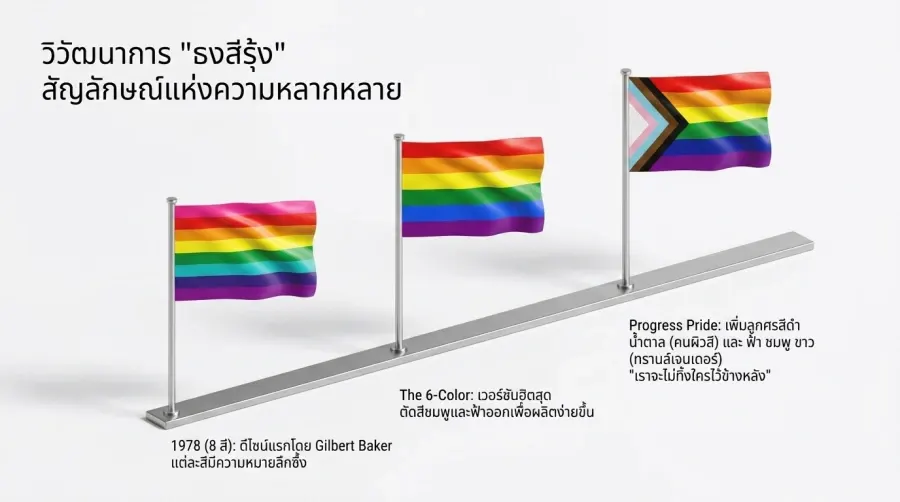
The original rainbow flag was designed in 1978 by gay artist and activist Gilbert Baker, reportedly with encouragement from Harvey Milk, one of the earliest openly gay elected officials in the United States. The first version featured eight colors, each with its own meaning, such as pink (sexuality), red (life), orange (healing), yellow (sunlight), and green (nature).
As times changed, the Pride flag continued to evolve to reflect greater diversity and inclusion within the LGBTQ+ community:
- 🏳️🌈 The 6-Color Pride Flag: The most widely used 6-color Pride flag, with pink and turquoise removed to make production easier.
- 🏳️⚧️ Transgender Pride Flag: Blue, pink, and white represent the transgender community.
- Progress Pride Flag: A newer version of the Pride flag that adds black and brown chevrons (representing people of color), along with blue, pink, and white (representing the transgender community), emphasizing that no one should be left behind.
From Protest to Celebration Parade: Pride Month History Enters a New Era
Over the decades, Pride has traveled through both tears and smiles. The events gradually evolved from tense protests into colorful celebrations, while never abandoning their core purpose of fighting for rights and equality.
The 80s–90s: The HIV/AIDS Crisis and Activism
During this period, the gay community faced the HIV/AIDS crisis, which claimed countless lives. Amid an inadequate government response, the Pride movement also became a platform for protest and advocacy, demanding greater attention and funding for treatment research. Activist groups such as ACT UP adopted an upward-pointing pink triangle as a symbol of resistance.
📌 Read More – Gay Health: PrEP, HIV, and Self-Care Every Man Who Has Sex with Men Should Know
The 2000s to Present: Marriage Equality and the Power of a New Generation
We’ve talked a lot about what happened abroad, so now let’s come back home! The history of Pride Month in Thailand has a fascinating and colorful story that is just as interesting as anywhere else in the world. Although Thailand has long been called an “LGBTQ+ paradise,” the reality is that our long fight for legal rights and equality has only begun to achieve major results in this era.
The Pioneering Era (1990s–2000s):
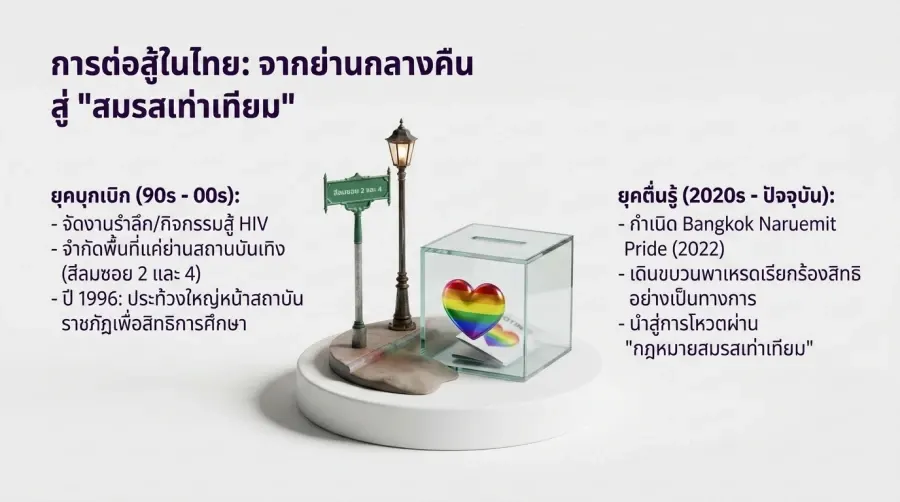
In the early days, Pride events in Thailand were usually held as commemorative gatherings or organized by activist groups and independent organizations working on HIV/AIDS, rather than as large-scale parades. The rainbow festivals many people remember from that era were often connected to entertainment districts, such as street-closing events on Silom Soi 2 or Silom Soi 4. These events were full of fun, but Pride had not yet gained much momentum at the national policy level.
One event many people may have forgotten is the major protest by gay and transgender people in front of a Rajabhat Institute in 1996, after the institution refused admission to kathoey and gay students. It became an intense fight for equal access to education.
The Era of Awareness and True Pride Parades (2020s–Present):
A major turning point for Pride in Thailand was the launch of “Bangkok Naruemit Pride” in 2022. It was one of Bangkok’s first major official and citywide Pride parades. It was not just about partying, but a collective movement calling for “Marriage Equality,” a “Gender Identity Recognition Act,” and an “end to the criminalization and suppression of Sex Workers.”
The sight of people of all genders and ages, including politicians, marching together along Silom Road and Rama I Road helped Thai society understand what Pride truly means. It is not simply a celebration for the “third gender,” as older media often called it, but a stand for equal human dignity—and Thailand eventually saw Parliament approve the Marriage Equality Bill!
📌 Read More – Pride Month Thailand 2026: Pride Thailand Events Across the Country
Why Should Gay People and Younger Generations Care About the History of Pride Month?
At this point, many people might be thinking, “We’re just gay people living our best lives in 2026, swiping through dating apps every day. Why do we need to know this history?” The answer is simple, sis… because what we have today didn’t come for free.
- To Honor the Pioneers Who Paved the Way
- The right to hold your boyfriend’s hand in a shopping mall, the right to express your gender and sexuality, and the right to marry were all won through the blood, tears, and freedom sacrificed by earlier generations of LGBTQ+ people.
- To Build Resilience
- Knowing the history of Pride helps us understand our roots. When we know where we come from, no prejudice can diminish our sense of pride.
- To Keep Moving Forward: Even as society becomes more open, hidden discrimination still exists. Understanding history helps younger generations learn how to “fight” with greater wisdom and strength.
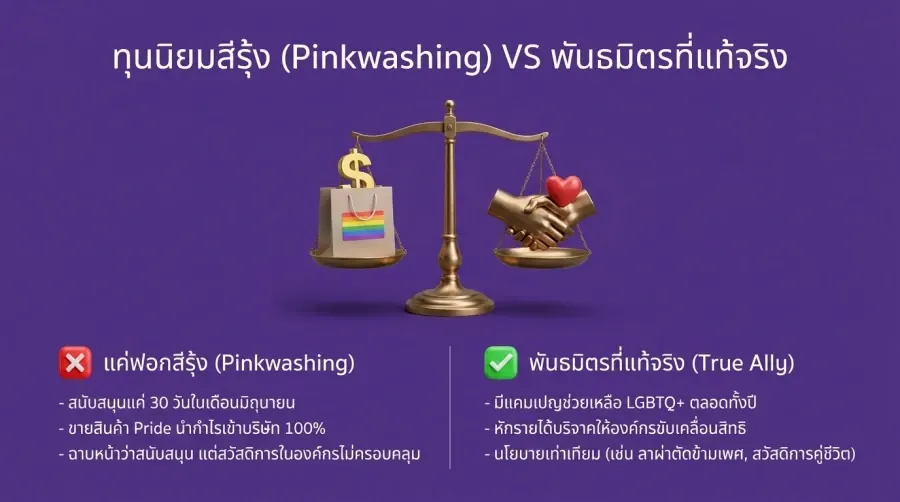
Rainbow Capitalism (Pinkwashing) VS True Allies
Today, supporting LGBTQ+ people has become widely accepted and valued by society. When learning about the modern history of Pride Month, gay people and younger generations should be aware of a phenomenon known as “Pinkwashing.”
So, what does Pride mean from a business perspective? For some brands, it is simply an opportunity to make money. They may change their logos to rainbow colors in June and launch Pride collections for profit, only to stop caring once the month is over. Worse, some companies may still discriminate against LGBTQ+ employees internally or quietly donate money to politicians who oppose LGBTQ+ rights.
Checklist: Does This Brand Truly Support LGBTQ+ People or Is It Just Pinkwashing?
| Signs of Pinkwashing | Signs of a True Ally |
|---|---|
| Shows support only in June, then goes silent afterward | Supports LGBTQ+ people and runs campaigns throughout the year |
| Sells Pride products, but 100% of the revenue goes to the company | Donates part of the revenue to organizations advancing LGBTQ+ rights |
| Appears supportive publicly, but employee benefits do not cover diverse needs | Provides equal employee benefits, such as leave for gender-affirming surgery and benefits for same-sex partners |
Therefore, as LGBTQ+ consumers, we should choose wisely and support organizations that are genuinely LGBTQ+ friendly, not those that simply cover themselves in rainbow colors for 30 days.
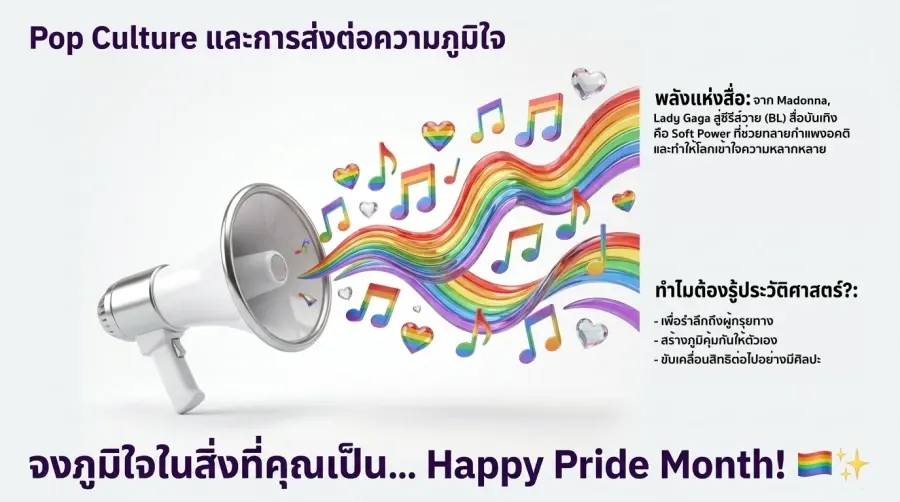
Pop Culture: The Soft Power Driving Gay Pride
There is no denying that entertainment media is one of the most powerful tools for building understanding and changing how LGBTQ+ people are viewed in society. Looking back at Pride history, artists and entertainment media have played a major role in helping the world see that there is nothing wrong or unusual about who we are.
- The Rule-Breaking Era (80s–90s): Legendary icons like Madonna openly spoke about gay rights and AIDS at a time when society was still filled with fear. Artists such as Elton John and George Michael also showed the world that gay artists could achieve global success.
- The Era of Shouting It to the World (2010s): Lady Gaga’s Born This Way became an anthem for LGBTQ+ people around the world. Its message—that whether you are gay, straight, bi, lesbian, or transgender, you should be proud of who you are—perfectly answers the question of what Pride means: being born to embrace and take pride in your true self.
- The BL Series Industry: In Asia, including Thailand, the BL Series industry has helped break down social prejudice and made same-sex relationships more familiar to a wider audience. Although there is debate about portraying gay relationships as fantasy, it has at least opened the door to broader conversations about sexual and gender diversity.
📌 Read More – Gay Coming Out: How to Tell Your Family and Help Them Understand? A Preparation Guide
Conclusion: Let’s Pass the Pride Forward Together
Throughout the history of Pride Month, one thing has always been clear: no matter how much society tries to hold us back, diversity is like water—it will always find a way to flow toward freedom. Asking “What is Pride?” is therefore not just about finding a definition in a dictionary, but discovering its meaning in all of our hearts.
This June, when you dress your best and proudly strut through a Pride parade or post a rainbow flag on social media, remember that you are carrying forward the spirit of the brave people of Stonewall.
Be proud of who you are, hold your head high, and let’s make a new chapter of history together! Happy Pride Month! 🏳️🌈✨
🌈 Ready to build a rainbow community together?
Stay updated, meet new friends, and share real stories and insights from our community. Download our app for free on iOS and Android!