
Double texting in gay dating means sending another message before the other person has replied. That is all it means. It is not automatically desperate, clingy, confident, attractive, or unattractive. Sometimes you forgot to add a detail. Sometimes you saw something funny that connects to the conversation. Sometimes plans need an answer. The problem is rarely the existence of message number two. It is the pattern underneath it. If you keep sending messages because you are trying to force a response, regulate your anxiety, or revive interest that is consistently not being returned, the second text becomes part of a bigger imbalance. The useful question is not “Am I allowed to double text?” It is “What is this message doing, and what does his overall response pattern tell me?”
In this article
One Extra Text Is Usually Just Another Message
Dating advice often treats texting like a game with strict turns: you send one, then he sends one, and anyone who breaks the sequence loses leverage. Real conversations do not work that neatly. If you send “That restaurant looks good” and five minutes later add “By the way, I’m free Thursday,” you have not created a relationship crisis. You have sent two thoughts.
People also use messaging differently. Research on electronic messaging and romantic attachment has found differences in how often people want messages and how quickly they respond. That means response timing can reflect communication preferences as well as interest. One extra message, especially when the conversation has otherwise been reciprocal, usually tells you very little by itself. Look at weeks of behavior rather than one uneven exchange.
Ask Whether the Second Text Adds Information or Anxiety
Before sending again, ask what changed since your previous message. If you have useful information, a practical update, a natural joke, or a clear question that helps plans move forward, the second text has a job. If nothing changed except that you became uncomfortable with the silence, the message may be trying to manage your feeling rather than communicate something new.
That does not make you weak. Waiting for a reply from someone you like can create uncertainty, especially early in dating when you do not know his habits yet. Still, noticing the difference helps. A message sent from genuine conversation often feels easy after you press send. A message sent mainly for reassurance may leave you checking the phone even more closely because the real need was certainty, not information.
Context Matters More Than the Message Count
Two texts after an active conversation are different from six unanswered texts across three days. A follow-up after someone said “Remind me tomorrow” is different from repeatedly restarting a chat that keeps dying. You need the surrounding pattern.
Think about where you are in the connection. If you are already planning a date, practical follow-ups are normal. If you have been talking for weeks and both of you regularly send multiple thoughts, the idea of “double texting” may not even be useful. When deciding how long messaging should continue before meeting, the more important signals are reciprocity, enough comfort to make a plan, and whether both people are moving the conversation forward. That is the same broader rhythm covered in our guide to gay dating app messaging and moving toward a first date.
When Double Texting Turns Into Chasing
Double texting becomes chasing when the messages are repeatedly compensating for the other person’s lack of participation. You are always restarting the conversation. Your questions sit unanswered, yet you send a new topic. He replies only after several prompts and then disappears again. You keep changing tone—funny, casual, sexual, concerned—hoping one version will make him engage.
The important signal is not that he took six hours once. People work, sleep, travel, socialize, and forget to reply. Look for repeated asymmetry. If you regularly send most of the messages, ask most of the questions, suggest every plan, and rescue every stalled conversation, you are not learning whether he can meet you halfway. Stop adding effort long enough to see what the connection does without your constant push.
Response Time Is Not the Same as Interest
Fast replies can feel reassuring, but response speed is a poor standalone measure of romantic interest. Some people are on their phones constantly. Others batch messages, avoid notifications while working, or prefer longer replies when they have time. A man can reply slowly and still make clear plans, remember details, initiate conversation, and show up consistently.
The reverse is also true. Someone can reply instantly for entertainment while avoiding any move toward meeting or deeper connection. Instead of timing individual messages, watch for dependable participation. Does he return to the conversation? Does he sometimes initiate? Does he answer questions with enough substance to continue? Does he make or accept plans? Those behaviors give you a stronger picture than a stopwatch.
Follow Up Once When the Situation Deserves Clarity
There are times when a second message is not only fine but useful. If you asked about a date and need to finalize your schedule, a simple follow-up can prevent ambiguity. If your previous message was easy to miss because it was buried in a longer chat, asking again can be reasonable. If you sent something that could be interpreted several ways, a short clarification may help.
Keep the follow-up clean. “Still good for Friday?” works better than “I guess you’re not interested anymore?” One asks for information; the other asks him to manage your fear while also answering the practical question. If the follow-up also receives no response, you have more information. You usually do not need a third message to confirm what repeated silence is already showing.
Signs It Is Better to Stop Texting
A pause is especially useful when the pattern starts making you feel smaller rather than more connected.
- You have sent several unanswered messages: Additional texts are unlikely to create reciprocity that is not already there.
- You keep changing the subject to get a response: The conversation is being carried by your effort rather than mutual interest.
- He responds only when the chat becomes sexual: Pay attention if ordinary conversation and plans disappear while sexual attention remains.
- You feel worse after every message: If sending gives a few minutes of relief followed by more checking, anxiety may be driving the pattern.
- He avoids concrete plans repeatedly: Messaging can become a holding pattern when someone likes attention but not enough to meet.
- He has asked for space or said he is not interested: Continuing after a clear boundary is not persistence; it is ignoring an answer.
- The conversation has become suspicious or financial: If someone moves quickly across platforms and then asks for money or investment help, stop engaging and verify rather than chasing the connection.
Use a Simple Reset When You Want to Text Again
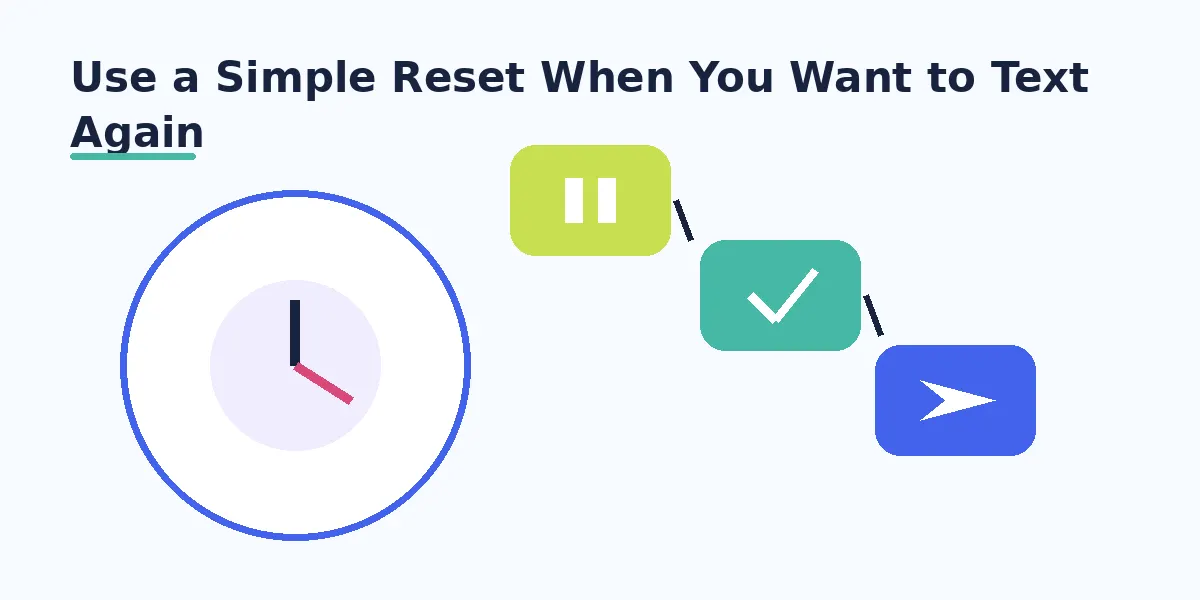
You do not need an elaborate “three-day rule.” Use a short reset that helps you separate communication from impulse.
| Question | If yes | If no |
|---|---|---|
| Do I have new information or a practical reason to text? | Send a normal message | Wait and let the previous message stand |
| Has he generally been reciprocal? | A second text is probably low-stakes | Notice whether you are carrying the connection |
| Do I need an answer for a plan? | Send one clear follow-up | There may be no urgency |
| Am I texting mainly to reduce anxiety? | Pause before sending | Continue naturally |
| Have I already followed up once? | Give him room to respond or not respond | One follow-up may be reasonable |
| Has he clearly asked for space? | Respect the boundary | Use the other signals above |
The reset is not about appearing less interested. It is about giving reality enough room to become visible.
Do Not Turn Silence Into a Story Too Quickly
An unanswered message creates a blank space, and your brain may fill it with the most painful explanation available: he met someone better, your last message sounded stupid, you were too eager, or you ruined the connection by texting twice. Most of those explanations are guesses.
Wait for evidence. If he returns and continues the connection normally, the silence may have meant very little. If the pattern keeps repeating and he contributes less each time, you can respond to the pattern without knowing his exact reason. You do not need to solve the mystery of why someone is inconsistent before deciding that inconsistency does not work for you.
Double Texting Is Fine When Reciprocity Is Still There
Healthy dating does not require perfectly alternating messages. It requires enough mutual effort that neither person has to manufacture momentum alone. Send the second message when it has a purpose. Follow up once when clarity matters. Share something spontaneous when the conversation already has life.
Then notice what comes back. If he engages, initiates, makes plans, and treats communication as a shared activity, the message count is probably irrelevant. If you repeatedly need another text to keep him present, stop focusing on whether double texting looks needy and start asking whether the connection is giving you enough to work with. The goal is not to win the texting game. It is to discover whether two people are actually participating.
References
- Cyberpsychology, Behavior, and Social Networking — Adult Romantic Attachment, Electronic Messaging, and Relationship Quality: Research linking attachment patterns with differences in desired messaging frequency and response behavior.
- Federal Trade Commission — Looking for love? Watch out for scammers: Current guidance on romance-scam patterns, including moving conversations off dating platforms and later introducing financial requests.