
Here’s something remarkable that too few people know: Thailand offers free HIV testing, free PrEP, and free HIV treatment to citizens through its universal health coverage system — one of the most progressive sexual health frameworks in Asia. The infrastructure to protect yourself is built, funded, and waiting. The missing piece is usually just information: what the services are, who they’re for, and how to actually use them.
That’s this guide. Whether you’re actively dating, in a relationship, or just building good habits, consider this your complete map of gay sexual health in Thailand — the testing rhythm that makes sense, PrEP and PEP explained in plain language, the science of U=U, and the conversation skills that make all of it easier. One note before we start: this is education, not medical advice — your clinician personalizes everything here to you, and that consultation is free too.
In this article
The Big Picture: What Thailand Gives You for Free
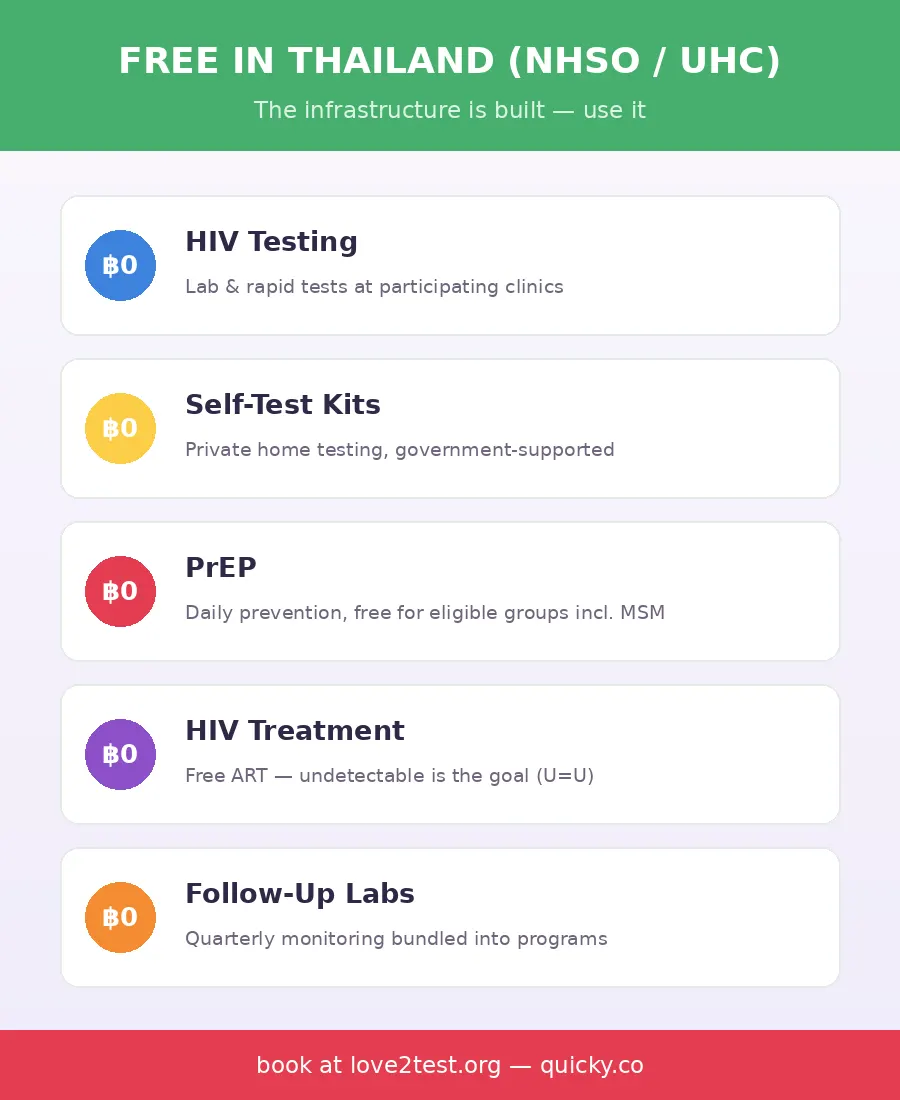
Through the National Health Security Office (NHSO) and the universal coverage system, Thai citizens can access a package that many countries still charge heavily for:
| Service | What It Is | Cost Under Universal Coverage |
|---|---|---|
| HIV testing | Lab or rapid testing at participating facilities | Free |
| HIV self-test kits | Test privately at home; nationwide scale-up government-subsidized | Free through participating channels |
| PrEP | Daily prevention medication for HIV-negative people at higher risk | Free for eligible groups |
| HIV treatment (ART) | Antiretroviral therapy for people living with HIV | Free |
| Follow-up labs | The routine monitoring that comes with PrEP or treatment | Covered within the programs |
Community-based clinics — including LGBTQ+-run services in Bangkok, Chiang Mai, and other provinces — deliver much of this in judgment-free settings designed for us. Booking is easier than ever: platforms like Love2Test let you find a nearby clinic and reserve an HIV/STI test slot online in minutes.
Testing: The Rhythm That Makes It Routine
Testing is the foundation everything else stands on — PrEP starts with a test, treatment starts with a test, and peace of mind starts with a test. Yet it remains the step people postpone longest, usually over feelings rather than logistics. So let’s fix the frame first, then the schedule.
The mental shift that changes everything: testing isn’t something you do when you’re worried. It’s maintenance, like the dentist — scheduled, boring, routine.
- Sexually active with new or multiple partners? Every three months is the standard rhythm for HIV and common STIs. Put it on the calendar like a haircut.
- New relationship going exclusive? Testing together at the start is the modern couple ritual — one appointment, full clarity, zero lingering question marks.
- Prefer privacy first? HIV self-test kits are now government-supported and available through participating channels — test at home, and if anything’s reactive, a clinic confirms and connects you to care the same week.
- Know the window period. Tests can’t detect an infection from last night; depending on test type, there’s a window of days to weeks after exposure. Your clinic will time things correctly — mention any recent risk when you book.
- Testing = the full menu. A proper checkup covers more than HIV: syphilis, gonorrhea, and chlamydia are common, frequently symptom-free, and easily treatable when caught. Ask for the full panel; many STIs you can have without ever noticing.
PrEP: The Daily Shield, Explained
PrEP (pre-exposure prophylaxis) is medication that HIV-negative people take to prevent HIV infection — and taken consistently, it’s one of the most effective prevention tools medicine has ever produced. The essentials:
- How it works: the medication builds a protective barrier in your cells so the virus can’t establish an infection. Consistency is the whole game — PrEP protects when it’s actually in your system.
- Who it’s for: Thailand’s program prioritizes people at higher risk, explicitly including men who have sex with men, as well as serodiscordant couples (where one partner is HIV-positive). If you’re dating actively, you’re likely eligible — the clinic assesses in one visit.
- Getting started: an HIV test plus basic health checks (including kidney function), then the prescription. Under NHSO support, eligible individuals receive it free.
- Staying on it: checkups roughly every three months — an HIV test plus safety monitoring to confirm the medication agrees with your body. Conveniently, this bundles your STI testing rhythm into the same visits.
- The horizon: long-acting and injectable PrEP options are an active area of development and rollout globally — worth asking your clinic what’s currently available if daily pills don’t suit your life.
PEP: The 72-Hour Emergency Option
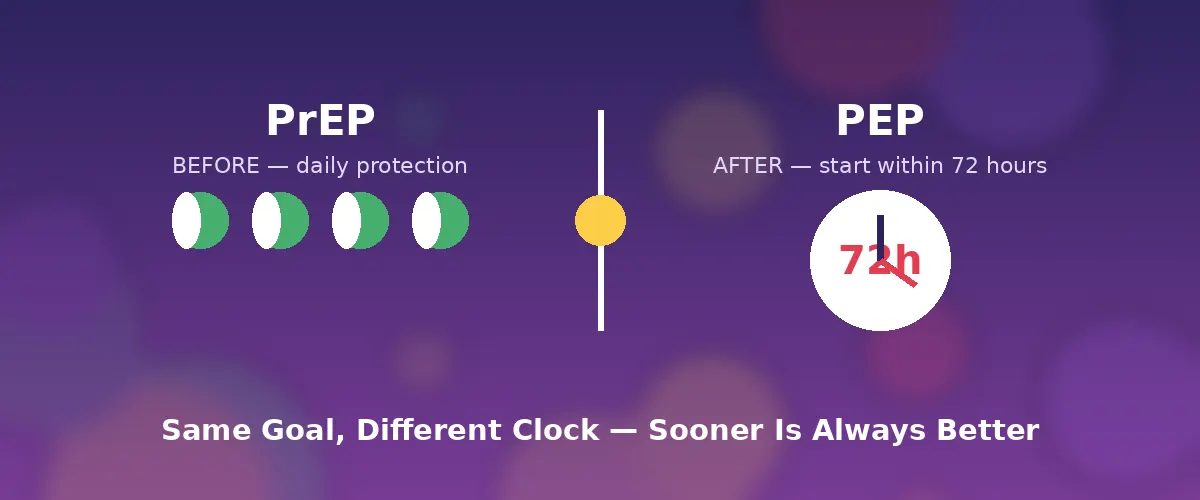
PEP (post-exposure prophylaxis) is PrEP’s emergency sibling: medication taken after a possible HIV exposure — a condom broke, protection didn’t happen — to prevent infection from taking hold.
- The clock matters enormously. PEP must start as soon as possible after exposure, and within 72 hours at the outside. Sooner is significantly better. If you think you need it, go today, not Monday.
- Where: hospitals and sexual health clinics. Say the word “PEP” and the timeline; staff know exactly what to do.
- What follows: a 28-day course plus follow-up testing. And if you find yourself needing PEP more than rarely, that’s the universe suggesting PrEP — the before-the-fact version is easier on everyone.
U=U: The Science That Ended an Era of Fear
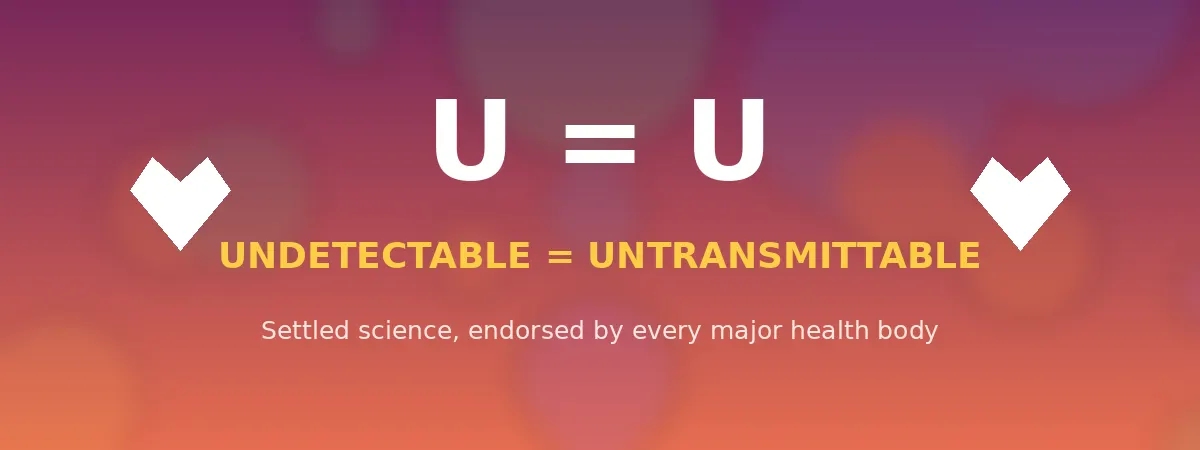
If you learn one acronym from this article, make it this one. U=U: Undetectable = Untransmittable. A person living with HIV who takes treatment and maintains an undetectable viral load cannot transmit HIV to sexual partners. This is settled science, endorsed by every major health body, confirmed across massive studies.
What it means practically: HIV status disclosure deserves a calm, informed response, not a flinch. A guy who tells you he’s undetectable is telling you he’s on top of his health — statistically better-managed than someone who’s never tested at all. Serodiscordant couples live full, safe lives together, with PrEP available as an extra layer of confidence. The stigma is a leftover from a different era; the science moved on, and our community’s response should too.
Beyond HIV: The Rest of the Sexual Health Picture
HIV gets the headlines, but a complete routine covers the whole landscape — most of it wonderfully unglamorous:
- Syphilis, gonorrhea, chlamydia. The everyday trio: common in the community, frequently symptomless, and — the good news — straightforwardly treatable with the right medication when caught at a routine screen. This is exactly why the quarterly full panel matters more than waiting for symptoms that may never announce themselves.
- HPV and the vaccine. HPV is extremely common and can lead to several cancers that affect men. The vaccine is recommended for men who have sex with men and is most effective when done early — but worth asking about at any age. One clinic conversation covers your options.
- Hepatitis A and B vaccines. Both are vaccine-preventable, both worth confirming you’re covered for. Many of us were vaccinated as kids for B; a quick blood test tells you if your immunity is still standing.
- Mpox awareness. Outbreaks in recent years disproportionately affected our community. Know the basics — unusual rashes or lesions mean a clinic visit and a pause on close contact — and ask about vaccine availability if you’re in higher-exposure social circles.
- Mental health belongs in this list. Sexual health and mental health travel together: anxiety around status, shame hangovers from growing up queer, and dating stress are health issues too. LGBTQ+-affirming counselors treat them like the legitimate topics they are.
None of this requires becoming a medical expert. It requires one good clinic relationship and a quarterly appointment — the clinic tracks the details so you don’t have to.
The Conversation: Making Health Talk Normal
All the free services in Thailand can’t help if the topic stays unspeakable between partners. The good news: the conversation is a skill, and it’s shorter than you fear.
- Before things get physical, one sentence does it: “Hey, when were you last tested? I got checked in [month], all clear, and I’m on PrEP.” Stated casually, it lands casually — you set the tone.
- On apps, put it in the profile. “On PrEP, test regularly” in a bio normalizes it for everyone and pre-filters for partners who take health seriously. (More profile strategy in our profile guide.)
- Watch the reaction — it’s a flag. A partner who responds to a health conversation with maturity just showed you a green flag. One who mocks it, pressures past it, or refuses discussion showed you the other kind — our Gay dating red flags: warning signs covers exactly this.
- New couples: test together, decide together. Exclusivity conversations and testing conversations belong in the same chapter. One clinic visit as a couple beats months of assumptions.
- No interrogations needed. The goal is shared information, not a courtroom. You share yours, ask theirs, respect the answer, and make your own choices with real data.
Building Your Routine: The Practical Setup
- Book the first test this week. Use Love2Test.org to find a friendly clinic nearby and reserve a slot — the whole errand takes under an hour, and the first visit turns the unknown into a routine.
- Ask about PrEP at that same visit. One conversation, and prevention runs on autopilot afterward.
- Sync the calendar. Quarterly checkups, annual full panels, and — worth asking about — the HPV vaccine, which is recommended for men who have sex with men and protects against several cancers.
- Stock the basics. Condoms and lube remain excellent technology: they’re the only tool that also blocks the everyday STIs that PrEP doesn’t cover. Layers work together.
- Save the emergency knowledge. You now know what PEP is and that the window is 72 hours. That single fact, remembered at the right moment, is the most valuable sentence in this article.
Frequently Asked Questions (FAQ)
Is PrEP really free in Thailand?
Yes — the National Health Security Office includes PrEP in the universal coverage benefits package for eligible higher-risk groups, explicitly including men who have sex with men and serodiscordant couples. The startup tests and routine three-month follow-ups are part of the program. Community clinics can confirm your eligibility in a single visit.
How often should gay men get tested for HIV and STIs?
Every three months is the standard recommendation for sexually active men with new or multiple partners — conveniently matching the PrEP follow-up schedule if you’re on it. At minimum, test with every new partner and annually even in quiet seasons. Free testing and government-supported self-test kits remove the old excuses.
What’s the difference between PrEP and PEP?
Timing. PrEP is taken before potential exposure, continuously, as ongoing protection. PEP is an emergency course started after a possible exposure — as soon as possible and within 72 hours — and runs for 28 days. If you’re reaching for PEP repeatedly, switching to PrEP is the smarter, calmer strategy.
Can I date someone who is HIV-positive?
Yes — fully, normally, safely. A partner on effective treatment with an undetectable viral load cannot transmit HIV sexually (U=U), and PrEP offers an additional layer if you want it. Serodiscordant couples are common, healthy, and covered by Thailand’s free treatment and prevention programs. His honesty about his status is a green flag, not a warning.
Conclusion: Confidence Is the Real Benefit
Sexual health sounds like a medical topic, but it’s really a dating topic: knowing your status, running prevention on autopilot, and speaking about it plainly is what lets you meet people with full confidence and zero background anxiety. Thailand built the free infrastructure; the only step left is yours — one booking, one conversation with a clinician, one calendar reminder every three months.
Take care of yourself and each other — that’s what community means. Book your test at Love2Test, and when you’re back to meeting great people, Quicky is free, ad-free, and built for the Thai LGBTQ+ community — date boldly, date healthy.
References
- Love Foundation — Unlocking Free HIV Services in Thailand: Testing, PrEP, Treatment
- Love Foundation — NHSO Provides PrEP as a Health Benefit
- National Health Security Office (NHSO) — Integrating PrEP Provision in Universal Health Coverage