There’s a reason gay Thailand tops every LGBTQ+ travel list in Asia — and it goes deeper than the nightlife. Thailand never criminalized homosexuality, gender diversity has been woven into its culture for generations, and in 2024 it made history as the first country in Southeast Asia to legalize same-sex marriage. Add world-class food, islands, temples, and the warmest hospitality on the continent, and you get a destination where LGBTQ+ travelers don’t just visit — they exhale.
This guide covers the whole journey: Bangkok’s legendary scene, Chiang Mai’s gentle north, the beaches of Phuket and the islands, the Pride and festival calendar worth planning around, and the culture tips that turn a good trip into a great one. Written from the local side — because the best of Thailand is the part travelers usually miss.
In this article
Why Thailand Is Asia’s LGBTQ+ Capital
By Asian standards — and increasingly by global ones — Thailand stands apart:
- Marriage equality is law. Same-sex couples can legally marry in Thailand, a first for Southeast Asia. Beyond symbolism, it means real legal footing for couples — and it has supercharged Thailand’s appeal for honeymoons and destination weddings.
- Acceptance runs older than the law. Gender and sexual diversity have long been part of Thai society’s fabric. Travelers routinely report walking hand in hand through busy streets without a second glance — an experience visiting couples describe as quietly moving.
- The infrastructure exists everywhere. Dozens of established gay bars, clubs, saunas, drag cabarets, and LGBTQ+-welcoming hotels operate across Bangkok, Phuket, Chiang Mai, and Pattaya. Even smaller cities usually have a welcoming local bar.
- Honest caveat: acceptance of tourists doesn’t always equal easy lives for local LGBTQ+ Thais, and rural areas remain more conservative. Being a gracious guest — modest public affection outside nightlife districts, respect at temples — keeps the welcome warm for everyone.
Bangkok: The Beating Heart
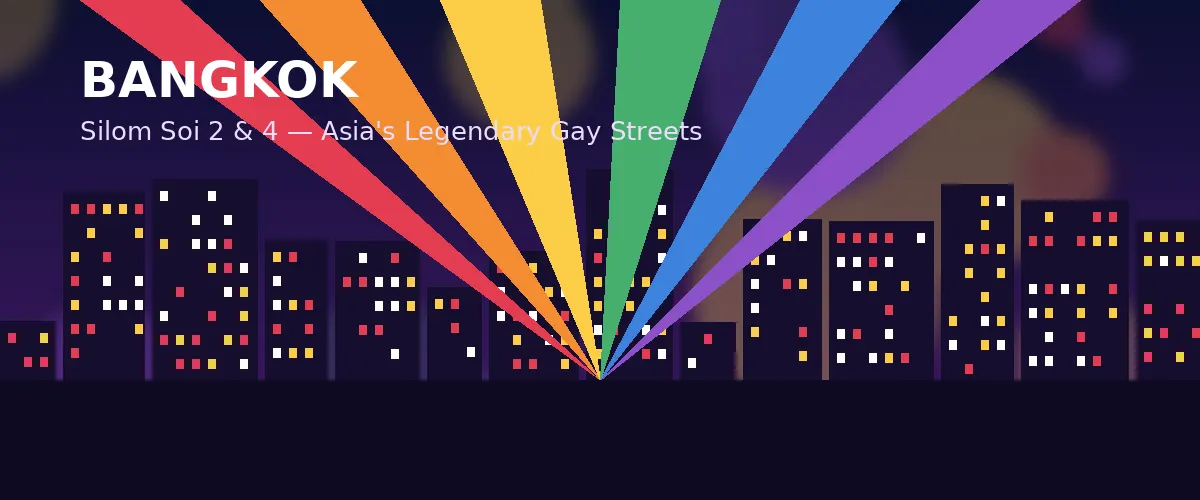
Bangkok hosts one of Asia’s largest and most international gay scenes, centered on the Silom district:
- Silom Soi 4 — the pedestrian lane of open-front bars that has anchored gay Bangkok for decades. Evenings start here: drinks, people-watching, and zero pressure. Busy every night of the week.
- Silom Soi 2 — where the night escalates. The street’s clubs run until late, drawing a mixed crowd of locals, expats, and travelers from across Asia.
- Drag and cabaret — Bangkok’s drag scene spans polished theater cabarets to riotous bar shows, and a drag night makes a perfect date-night centerpiece.
- Beyond the scene — the Grand Palace and Wat Arun at golden hour, canal boats through Thonburi, rooftop sunsets, Chatuchak weekend market, and street food that ruins you for street food everywhere else. Our Bangkok & Chiang Mai date ideas guide maps out the romantic side in detail.
- Where to stay — Silom puts the scene on your doorstep; Sukhumvit offers rooftop hotels and easy BTS access; the riverside delivers the postcard views. All three are safe and LGBTQ+-welcoming.
Chiang Mai: The Gentle North
Thailand’s second city trades Bangkok’s intensity for mountain air, 300+ temples, and Southeast Asia’s best café culture. Visiting couples consistently describe the city as remarkably relaxed — hand-holding on busy streets included.
- The scene — smaller and friendlier than Bangkok’s: a cluster of long-running gay bars and cabaret spots around the Night Bazaar area. The intimacy is the charm; by night two, the bartender knows your order.
- The days — Doi Suthep at golden hour, the Old City temple circuit, Nimman café-hopping, ethical elephant sanctuaries, and craft workshops in the mountains.
- The vibe — Chiang Mai suits slow travelers: yoga retreats, digital nomads, couples who prefer sunrise alms rounds to sunrise afterparties. Many visitors plan three days and stay three weeks.
Phuket, Pattaya & the Islands: Sun and Scene
- Phuket — the island’s gay life clusters around Patong’s Paradise Complex: bars, cabarets, and a beach scene that draws visitors from Europe, Australia, and the Americas. April is the big month, when Phuket Pride takes over.
- Pattaya — a divisive city with an undeniably established scene across BoyzTown and the Jomtien Complex, plus a famous beachfront. Closest beach scene to Bangkok.
- Koh Samui — resort-island calm with a younger backpacker current from the Full Moon Party circuit. Better for romantic escape than nightlife.
- Krabi, Koh Phi Phi, Koh Tao — no dedicated gay scenes, but universally easygoing. These are the honeymoon islands: limestone karsts, dive schools, and beaches that need no filter.
City-by-City at a Glance
| Destination | Scene Size | Best For | Signature Experience |
|---|---|---|---|
| Bangkok | Large, international | Nightlife, first visit, food | Silom Soi 4 evening into Soi 2 night |
| Chiang Mai | Small, friendly | Culture, couples, slow travel | Doi Suthep golden hour + café days |
| Phuket | Medium, beach-party | Beach + nightlife combo | Paradise Complex cabaret night |
| Pattaya | Medium, established | Beach scene near Bangkok | Jomtien beach day, BoyzTown night |
| Koh Samui | Small | Resort romance | Private villa sunset |
| Krabi / Phi Phi | None, but easygoing | Honeymoons, nature | Longtail boat island-hopping |
The LGBTQ+ Events Calendar Worth Planning Around
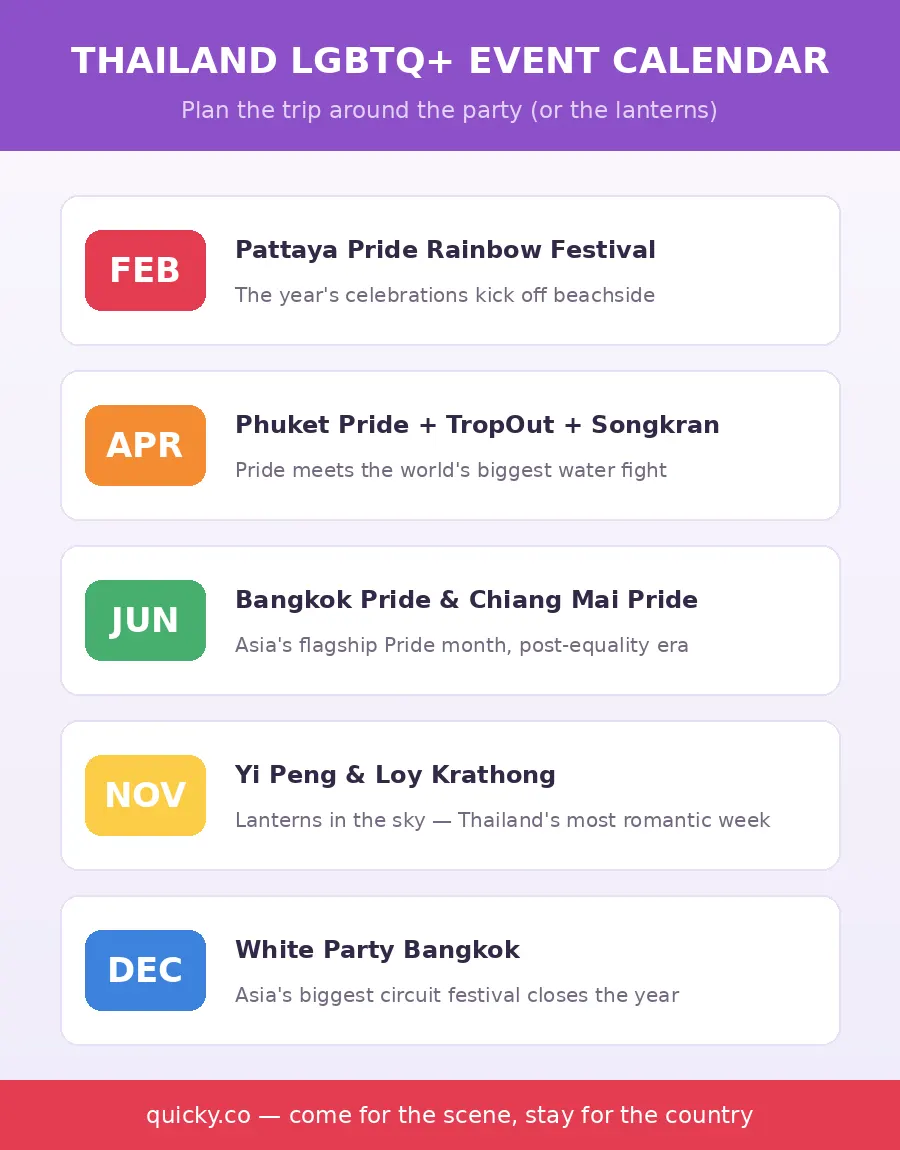
- February — Pattaya Pride Rainbow Festival kicks off the year’s celebrations.
- April — Phuket Pride and the TropOut festival collide with Songkran, Thailand’s nationwide water-festival new year: the single wettest, happiest week to be in the country.
- June — Bangkok Pride, grown into one of Asia’s flagship Pride celebrations since marriage equality, with Chiang Mai’s parade adding a northern chapter.
- November — Yi Peng and Loy Krathong: lanterns in the Chiang Mai sky, candles on every waterway. Not an LGBTQ+ event, but the most romantic week in the Thai calendar.
- December — White Party Bangkok, Asia’s biggest circuit festival, closes the year at full volume.
Culture Tips: How to Be the Guest Thailand Loves
- Keep PDA gentle outside nightlife zones. Thai culture is publicly modest for all couples. Hand-holding is fine nearly everywhere; save more than that for Silom after dark.
- Dress and act respectfully at temples. Covered shoulders and knees, shoes off, voices low. The rules apply to everyone and are warmly appreciated when followed.
- Respect the monarchy and the culture. Thais hold both dearly, and visitors should too — legally as well as socially.
- Learn five words of Thai. Sawasdee (hello), khob khun (thank you), and a smile will upgrade every interaction you have.
- Tip modestly, bargain kindly. Rounding up bills and friendly market haggling are both normal; aggression at either is not.
Meeting Locals: The Part Group Tours Can’t Give You
Here’s the truth every travel writer knows: the best Thailand experiences come from Thai friends. The night market stall a local swears by, the viewpoint that isn’t on Maps, the bar where the show is for the neighborhood rather than the tour bus — none of it is bookable.
- Use community apps thoughtfully. A locally built app like Quicky — made by and for the Thai LGBTQ+ community — connects you with locals who actually live in the city you’re visiting, whether you’re after friendship and travel buddies or something more romantic.
- Be upfront about your dates. “Visiting Bangkok until Sunday, would love a local’s tour of Silom” is honest and appealing. Pretending otherwise wastes everyone’s week.
- Meet smart. The same rules apply abroad as at home — public first meeting, video call beforehand, a friend who knows your plan. Traveling adds a layer: our gay dating safety guide has a dedicated section on dating while traveling.
- Reciprocate. If a local shows you their city, pick up the bill, bring the enthusiasm, and return the favor when they visit yours. Community is a two-way street.
Getting Around: Logistics Made Easy
Thailand’s tourism infrastructure is among the smoothest in Asia, and moving between the scenes is half the fun:
- Bangkok in-city: the BTS Skytrain and MRT cover the essential districts fast and cheap — Silom has its own stations. Ride-hailing apps fill the gaps; agree taxi fares or insist on the meter before setting off.
- Bangkok ↔ Chiang Mai: a one-hour flight on any of several daily budget services, or — the romantic option — the overnight sleeper train, which turns transit into a date.
- To the islands: direct flights reach Phuket, Krabi, and Samui from Bangkok; ferries connect the island chains. Book ahead in high season (December–January and April).
- SIMs and money: tourist SIMs with generous data are sold at every airport; cards are widely accepted in cities while markets and street food remain cash-first. ATMs are everywhere.
What a Gay Thailand Trip Actually Costs
Thailand famously flexes to every budget — the same city delivers a backpacker week and a five-star honeymoon with equal grace:
- Budget (roughly ฿1,500–2,500/day): guesthouses or hostels, street food feasts, BTS and songthaews, free temples and beaches, happy-hour drinks on Soi 4. Nothing about this tier feels like sacrifice.
- Mid-range (฿3,000–6,000/day): boutique hotels in Silom or Nimman, a rooftop cocktail each night, massages every other day, domestic flights between cities, cabaret tickets.
- Splurge (฿8,000+/day): riverside suites, private longtail charters, tasting menus, beach-villa island stays. Thailand’s luxury tier undercuts equivalent experiences in Europe by half or more.
- What surprises visitors: the massive quality of the cheap end (a ฿60 bowl of boat noodles will haunt you) and how affordable “treat yourself” moments are — a two-hour massage costs less than a cinema ticket back home.
Frequently Asked Questions (FAQ)
Is Thailand safe for gay travelers?
Thailand is widely regarded as the safest and most welcoming destination in Asia for LGBTQ+ travelers. Homosexuality has never been criminalized, same-sex marriage is legal, and tourist areas are thoroughly accustomed to LGBTQ+ visitors. Standard travel precautions apply — but discrimination against travelers is rare, especially in Bangkok, Chiang Mai, and the island destinations.
When is the best time to visit gay Thailand?
November to February offers the best weather nationwide — cool, dry, and festival-rich (Yi Peng in November, White Party in December). April brings Songkran and Phuket Pride for party-focused trips, and June is the month for Bangkok Pride. The rainy season (roughly May–October) still works well, with afternoon downpours and lower prices.
Can same-sex couples get married in Thailand?
Yes. Thailand legalized same-sex marriage — the first country in Southeast Asia to do so — and both Thai citizens and, subject to document requirements, foreign couples have been able to register marriages. Destination weddings and honeymoons have boomed accordingly. Check current requirements with a Thai district office or embassy, as documentation rules for foreigners vary by nationality.
Do I need to speak Thai to get around?
No — English is widely spoken throughout the tourism industry, and Bangkok, Chiang Mai, and the islands are easily navigated in English. That said, a handful of Thai phrases earns outsized goodwill, and translation apps close any remaining gaps.
Is Thailand good for solo LGBTQ+ travelers?
Exceptionally. The hostel and café culture makes meeting people effortless, the scene in every major city is welcoming to newcomers walking in alone, and community apps connect you with locals before you even land. Many solo travelers report that Thailand is where traveling alone stopped feeling lonely — between bar neighbors, tour groups, and new local friends, company finds you.
Conclusion: Come for the Scene, Stay for the Country
Gay Thailand delivers what it promises — the bars of Silom, the cabarets of Patong, a Pride calendar that spans the year. But the travelers who fall hardest for Thailand are the ones who let the country past the nightlife: temple mornings in Chiang Mai, lantern nights in November, islands with no scene and no need for one, and Thai friends who turn a destination into a place you return to.
Whether it is a first long weekend in Silom or a month drifting between mountains and islands, the formula stays the same: plan around the calendar, honor the culture, meet the locals — and don’t be surprised when one trip becomes an annual tradition. And if you happen to meet someone who makes leaving harder than expected? We’ve got a guide for that too.
References
- IGLTA (International LGBTQ+ Travel Association) — Gay Thailand: LGBTQ+ Travel Guide
- Nomadic Boys — Gay Travel to Thailand: Country Guide
- Out Adventures — Thailand Gay Travel