
Rejection is one of the hardest parts of dating because it can feel so immediate, especially on apps. A conversation slows down, a match disappears, someone says he is not interested, or a date that seemed promising never turns into a second one. Even when you understand this happens to everyone, it can still land in a very personal way. That is why learning how to handle rejection on gay dating apps without taking it personally matters so much for your confidence and emotional stability.
If you want the broader confidence foundation behind this topic, start with Gay Dating Confidence: Build Self-Esteem Without Chasing Validation. This article focuses on a specific challenge inside that bigger issue: how to deal with rejection on dating apps without letting it define your worth.
On Quicky or any other dating app, rejection does not always arrive clearly. Sometimes it is direct, but often it looks like silence, inconsistency, mixed signals, or someone suddenly losing energy. That ambiguity can make it even easier to spiral. The key is not pretending rejection feels good. The key is responding in a way that keeps perspective, protects your self-respect, and helps you stay open to dating without becoming emotionally bruised by every setback.
In this article
Why Rejection Hits So Hard on Dating Apps
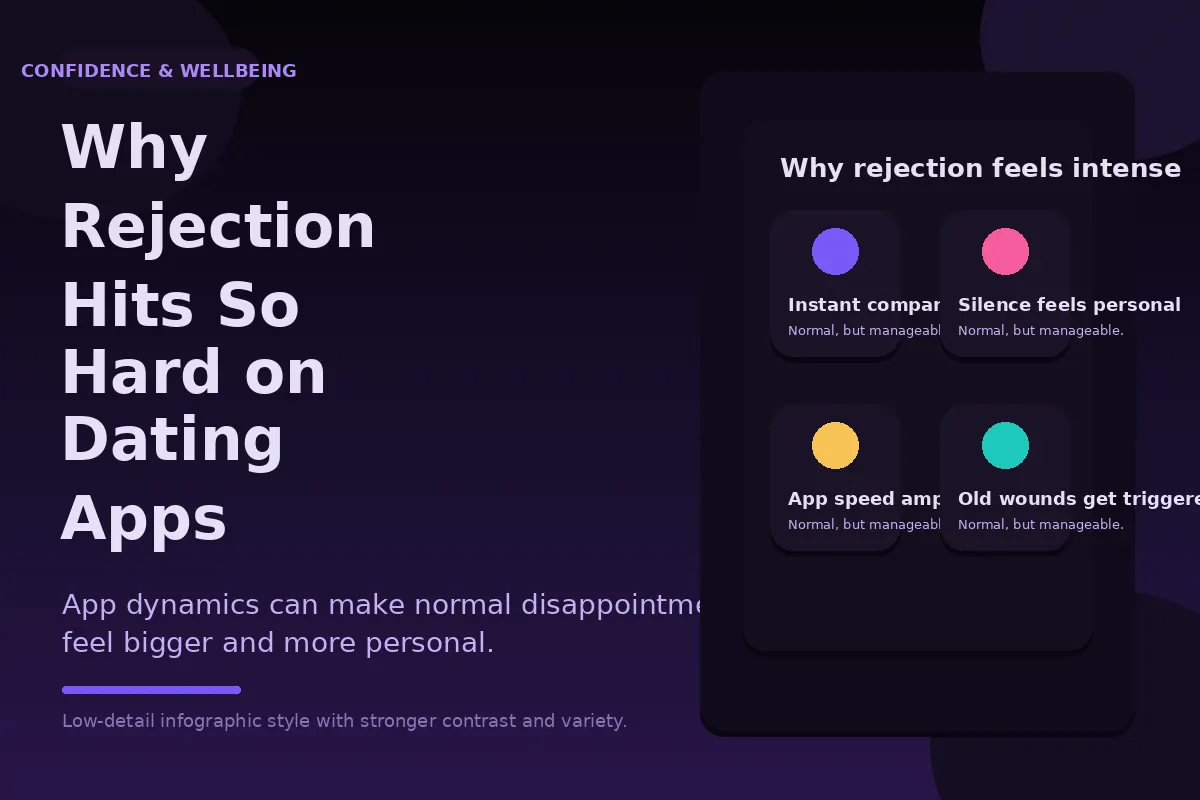
Dating apps compress a lot of emotion into a fast and highly visible space. You are often making yourself available, hoping for connection, and receiving feedback in real time. That feedback may not be spoken, but it still lands. A message left unanswered or a match that disappears can feel like a mini public vote on your desirability, even when that is not what it really means.
This can feel especially intense in gay dating because apps may play a large role in how people meet. If dating apps are one of your main ways to connect, each interaction can carry more emotional weight. You may also compare yourself more often, notice who seems to get more attention, or start wondering whether you are being passed over for reasons that feel personal. These patterns are common, but they can distort reality quickly.
Another reason rejection hits hard is that it often activates older insecurities. Maybe you already worry about being too much, not enough, too late, too different, or too easily forgotten. Rejection does not create all of those fears, but it can awaken them. That is why the emotional reaction may feel bigger than the situation itself.
Stop Treating Every Non-Response as a Verdict
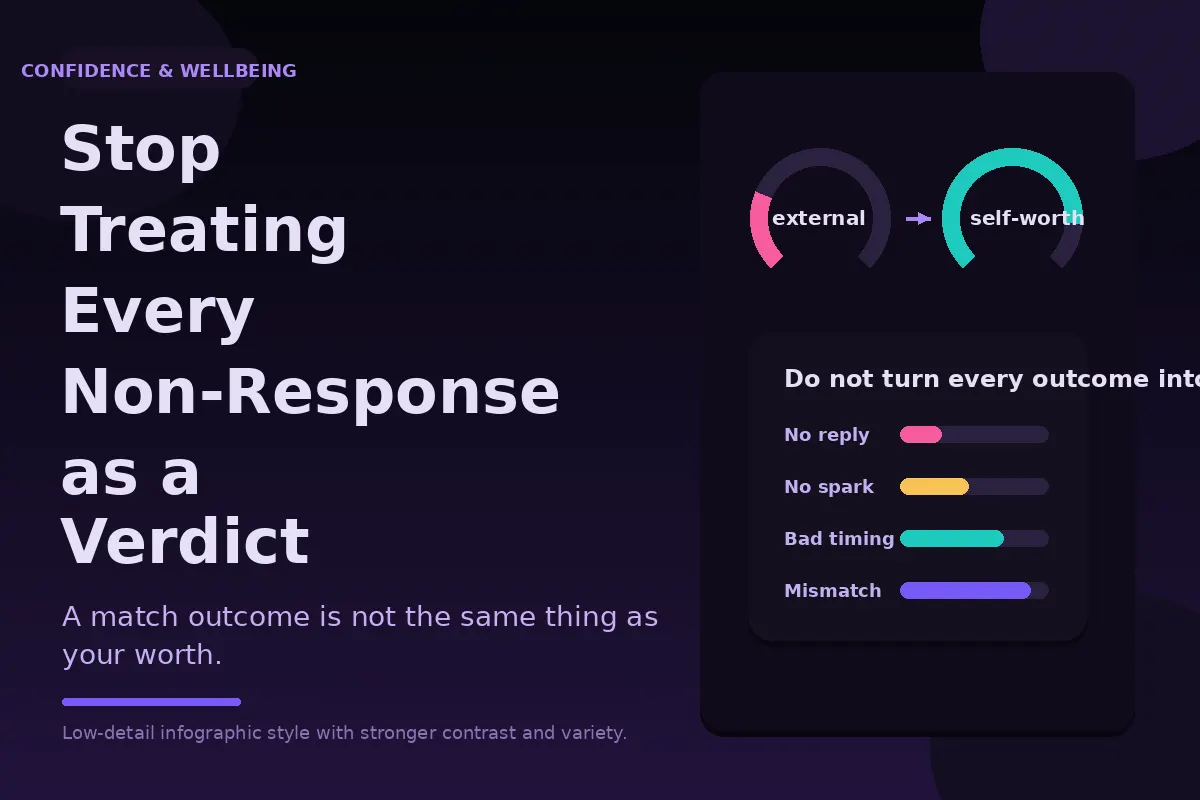
One of the most useful shifts you can make is separating outcomes from identity. Someone not replying, losing interest, or deciding not to meet you is an outcome. It is not a full statement about your attractiveness, your personality, or your long-term dating potential. When you collapse those two things together, every small disappointment starts to feel like evidence against you.
There are many reasons a person may not respond or continue. He may be distracted, overwhelmed, emotionally unavailable, inconsistent, recently out of something serious, only half-committed to dating, or simply not feeling the right fit. Some of those reasons are thoughtful. Some are messy. Either way, they are not all about you.
The problem comes when your mind fills in the blanks with the harshest possible interpretation. Instead of “This did not go anywhere,” you tell yourself, “I am forgettable,” or “No one really wants me.” That leap is where rejection becomes identity damage. Learning to interrupt that leap can change the whole experience.
- An unanswered message is not proof you are unwanted.
- A mismatch is not the same as a personal failure.
- App behavior often reflects timing and habits, not just chemistry.
- You do not need total explanation to protect your perspective.
Reframe Rejection as Mismatch, Not Failure
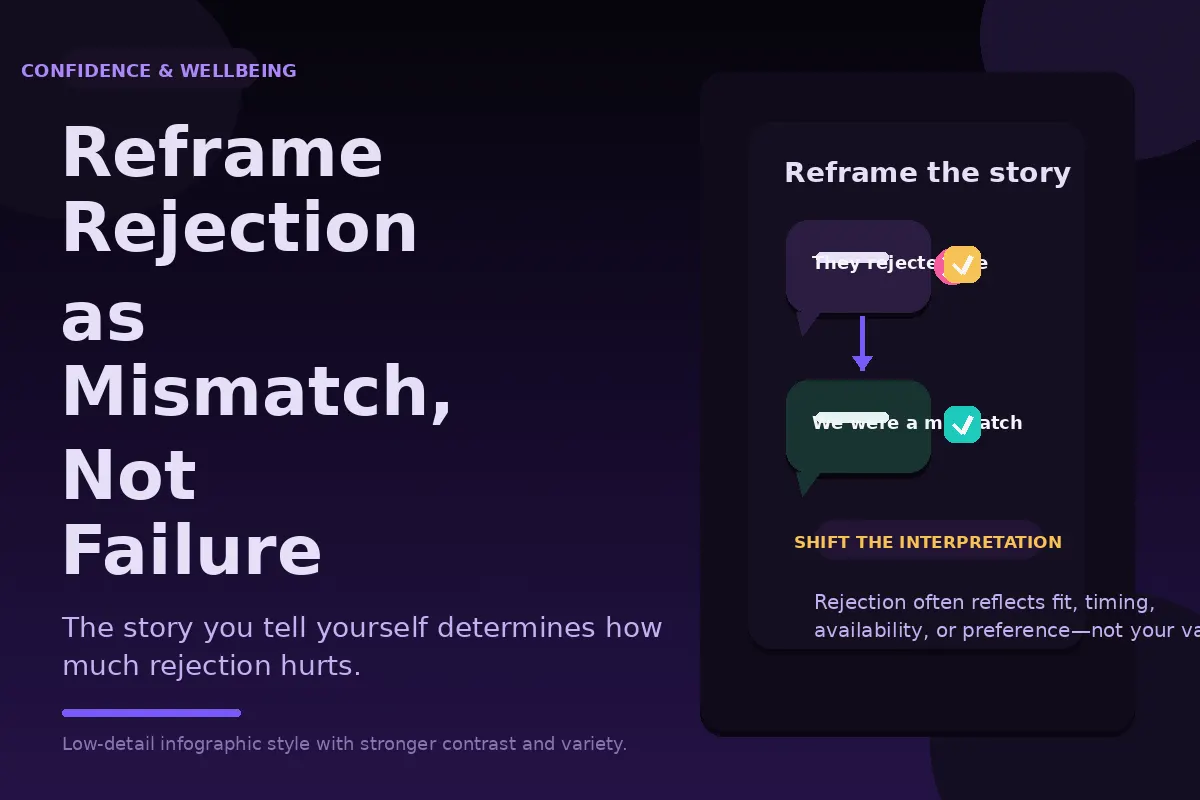
Reframing does not mean denying that something stung. It means choosing a more accurate interpretation. Instead of assuming rejection means there is something wrong with you, try viewing it as information about fit, preference, or timing. That framing creates emotional distance without forcing fake positivity.
A useful question is this: what if this was not a verdict, but a sorting process? Dating works by narrowing. You are not supposed to be right for everyone. People are not all looking for the same energy, timing, goals, communication style, or chemistry. The fact that someone did not move forward may say more about the mismatch than about your value.
This matters because the story you repeat becomes the emotional truth you live inside. If your story is “I got rejected because I’m not enough,” your confidence shrinks. If your story becomes “This was not the right fit, and that is part of dating,” disappointment becomes easier to carry. You still feel it, but it does not define you.
| Unhelpful interpretation | Healthier reframe | Why it helps |
|---|---|---|
| He stopped replying because I am boring. | He stopped replying and I do not need to invent the harshest reason. | Protects you from filling silence with self-attack. |
| No second date means I failed. | No second date means the fit was not strong enough for one or both of us. | Turns the moment into information, not shame. |
| If he liked me, this would have worked. | Attraction is only one part of dating; timing and readiness matter too. | Creates a more realistic view of connection. |
| Rejection proves I am not desirable. | Rejection is part of the process for almost everyone. | Restores perspective and normalizes the experience. |
Watch the Habits That Make Rejection Feel Worse
Some reactions naturally intensify rejection. Re-reading the conversation repeatedly, checking whether the person is online, comparing yourself to other profiles, and creating detailed theories about what went wrong can all deepen the wound. These habits feel like they will give you clarity, but they often keep you emotionally stuck instead.
Another common trap is chasing closure from someone who has already shown limited interest. If a person has become clearly distant, pressing for more validation can make you feel more exposed rather than more settled. Sometimes the healthiest closure comes from your own decision to stop asking the situation to explain your value back to you.
It also helps to notice when rejection on the app starts blending into your wider self-view. If one disappointing interaction suddenly changes the way you think about your appearance, lovability, or future chances, pause. That is a sign the experience is starting to generalize too far.
Build Recovery Habits That Protect Your Confidence
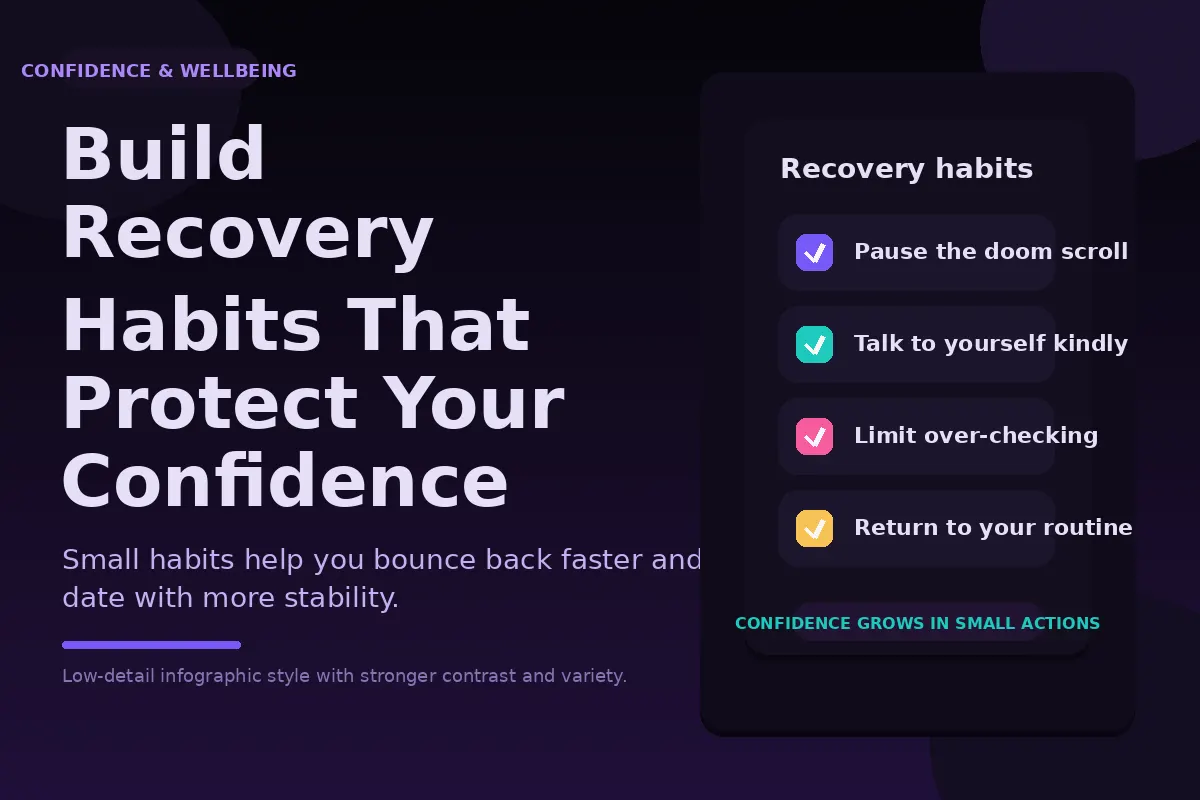
Confidence after rejection is rarely rebuilt by one big insight. It usually returns through small stabilizing habits. Step away from the app for a bit if you need to. Talk to yourself the way you would talk to a friend. Do something that reminds you who you are outside of dating. Return to routines that make you feel grounded, capable, and connected to your own life.
It can also help to set boundaries around how much emotional weight you let any single app interaction carry. Not every match deserves a fantasy. Not every good opening conversation deserves a full emotional investment. Letting things build more gradually can protect you from the sharp crash that happens when early hope outruns actual reality.
Recovery habits also include perspective habits. Remind yourself that interest is not a reward for being worthy. It is just one person’s response at one moment in time. When you hold that truth firmly, rejection becomes disappointing but less damaging.
- Take a short break from the app when needed.
- Replace self-criticism with a calmer internal voice.
- Keep dating in proportion to the rest of your life.
- Let new connections earn deeper emotional investment over time.
Confidence Grows When You Stay Honest and Self-Respecting
One of the best ways to handle rejection is staying rooted in behavior you actually respect. If you were genuine, kind, clear, and appropriately open, then you can let the outcome belong to the outcome. You do not need every interaction to validate you if you already know you showed up in a way that matches your values.
This is different from pretending you never care. Of course you care. The point is to keep your dignity even when someone else does not choose you. You can feel disappointed without begging for reassurance. You can be hurt without turning cruel to yourself. You can still want connection without interpreting every rejection as proof you should want less.
That kind of self-respect builds a more stable form of confidence. It is not based on constant attention or perfect outcomes. It comes from knowing you can survive dating honestly, even when not every person responds the way you hoped.
Rejection Does Not Get the Final Word
Handling rejection on gay dating apps without taking it personally is really about learning to separate momentary outcomes from lasting self-worth. Rejection may still sting, but it does not have to become an identity crisis. When you understand why the app environment makes rejection feel heavier, interrupt harsh interpretations, reframe mismatch more accurately, and use recovery habits that protect confidence, you give yourself a much better experience of dating overall.
You do not need to become immune to disappointment. You only need to stop letting disappointment speak for your value. That shift makes dating lighter, steadier, and more sustainable. And that is what allows confidence to grow instead of being rebuilt from scratch after every setback.