

There are only a handful of true bosses in the relationship video game, and this is one of them: meeting his family. The stakes feel enormous because they kind of are — these are the people whose opinions echo in his head, whose dinners you’ll attend for years if this goes the distance, and whose acceptance turns a relationship from a private world into a supported one. For gay couples the moment carries extra layers: questions of who’s out to whom, what you’ll be introduced as, and — in Thailand especially — a family culture with its own beautiful, specific etiquette.
The good news: this is a preparation game, and prepared couples win it constantly. Here’s the complete playbook — the prerequisites to settle first, the two-way briefing, the Thai-family etiquette that earns quiet approval, the day-of moves, and the long game for when the first welcome is cooler than you hoped.
In this article
Before Anyone Meets Anyone: The Prerequisites
- Settle the “out” status honestly. The single most important pre-question: does his family know, and what do they know? Being introduced as the partner, the “friend,” or something deliberately unlabeled are three different evenings — and you deserve to know which one you’re walking into before you’re standing in it, not during the fruit course.
- Don’t combine coming out with the introduction. Experts are unanimous: using your arrival as the coming-out moment overloads everyone — the family processes two enormous things at once, and you become the face of the news. If the coming-out conversation hasn’t happened, it goes first, with breathing room after (our coming out guide covers the spacing).
- Agree on the label and the affection level. “Partner”? “Boyfriend”? “แฟน”? And is hand-holding on the table, or is this a low-key first pass? Whatever you both choose is fine — mismatched improvisation is what goes wrong. Decide together, out loud, in the car if necessary.
- Both of you get veto power on timing. The introduction happens when the relationship is ready and both people want it — not because a holiday created an opening or an aunt applied pressure. A rushed introduction risks a first impression you can’t re-take.
The Two-Way Briefing: Prep Him, Prep Them
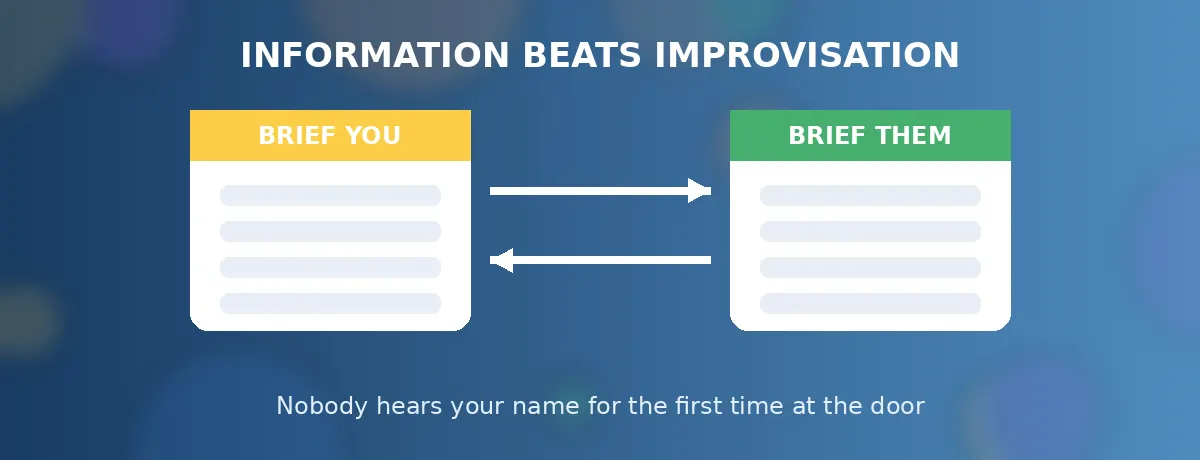
Etiquette writers on this topic converge on one principle: information beats improvisation, in both directions.
- His job — brief you thoroughly: who’s warm and who’s wary (and any history of who took his coming out well or badly), what topics land (mom’s garden, dad’s football team) and which to avoid, family in-jokes, dietary customs, and the small stuff that reads as care — knowing his sister’s kids’ names is worth an hour of charm.
- His job — brief them too: per the etiquette experts, family should never hear your name for the first time at the door. He tells them who’s coming, that this person matters, and a few facts to build conversation from (“he runs marathons, he’s from Khon Kaen, he makes incredible gaeng som”). Prepared relatives ask better questions than surprised ones.
- Find the bridges in advance. The classic move: identify what you share with each family member — same team, same hobby, same hometown region — and let him seed those connections. “He cooks like Mom” is a lukewarm-to-warm converter with a documented success rate.
- Agree on a rescue signal. A look, a phrase, a sudden need for help in the kitchen — some low-drama way to tag each other in when a conversation corner gets tight.
Setting & Timing: Engineer the Easy Version
- Neutral ground for round one, when possible. A café, restaurant, or park walk puts everyone on equal footing — no home-turf advantage, no houseguest pressure, and a natural time limit. Everyone is their best self when the event has edges.
- Time-box it. A ninety-minute lunch beats an open-ended evening. If it’s going wonderfully, it ends with everyone wanting more — the correct outcome. Longer visits are for later rounds.
- Skip the holiday ambush. Major holidays look convenient and are actually maximum-stakes: heightened emotions, big audiences, no exits. If a holiday visit is genuinely the only option (his family is far away), book separate accommodation — being a first-time houseguest during the most stressful week of the year is an advanced-level challenge nobody needs.
- Small cast first. Parents first, or parents plus one friendly sibling — not the full extended family festival. Win the inner circle; let them advocate for you at the bigger table later.
The Thai Family Edition: Etiquette That Speaks Louder Than Words
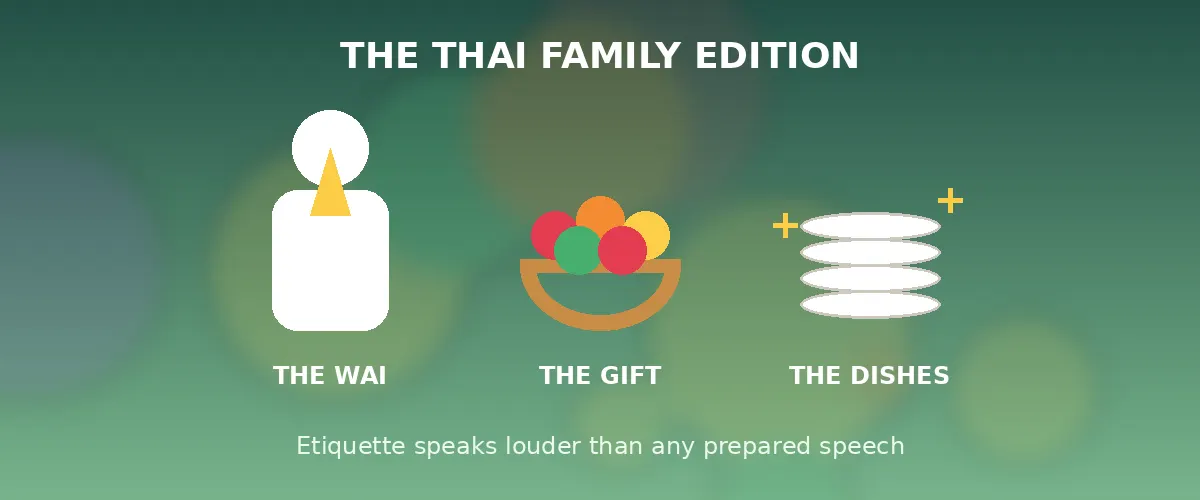
Meeting a Thai family runs on its own quiet grammar, and fluency in it earns more goodwill than any prepared speech:
- The wai, done right. Greet parents and elders with a proper wai — hands high, small bow, genuine. Wait to be invited before switching to more casual greetings. Getting this right in the first ten seconds sets the whole tone.
- Never arrive empty-handed. Quality fruit, good desserts (a well-chosen box from a respected shop), or something from your hometown. Not extravagant — thoughtful. The gift says “I understand how this works,” which is the actual message.
- Honor the food rituals. Compliment the cooking specifically and often — it’s the language of Thai family love. Accept seconds (strategically pace yourself). Wait for elders to start. And the power move that never fails: help clear the table and offer to do dishes. Thai mothers have approved sons-in-law over less.
- Respect the label they can handle. Many Thai families operate on the “showing not announcing” system — you may be introduced as a friend even when everyone quietly understands more. Don’t correct the record at the table; the extra place setting that keeps appearing for you is the acceptance, arriving in the dialect this family speaks. (Fuller context in our coming out guide‘s Thai path section.)
- Mind the hierarchy touches. Let elders lead conversation, don’t tower over seated grandparents (lower your head slightly when passing), mind your feet, and offer things with the right hand or both hands. Small physical courtesies that register deeply.
- Kreng jai works in your favor here. Being modest, easygoing, and low-maintenance as a guest — accepting what’s offered, praising generously, needing nothing — is exactly the impression that gets discussed approvingly after you leave.
The Day-Of Playbook
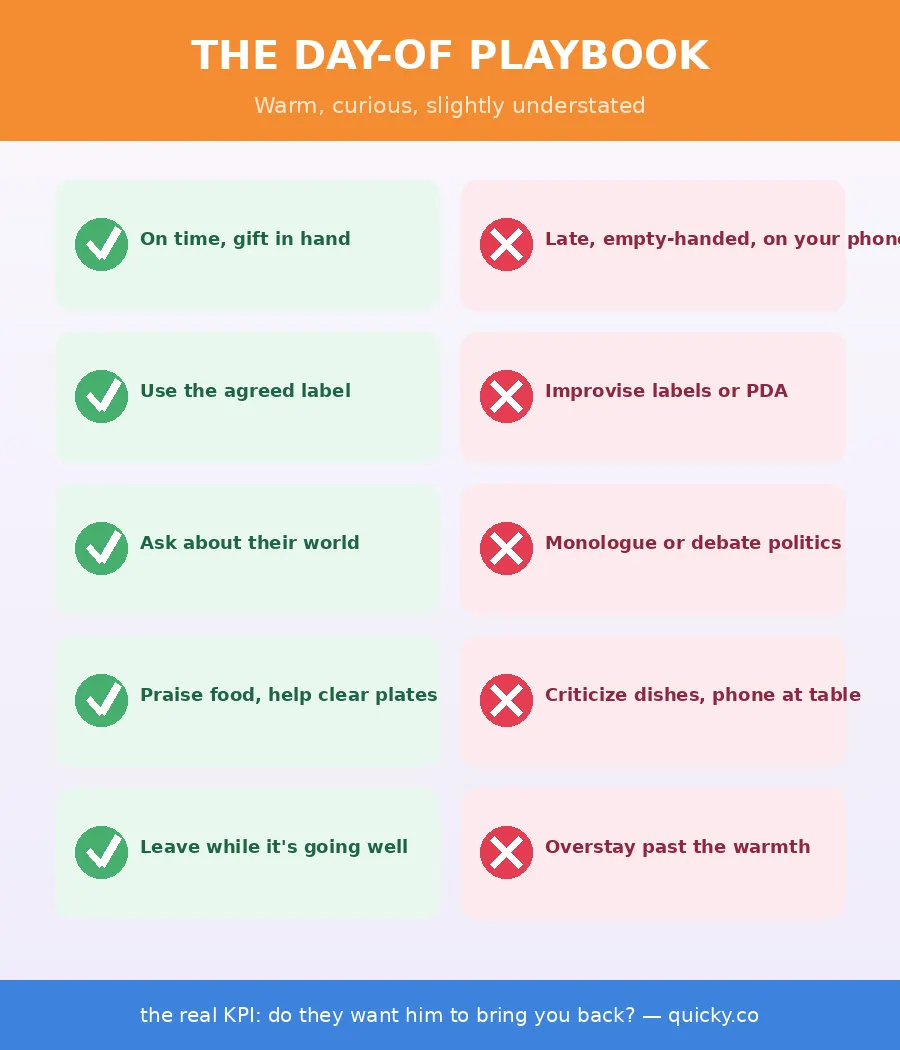
| Moment | Do | Don’t |
|---|---|---|
| Arrival | On time, gift in hand, proper greetings, warm smile | Arrive late, empty-handed, or glued to your phone |
| Introductions | Use the agreed label; follow his lead on affection | Improvise labels or PDA levels you didn’t discuss |
| Conversation | Ask about them — their town, garden, recipes, grandkids | Monologue about yourself, or debate politics/religion |
| The meal | Praise the food, accept seconds, help clear plates | Criticize dishes, check your phone at the table |
| Awkward gaps | Let your boyfriend moderate; deploy prepared topics | Panic-fill silence or overshare to compensate |
| Departure | Thank hosts specifically; leave while it’s going well | Overstay, or leave without warm goodbyes to elders |
General calibration: aim for warm, curious, and slightly understated. You don’t need to be the most impressive person at the table — you need to be the one who made everyone comfortable, and those are usually different people. Dress one notch nicer than the setting requires, keep your phone invisible, and remember the evening’s real KPI: do they want him to bring you back?
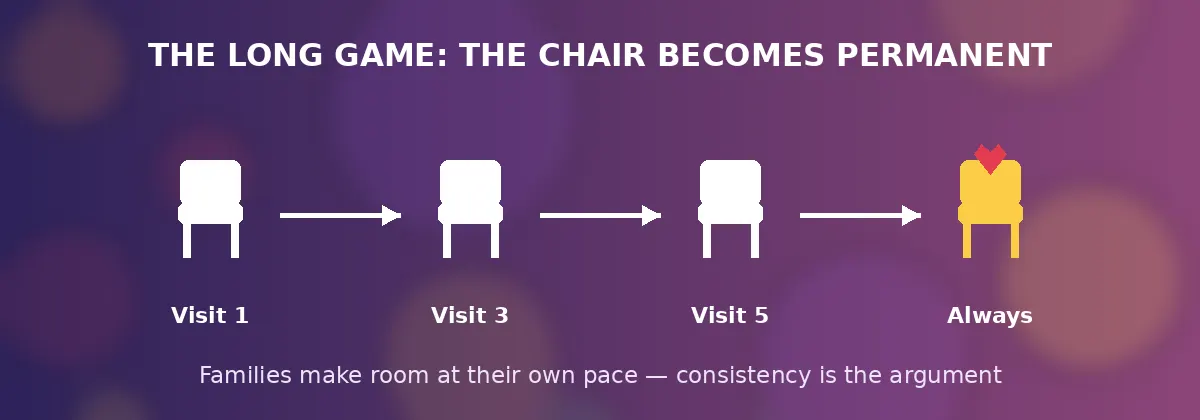
Afterward: The Debrief and the Long Game
- Debrief as a couple, gently. What went well, who warmed up, any moments to decode (“your dad went quiet when…”). One meeting is a data point, not a verdict — first impressions of families deserve the same patience you’d want from them.
- Send the thank-you. A short message through him — or directly if numbers were exchanged — thanking them for the meal, naming a dish. Small, remembered forever.
- If the welcome was lukewarm: play the long game. Cool politeness at meeting one frequently becomes genuine warmth by meeting five — especially in Thai families, where acceptance often arrives through accumulated normalcy rather than announcements. Keep showing up, keep being kind, and let time and consistency argue your case.
- If it was genuinely cold: his family is his job. The standing rule therapists give mixed-reception couples: each partner manages their own family — advocates for the relationship, sets the boundaries, absorbs the difficult conversations. Your job is to support him, not to win a debate with his father. And a partner who won’t advocate for you with his family over the long term is telling you something the Gay dating red flags: warning signs covers.
- Protect the relationship’s morale. A hard family isn’t a failed relationship. Plenty of thriving couples run on chosen family plus one warm side of the aisle — and family positions soften over years more often than they harden.
Flipping It: When He Meets Yours
Everything above runs in reverse when it’s your family’s turn — and going second is its own advantage: you’ve both learned the choreography. Brief him like you wished you’d been briefed, guard him from the interrogation-prone uncle, agree on labels beforehand, and watch for the quiet Thai acceptance signals on your own side — the extra plate, the “is your friend coming?” that starts preceding every invitation. That’s the sound of a family making room.
Frequently Asked Questions (FAQ)
When should I meet my boyfriend’s family?
When three things align: the relationship is established enough to be worth introducing (typically some months in, not weeks), the coming-out status with his family is settled and separate from your introduction, and both of you actively want it — not because a holiday or relative created pressure. Readiness beats calendar math; a rushed first impression can’t be re-taken.
What should I bring when meeting a Thai family for the first time?
Never arrive empty-handed: quality fruit, good desserts from a respected shop, or a specialty from your hometown all work. The gift should read thoughtful rather than extravagant — it signals respect for how family visits work. Pair it with a proper wai to parents and elders, and you’ve had a great first ten seconds.
What if his family thinks I’m just his friend?
In Thai family culture especially, the “friend” label often coexists with quiet, growing understanding — many families process a partner through gradual normalcy rather than announcements. Don’t correct the record at the dinner table; agree with your boyfriend beforehand on the label and pace you’ll both use, and read acceptance through actions: the standing invitations, the extra plate, the questions about you when you’re absent.
What if his family doesn’t accept me?
Play the long game first: cool first meetings regularly warm over repeated, low-drama exposure, and consistency is persuasive in ways arguments aren’t. Meanwhile, the boundary rule: his family is his to manage — he advocates and absorbs the hard conversations; you support him. If coldness persists for years and he won’t advocate at all, that’s a relationship conversation, not a family one.
Conclusion: The Table Gets Bigger
Meeting his family is a preparation game wearing the costume of a social event: settle the out-status and labels first, run the two-way briefing, engineer a time-boxed neutral first round, speak the etiquette dialect fluently — especially the Thai one, where a wai, a gift, and washed dishes outrank any speech — and then play the long, warm, consistent game. Families make room at their own pace, and the couples who win are rarely the most dazzling; they’re the ones who kept showing up kindly until the extra chair became permanent.
Still looking for the guy whose family table you’ll eventually be nervous about? Quicky is free, ad-free, and built by the Thai LGBTQ+ community — and somewhere on it is a man whose mother is going to love how you do dishes.