
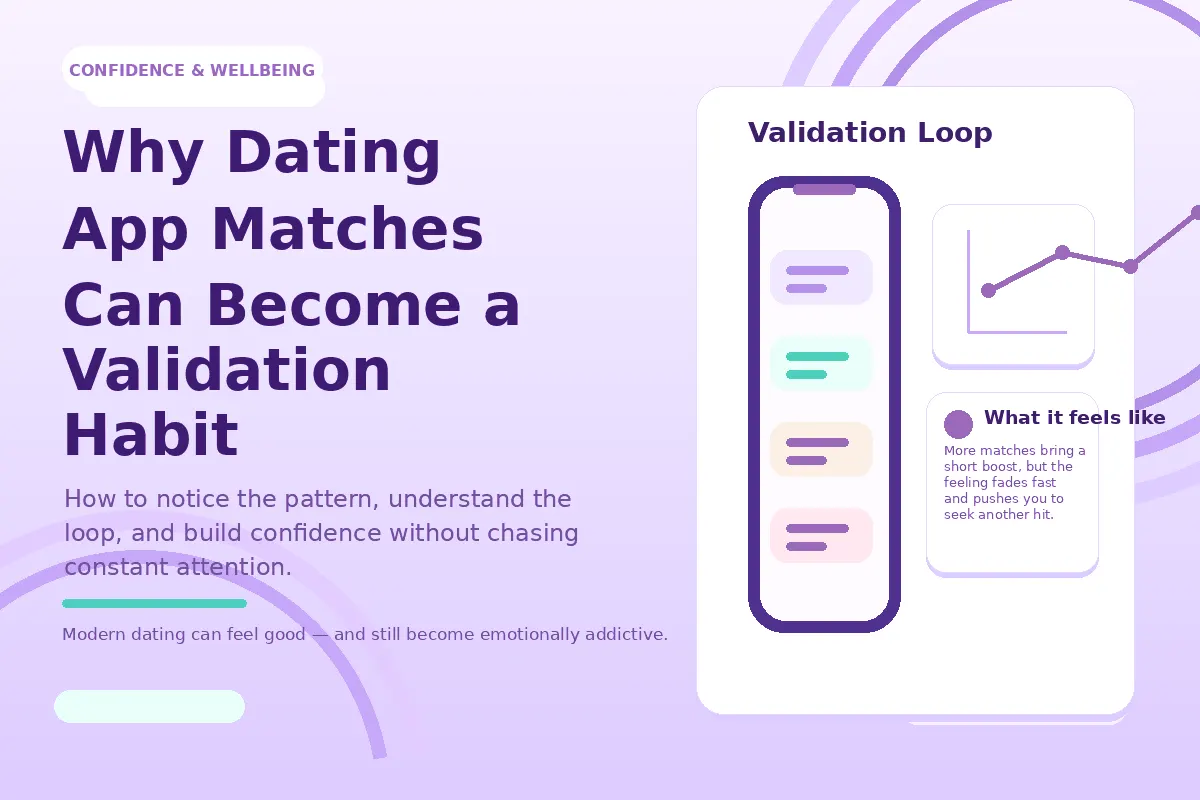
Dating apps can be useful, exciting, and genuinely hopeful. They can also become something else: a fast way to look for reassurance when you feel bored, lonely, uncertain, or emotionally low. When that happens, matches stop being only about dating. They start acting like proof that you are attractive, wanted, or still worth noticing. That is how dating app matches can become a validation habit.
If you want the bigger framework behind this topic, start with Gay Dating Confidence: Build Self-Esteem Without Chasing Validation. This article focuses on one specific pattern inside that bigger issue: how the search for attention on dating apps can slowly shift from healthy curiosity into a cycle of emotional dependence.
That does not mean using dating apps is shallow or unhealthy. Most people enjoy attention. Most people feel good when someone attractive responds well to them. The problem begins when the app becomes your quickest emotional fix, and your mood starts to rise or fall based on likes, messages, and matches from people who may not even know you.
In this article
Why This Pattern Is So Common on Dating Apps
Dating apps are built around quick signals. A new like, a new match, a new message, or even a profile view can create a brief emotional lift. It is not strange to enjoy that. In fact, that small rush is part of why the experience can feel fun in the beginning.
The issue is that the reward is short-lived. The boost fades quickly, especially if the match does not turn into anything meaningful. If you already feel insecure, disconnected, or under-seen in other areas of life, it can be easy to go back for another quick boost. Over time, the app stops being just a tool for meeting people and starts functioning like emotional self-soothing.
This can be especially intense in gay dating spaces where appearance, attention, and competition may already feel highly visible. The faster the environment, the easier it is to confuse attention with worth.
Why the App Reward Cycle Can Feel So Powerful
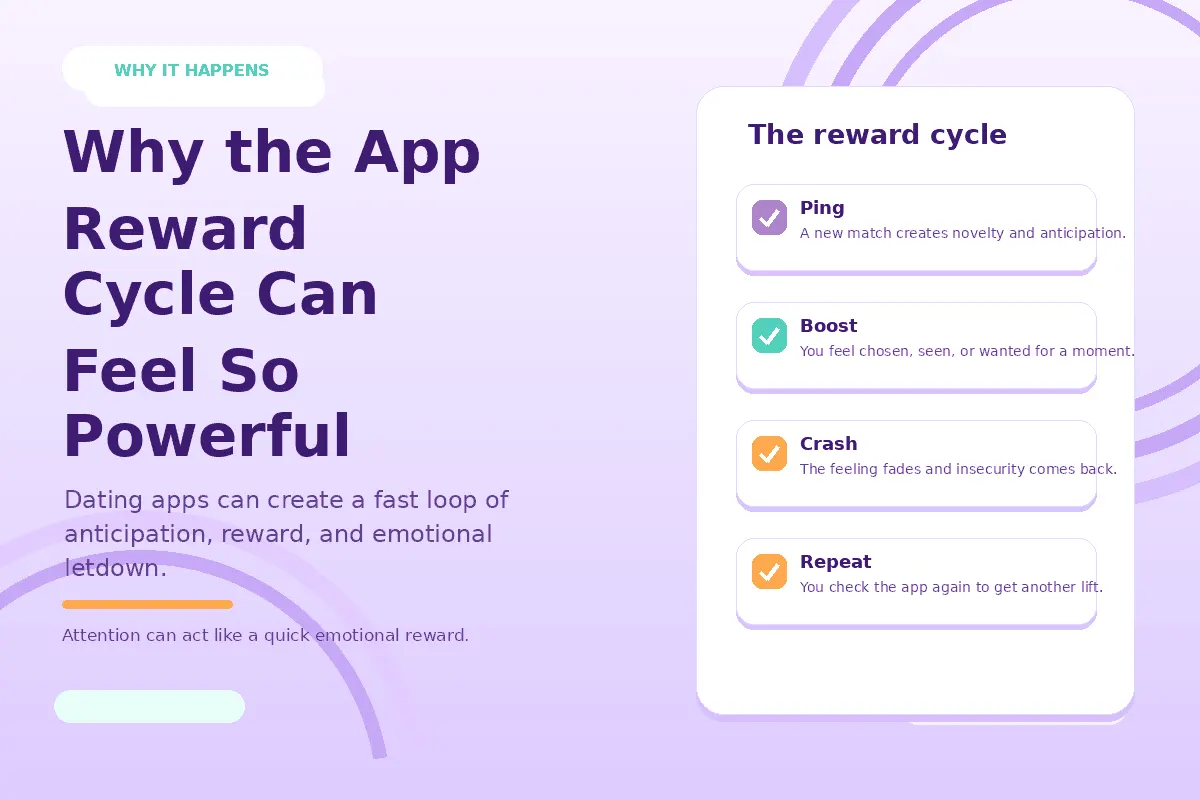
A validation habit often works like a loop. First, there is anticipation. You open the app hoping for something good. Then comes a reward: maybe a new match, a flattering message, or a sign that someone you like noticed you. For a moment, you feel more confident, calmer, or more desirable.
Then the feeling fades. Maybe the match does not reply. Maybe the conversation stalls. Maybe you compare yourself to people getting more attention. That drop can feel surprisingly sharp, which makes the app tempting again. You check it once more, not because you are truly ready for meaningful dating, but because you want the emotional lift again.
This is why the pattern can become sticky. The app is not only offering connection. It is offering relief.
- Anticipation makes opening the app feel exciting.
- A match or message creates a short emotional boost.
- The boost fades quickly when nothing deeper follows.
- You return to the app to recreate the same feeling.
The Difference Between Enjoying Attention and Depending on It
Enjoying attention is normal. Depending on it is different. A healthy response might be, “That felt nice.” An unhealthy pattern sounds more like, “If I do not get enough matches, something must be wrong with me.” The difference is not the behavior alone. It is the emotional meaning you attach to it.
When attention becomes a substitute for self-worth, the app starts controlling too much of your internal state. Silence feels heavier. Rejection feels more personal. A slow night on the app can feel like evidence that you are less attractive or less lovable, even when none of that is true.
The deeper problem is not the app itself. It is the silent belief that external attention is the fastest way to feel okay again.
Signs You Are Using Matches for Emotional Reassurance
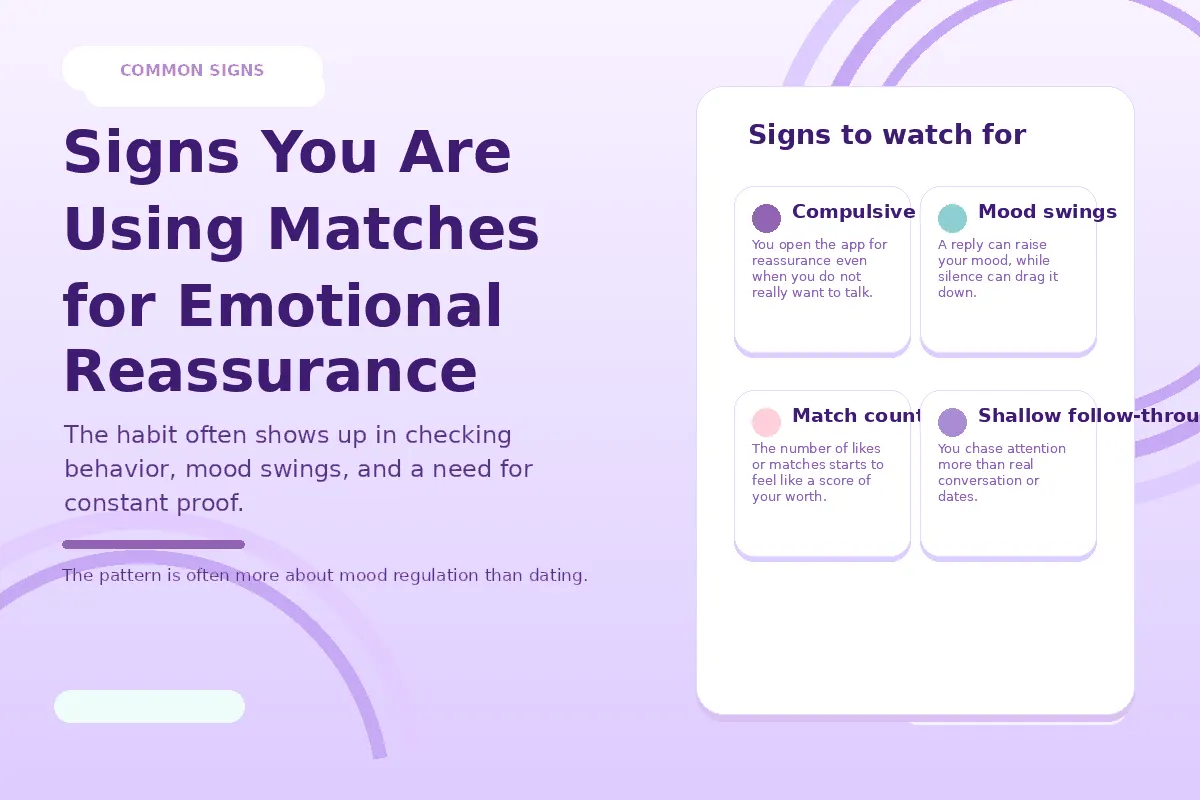
One common sign is compulsive checking. You may open the app automatically, especially when you are stressed, lonely, bored, or feeling rejected somewhere else. Another sign is mood dependency. A reply can make you feel lifted, while a quiet inbox can drag your confidence down much more than it should.
You may also start measuring yourself by numbers. How many likes did you get? How many matches happened this week? How quickly did someone respond? Once those signals become a scoreboard for worth, dating starts to feel less like exploration and more like emotional performance.
Sometimes the clearest sign is shallow follow-through. You may chase the feeling of being wanted more than the actual work of getting to know people. That means lots of swiping, checking, and matching, but less depth, less intention, and fewer grounded conversations.
| Pattern | What it often means | Why it matters |
|---|---|---|
| Compulsive checking | You want relief, not just connection | The app becomes a mood regulator |
| Mood swings after replies | Your confidence is reacting to strangers | External attention gains too much power |
| Counting matches | You are using numbers as self-worth signals | Dating turns into measurement |
| Little real follow-through | You chase the boost more than the bond | The loop keeps replacing meaningful dating |
Why This Habit Can Hurt Your Confidence Over Time
The habit feels helpful at first because it provides small bursts of comfort. Over time, though, it often weakens confidence rather than building it. If your mood depends on getting chosen, then not getting chosen starts to feel like a verdict. The more often that happens, the more fragile your confidence becomes.
It also makes comparison more intense. Dating apps expose you to endless alternatives, constant visual competition, and people who may disappear for reasons that have little to do with you. If you use that environment to decide how valuable you are, the result is usually unstable self-esteem.
In other words, the validation habit may look like confidence-seeking, but it often creates the opposite: more insecurity, more checking, and more emotional dependence.
How to Break the Validation Habit Without Quitting Dating
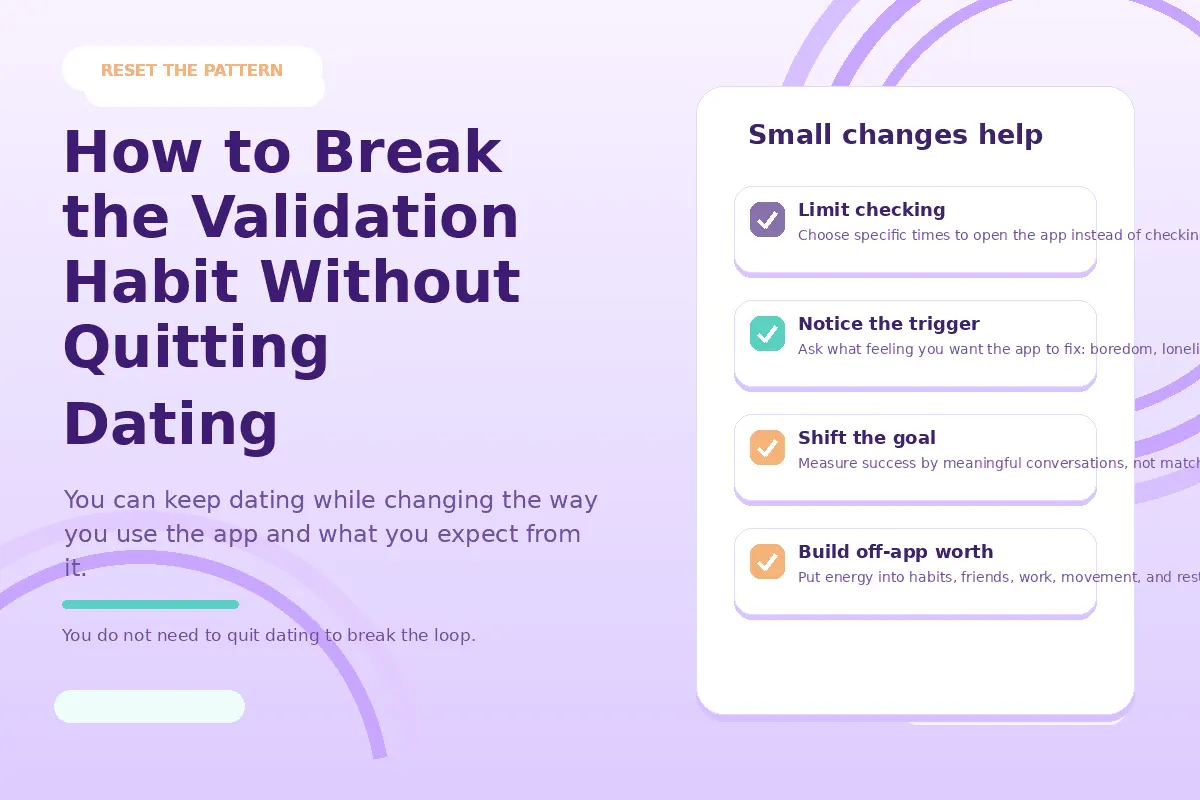
You do not have to delete every app to change the pattern. A more realistic goal is to change your relationship with the app. One helpful step is reducing impulsive checking. Instead of opening it every time you feel low, choose specific times to use it more intentionally.
It also helps to notice the trigger behind the urge. Are you lonely? Restless? Insecure after a bad day? Once you can name the feeling, you have more choices. You can still use the app, but you are less likely to confuse the app with the solution to the feeling.
Another useful shift is redefining success. Instead of measuring success by match count, measure it by quality. Did you have a real conversation? Did you show up honestly? Did you choose people based on fit instead of fantasy? Those questions move you away from validation chasing and back toward actual dating.
- Set times for app use instead of checking constantly.
- Ask what feeling you want the app to fix.
- Focus on conversation quality, not match volume.
- Build more self-worth sources away from the app.
How to Build Confidence That Does Not Depend on Matches
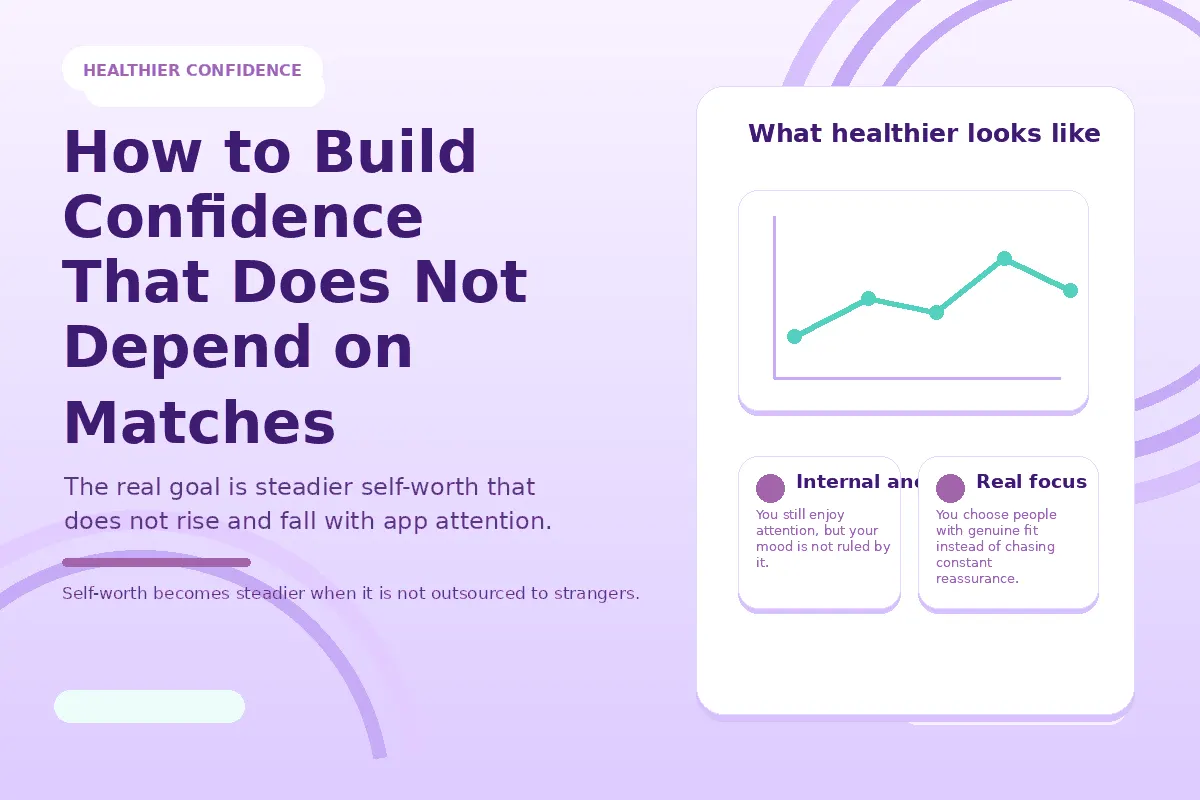
Real confidence grows more steadily when it comes from more than romantic attention. That can include friendships, work, creativity, movement, personal values, therapy, spiritual life, rest, or simply keeping small promises to yourself. None of those things provide the instant hit a match can provide, but they create something better: a more stable sense of self.
When your confidence is more internal, attention feels enjoyable without becoming essential. A good match still feels exciting. A dry spell may still feel disappointing. But neither one defines you. The app returns to its proper role: a tool for meeting people, not a machine for deciding your worth.
That shift is important because it lets you date from abundance instead of emotional hunger. You can become more selective, more present, and more open to genuine connection.
When It May Help to Talk to Someone
If the pattern feels hard to interrupt, or if the highs and lows around dating apps are affecting your mental health, talking to a therapist can help. This is especially true if the app connects to deeper themes such as rejection sensitivity, body image struggles, loneliness, anxiety, or low self-esteem that existed before the app ever entered the picture.
Therapy is not about judging your dating life. It is about understanding the emotional job the app is doing for you and building stronger ways to meet that need. Sometimes the real issue is not dating. It is how much of your self-worth you have learned to outsource.
Getting support can make dating feel lighter, clearer, and less emotionally costly.
Matches Feel Good, but They Cannot Carry Your Self-Worth
Dating app matches can become a validation habit when attention starts functioning like emotional proof. The fix is not to shame yourself for enjoying attention. The fix is to recognize when the app has become your quickest route to feeling okay and to start building a steadier source of confidence outside it.
Once that shift happens, matches become what they were always supposed to be: one part of dating, not the measure of your value. That makes the whole experience healthier. It also gives you a better chance of finding connection that is based on fit, curiosity, and real compatibility instead of chasing the next short-lived boost.
References
- Mental Health America – Co-Dependency – A useful explanation of how low self-esteem can lead people to look outside themselves for something that makes them feel better.
- NHS – Raising Low Self-Esteem – Practical guidance on understanding self-esteem and building a more stable sense of self-worth.