

Love is beautiful, but there’s no denying that money plays an important role in keeping a relationship running smoothly. Now that marriage equality is legally recognized in Thailand, building a family and planning a future together is no longer just a dream for gay men and LGBTQ+ people—it also comes with real legal rights and responsibilities. If you’re in a relationship and starting to think long term, this guide explores gay financial planning and shares smart tips for managing money together, avoiding arguments over bills, and enjoying a secure future together!
In this article
English: Gay finances are something couples need to discuss clearly!
Many couples struggle when talking about money because it can feel sensitive or uncomfortable. But discussing finances, income, and debt openly from the start can help prevent relationship problems later. Good gay financial management isn’t just about earning more—it’s also about understanding each other’s spending habits.
“Love makes us want to be together, but financial stability helps us stay together.”
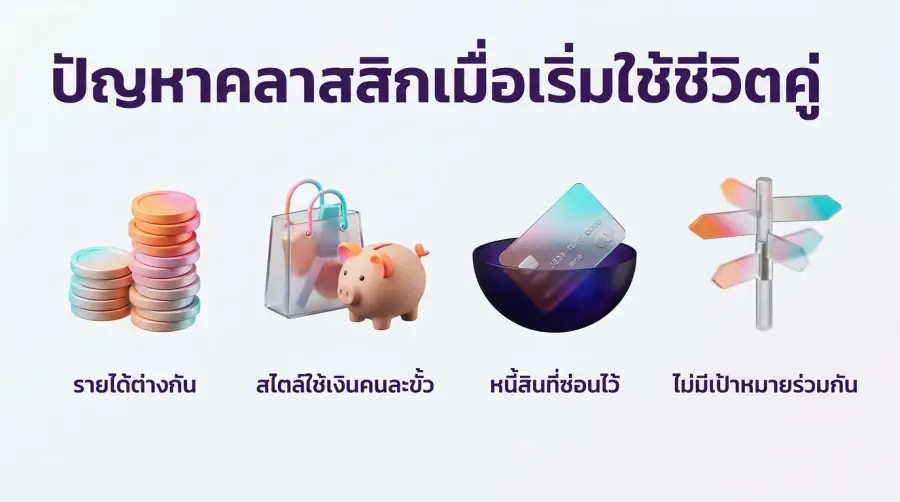
Common Problems When Starting a Life Together
Before looking at solutions, check if you and your partner are facing these problems:
- Income gap: One earns over 100,000 baht a month, while the other has just started working and earns around 10,000 baht.
- Different spending styles: One loves spending on luxury brands, while the other prefers saving money.
- Hidden debts: Credit card debt, student loans, or family financial obligations that weren’t disclosed from the start.
- No shared goals: Not knowing whether you want a house, a car, or where you want to travel in the next 3–5 years.
First Steps to Managing Gay Couples’ Finances for a Smoother Relationship
Financial planning as a gay couple doesn’t mean combining all your money and losing personal freedom. It’s about finding a “middle ground” that works for both of you. Let’s look at how to get started.
| Talk openly about money |
|---|
| Pick a relaxed day, order some good food, and talk about your financial goals. Be open about each person’s income, expenses, and debts. Don’t be embarrassed about having debt—knowing the truth helps you find solutions together instead of hiding it. |
| Allocate accounts |
|---|
| The “3-wallet method” is one of the most effective approaches for modern couples. It divides money into three parts: a shared fund for life together and separate personal funds for each partner. Without clear financial allocation, emergencies can lead to financial difficulties or problems. |
🏳️🌈 Read more – How to register a gay marriage? A–Z guide to preparing marriage documents
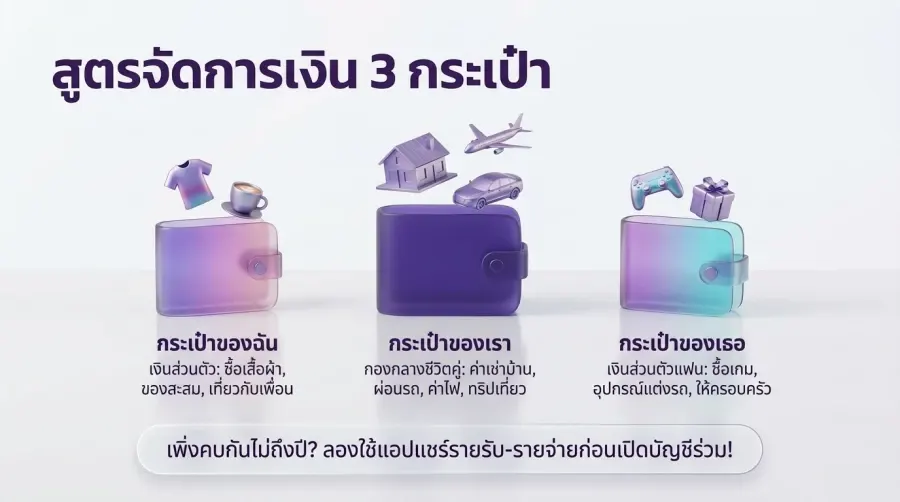
3-Account Method
| Account Type | Purpose | Who manages it? | Expense Examples |
|---|---|---|---|
| My Wallet | Personal Money | Account Holder | Clothes, collectibles, trips with friends |
| Your Wallet | Partner’s Personal Money | Boyfriend | Games, car accessories, money for his family |
| Our Account | Joint account for shared expenses | Manage together | Rent, car payments, electricity, food, couple trips |
Essential Rules of Gay Financial Planning You Shouldn’t Ignore
Emergency Fund
Life is unpredictable. Either partner may suddenly lose their job or become ill. Your joint account should have an emergency fund covering at least 3–6 months of total expenses to keep your life together stable during unexpected situations.
Managing Debt and Gay Finances Together Wisely
If you decide to build a family together, your partner’s debt may affect you too, especially after registering your marriage. For high-interest debt such as credit card debt, plan together to pay it off as quickly as possible, or use part of your joint fund as agreed.
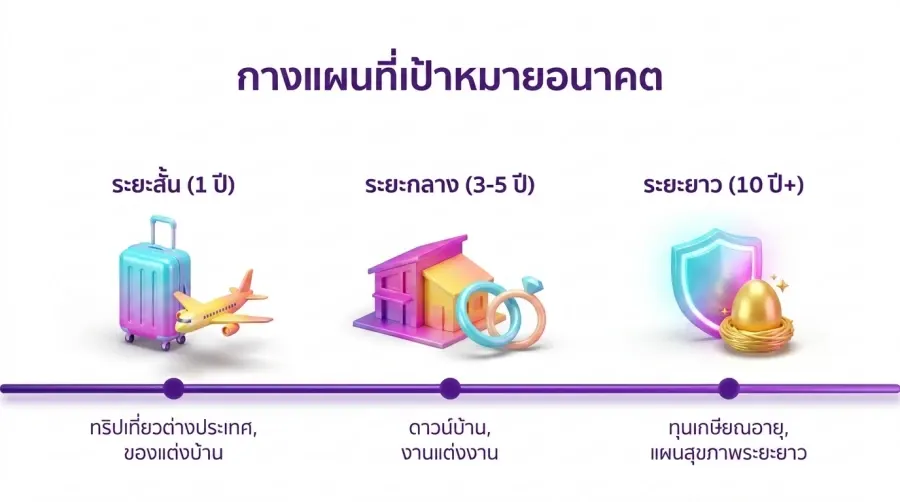
Gay Couples Planning Finances for the Future
What is your dream as a couple? Buying a condo in the city center? Having a beach wedding? Or adopting a child? Setting shared goals can make saving more motivating. Divide your goals into:
- Short-term (1 year): Save for an overseas trip, buy new furniture
- Medium-term (3–5 years): House down payment, buying a car, wedding
- Long-term (10+ years): Retirement fund, long-term healthcare plan
🏳️🌈 Read More – The Future of Thailand’s Gay Community: What We Hope to See in the Next 5 Years
Which expense-sharing style suits your relationship?
There are several ways to contribute to a joint account, with no right or wrong method. It depends on both partners’ financial situations and comfort levels. Check the table below to find what works best for you.
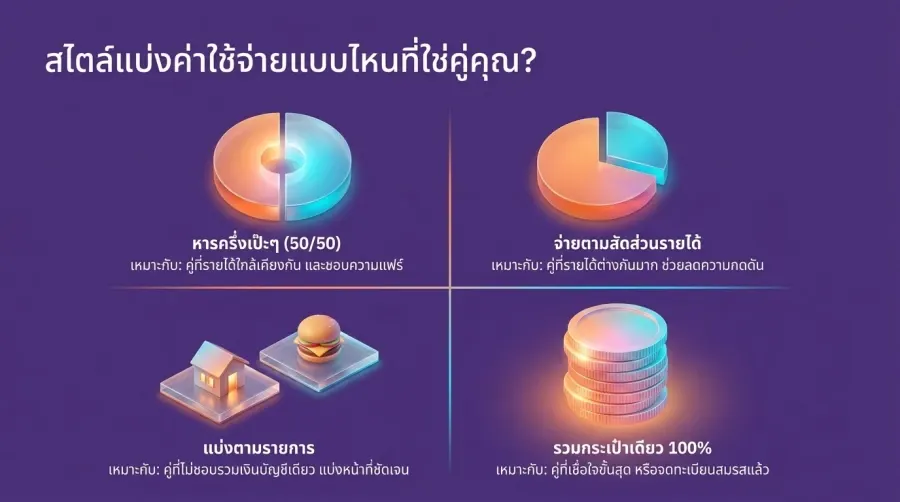
| Sharing Style | How It Works | Who is it for? |
|---|---|---|
| Split Equally (50/50) | Split every expense equally | Couples with similar incomes who value fairness |
| Split Based on Income | The higher earner pays a larger percentage | Couples with a large income gap, helping reduce financial pressure |
| Split by Expense | One pays for housing, the other covers food and travel | Couples who prefer separate accounts but have clear financial responsibilities |
| 100% Combined Finances | All income goes into a joint fund, then personal spending money is allocated | Couples with complete trust, usually already married |
Monthly Checklist: Keep Your Gay Finances on Track Before Money Slips Away
Once you’ve agreed on how to split expenses, gay couples should regularly update each other on their financial situation. Set a monthly “Money Date,” perhaps on a relaxing day off or at the beginning of the month after payday, to review this checklist:
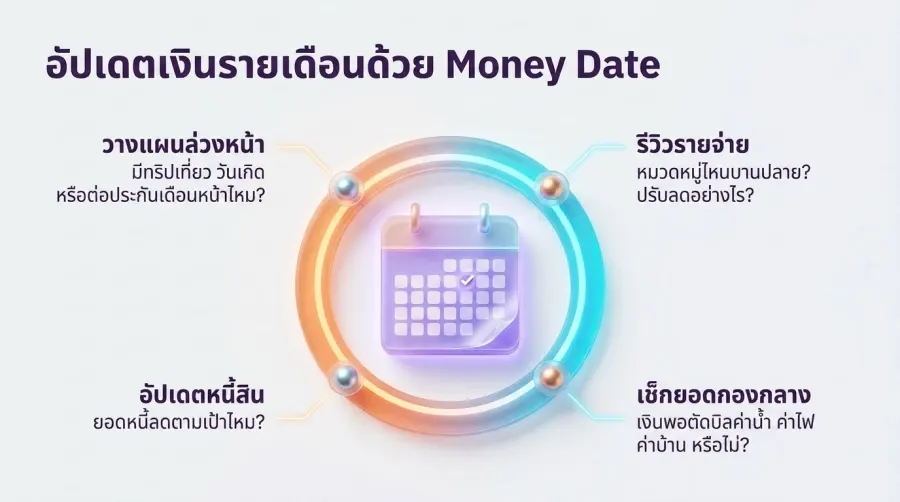
- Review last month’s expenses
- Did any spending category go over budget? (e.g., fine dining or online shopping) How can you cut back next month?
- Check the joint account balance
- Is there enough money in “our” fund to cover this month’s water, electricity, maintenance fees, or car payments?
- Update Debt Status
- How much debt have you paid off this month? Is the remaining balance decreasing as planned?
- Plan Special Expenses in Advance
- Any birthdays next month? Planning a long-weekend trip or renewing car insurance? Knowing these expenses in advance helps avoid dipping into your emergency fund.
Having regular “Money Dates” makes your finances more transparent, reduces doubts, and helps you feel more like a team.

Gay Finance Updates After Marriage Equality
The passage and enforcement of marriage equality law not only grants the right to marry but also removes many financial barriers that previously disadvantaged LGBTQ+ couples, such as:
- Joint home loans: Easier to apply as spouses, with higher loan limits and better terms.
- Tax deduction: You can claim a spouse with no income as a tax deduction.
- Inheritance: If something unexpected happens, the spouse has legal inheritance rights, providing greater protection over inherited assets.
- Medical decision-making rights: Spouses can give consent for each other’s medical treatment, which may involve significant hospital expenses.
Gay Couples’ Investment Planning: Building Wealth as DINKs
Many gay couples fall into the DINKs (Double Income, No Kids) category, meaning they have two incomes and no children. This gives them greater financial flexibility than couples raising children. However, it also means retirement planning is essential, as they may not have children to support them later in life. Investing to grow their wealth is therefore a necessity, not just an option.
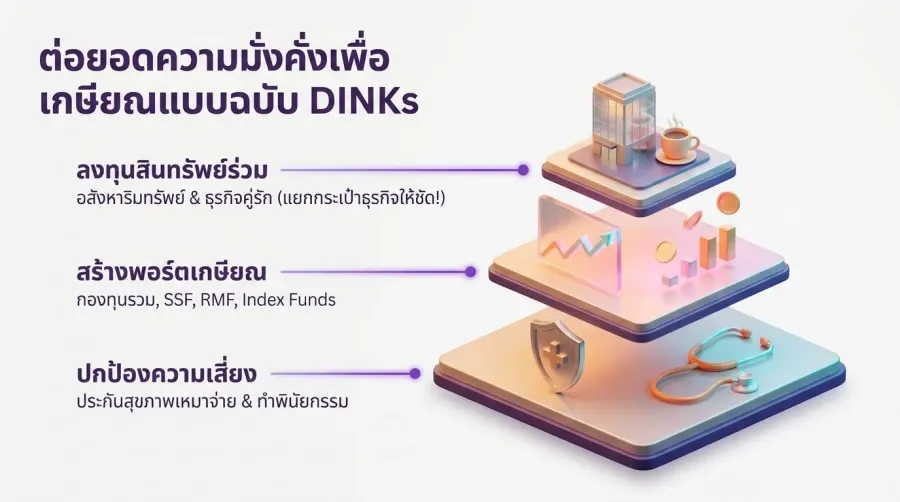
1. Investing in Real Estate Together
Taking out a joint loan to buy a house or condo is a major step for a couple. Before deciding, consider:
- Ownership share: Will you split ownership 50/50 or based on each person’s share of the repayments?
- Backup plan in case of separation: Even if you don’t want to think about it, agree in advance whether you’ll sell the property and split the proceeds or one partner will take over the payments, to avoid future disputes.
2. Mutual Funds and Stocks (Building a Retirement Portfolio)
If gay couples are planning financially for retirement in the next 20–30 years, they should allocate part of their joint fund (or individual accounts) to growth-focused mutual funds, such as:
- SSF / RMF: In addition to long-term savings, they also offer annual tax deduction benefits.
- Index Funds: Suitable for couples who don’t have time to closely follow the stock market but want long-term returns that outpace inflation.
3. Starting a Business Together (Co-Founders in Love)
Many couples choose to open a café, start a clothing brand, or freelance together. The golden rule of doing business with your partner is: “Keep business finances completely separate from personal money and your joint fund.” Profit sharing and responsibilities should also be clearly agreed on from Day 1.
Life Insurance and Inheritance: Protecting Your Finances Against the Unexpected
Although marriage equality has unlocked many rights, managing your own risks remains essential for gay couples’ financial planning, especially when it comes to health and life.
Naming a Life Insurance Beneficiary
Previously, LGBTQ+ couples often faced difficulties naming their partners as life insurance beneficiaries because insurers might require proof of family relationship or marriage. Today, once legally married, you can name your spouse as the beneficiary. This provides important financial protection, giving your partner funds to manage living expenses and outstanding debts if something happens to you.
Health Insurance: A Must-Have
As you get older, the most worrying expense isn’t travel—it’s “medical bills.” Using part of your joint funds to buy comprehensive health insurance for each other helps protect your family’s wealth from being drained by hospital bills.
🏳️🌈 Read more – Gay Men’s Health: PrEP, HIV, and Self-Care Every Gay Man Should Know
Making a Will
Even though the law recognizes spouses’ rights, making a will that clearly states how assets should be divided can help prevent disputes between a “partner” and the “original family (parents/siblings).” It reduces inheritance conflicts and gives everyone peace of mind. Careful gay financial planning should also consider what happens after we’re gone.

3 Practical Financial Planning Styles for Gay Couples
Case 1: Salaried Employee + Freelancer (Unstable Income)
- A is an office worker with a fixed income of 40,000 baht/month, while B is a freelancer earning between 15,000–60,000 baht/month.
- Solution: A handles fixed bills such as condo rent and internet, while B covers variable or roughly estimated expenses such as food and travel. Whenever B earns a large amount in a month, 20% should immediately go into the joint emergency fund.
Case 2: Age-Gap Couple (Large Income Gap)
- Nat, 45, is an executive earning 150,000 baht/month, while Golf, 25, is a recent graduate starting his career with an income of 25,000 baht/month.
- Solution: Split shared expenses proportionally. Nat may cover 80% and Golf 20%, so Golf doesn’t feel too much financial pressure and still has money for personal development or savings.
Case 3: Heavy Existing Debt, but Ready to Build a Future Together
- Jay and Top both earn 35,000 baht/month, but Jay has 100,000 baht in credit card debt.
- Solution: Jay should disclose all his debts to Top. Top doesn’t have to help repay them directly, since they are personal debts from before the relationship, but he can temporarily cover more food or shared expenses so Jay has more money to pay off his credit card debt within 1 year. Once the debt is cleared, they can return to a 50/50 split.
These examples show that financial planning for gay couples has no fixed formula and can be adjusted to suit each couple’s situation.
Frequently Asked Questions (FAQ) About Gay Finances
Q: We’ve only been dating for 6 months. Should we open a joint account now?
= It may be too early for a legally linked joint account. Start with a shared income-and-expense tracking app or take turns paying on dates to understand each other’s spending habits.
Q: My partner often borrows money and rarely pays it back. What should I do?
Q: What should gay couples focus on investing in when planning for retirement?
= Focus on diversified long-term investments, such as mutual funds (RMF/SSF), retirement life insurance, or real estate. Having no children to provide support later in life means relying more on your own savings and investment returns.

Conclusion
Managing finances as a gay couple isn’t about finding faults or limiting freedom—it’s one of the most practical ways to show love. Transparent financial planning together helps build a strong foundation for the relationship, face economic challenges with confidence, and work toward shared future goals. When you love each other, don’t forget to take care of each other’s finances too!
Ready to explore a new experience in Thailand’s gay community?
Stay updated on gay finances and lifestyle. Download Quicky today to meet new friends and find someone special who truly understands the LGBTQ+ community!