
Tuesday: good-morning texts, plans for Friday, a voice note that made you grin on the BTS. Thursday: nothing. Friday: nothing. Your message sits on read like furniture. Welcome to ghosting — modern dating’s signature injury, reported by a staggering 84% of younger daters in recent surveys. If it’s happened to you, you’re in the overwhelming majority; if you’ve done it, statistically, you’re also in the majority — about two-thirds of people who’ve been ghosted admit they’ve ghosted someone else, a loop researchers literally call reciprocal ghosting.
This guide covers the whole phenomenon: what actually counts as ghosting (less than you think), why it hurts more than an honest rejection ever would, the specific twist gay dating adds, how to cope without spiraling into detective work — and, because the cycle only breaks from the inside, the 20-second scripts that make you the person who doesn’t do this.
In this article
First, Definitions: Not Everything Is Ghosting
The word gets stretched until it covers everything, which makes everything feel like betrayal. Useful boundaries:
| Situation | Is It Ghosting? | The Honest Read |
|---|---|---|
| One opener, no reply | No | Non-engagement. Openers are invitations, not contracts |
| Match chats a bit, drifts off | Not really | The fizzle — low investment on both sides, natural fade |
| Neither of you texts after date one | No | Mutual fizzle. Nobody owes a formal closing ceremony |
| Good dates, made plans, then vanishes | Yes | Real ghosting — connection was established, silence chosen |
| Weeks/months in, disappears completely | Severe | The kind that genuinely wounds and deserves real recovery |
| Blocks after you crossed a stated line | No | That’s a boundary, not a ghost — and it’s legitimate |
Why the definitions matter: the early-stage stuff is the app ecosystem working as designed — filtering at low cost. Save your hurt (and your recovery energy) for the real thing: established connection, chosen silence.
Why It Hurts Like It Does

- Your brain files it as physical pain. Neuroscience research shows social rejection activates the same pain pathways as physical injury. The ache is not you being dramatic; it’s your hardware working to spec.
- Ambiguity is the amplifier. A clear “no” closes the file. Silence leaves an open loop your mind runs on repeat — what did I do? was any of it real? — and open loops are what brains chew at 2am. Ghosting hurts more than rejection precisely because it withholds the closure that lets processing finish.
- It lands on old wounds. For many of us, unexplained disappearance echoes earlier rejections — family, school, the closet years. The ghost doesn’t know they pressed that bruise; your nervous system doesn’t care that they didn’t know.
- It quietly argues you weren’t worth a sentence. That’s the story the silence tells. It’s false — the silence describes their avoidance, not your worth — but it takes deliberate work not to internalize it.
Why People Ghost (Almost Never the Reason You Fear)
- Conflict avoidance, industrial grade. Most ghosts aren’t cruel; they’re cowardly in a very ordinary way. Rejection conversations feel awkward, so they choose the exit with no friction for them — telling themselves you’ll “get the hint” and that it’s somehow kinder.
- Choice overload logistics. Someone juggling five conversations who commits to one often drops the other four in silence because four goodbye notes feel like paperwork. Common, documented, and still not courteous.
- The reciprocal cycle. Two-thirds of ghostees become ghosters — once burned, people pre-emptively vanish as self-defense. Hurt people ghost people.
- Their life, not your chat. Depression seasons, family crises, work implosions. Sometimes the vanishing genuinely wasn’t about you — which changes the meaning, though not your need to move forward.
- And sometimes it’s legitimate. Even researchers note most young daters consider ghosting acceptable in some cases — creepy behavior, boundary-pushing, safety concerns. Nobody owes a farewell to someone who made them feel unsafe. (Our safety guide covers when blocking without ceremony is exactly right.)
The Gay-Scene Twist: Ghosts You’ll See Again
Straight daters ghost into an infinite anonymous pool. We ghost into a village. The community is small enough that your ghost will reappear — at the bar in Silom, in a mutual friend’s birthday photos, resurfacing on the grid three months later with a new profile pic, or standing behind you at Pride. This changes the math in both directions:
- Getting ghosted: pre-decide your run-in move now — a neutral nod, zero confrontation, maximum composure. The person who handles the encounter gracefully wins the room, every time. No bar-corner tribunals; the scene has a long memory for drama.
- Doing the ghosting: understand that in a small community, ghosting is a reputation decision, not a private one. “He seems nice but he vanishes on people” travels fast in a village. The 20-second closure text below is also brand management.
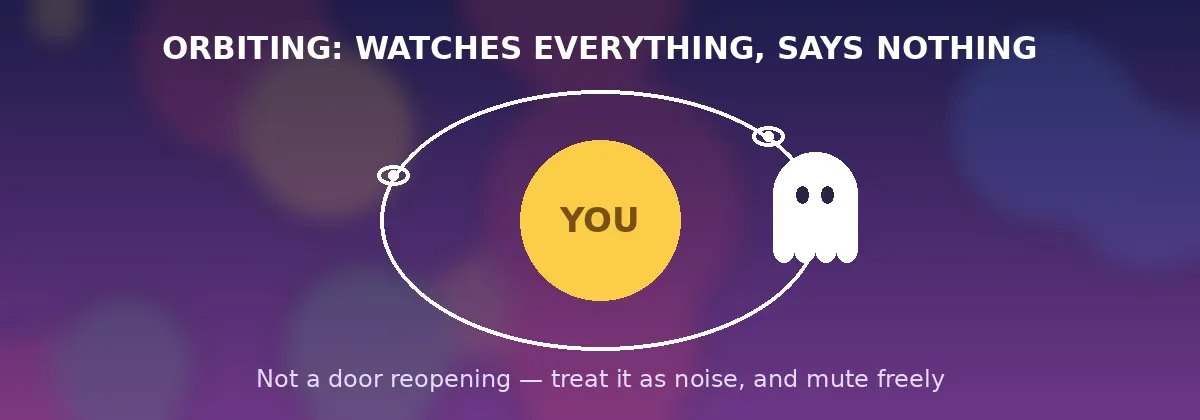
- Orbiting hits different here too. The ghost who won’t answer your message but watches every story and likes your gym post — researchers call it orbiting, and small-scene algorithms guarantee you’ll see them doing it. Name it for what it is: passive periphery-keeping that costs them nothing. It is not a door reopening; treat it as noise, and mute freely.
How to Cope: The No-Spiral Protocol
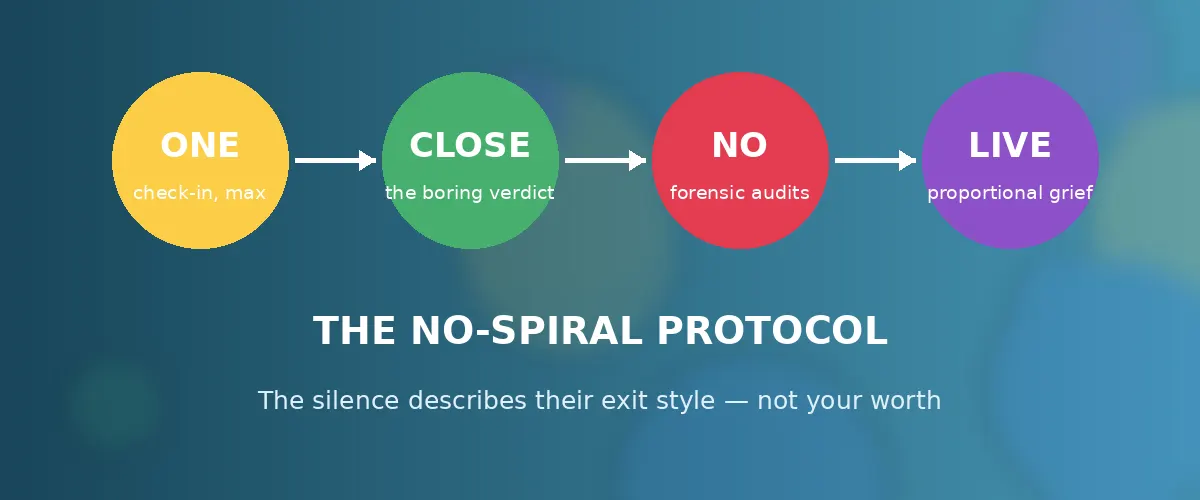
- One check-in, maximum, then done. A single light message after a reasonable gap (“Hey, haven’t heard from you — hope all’s well!”) covers the phone-died-family-emergency scenarios. If silence follows, that is the answer. Repeated messages don’t retrieve ghosts; they just hand your dignity to someone who stopped earning it.
- Close the case without a confession. Your brain wants a reason; the ghost declined to provide one. So supply the boring, statistically likely verdict yourself — “conflict-avoidant person took the frictionless exit” — and file it. Refusing to write a self-blaming story is the single biggest recovery accelerant.
- No forensic audits. Re-reading the chat for clues, checking their last-seen, decoding their posts — every data point costs you a day of progress and buys nothing. Mute or unfollow; make the wound harder to re-open.
- Feel it proportionally, then live. A three-week connection deserves a bad evening and a good venting session, not a lost month. A three-month one may deserve the fuller toolkit — our breakup guide scales to fit. Either way the prescription converges: friends, movement, the life that was already good.
- Keep the ghost’s verdict out of your worth. One person’s avoidance is data about them. Your dateability was not on trial, and the next good conversation is evidence enough.
How Not to Be a Ghost: The 20-Second Scripts
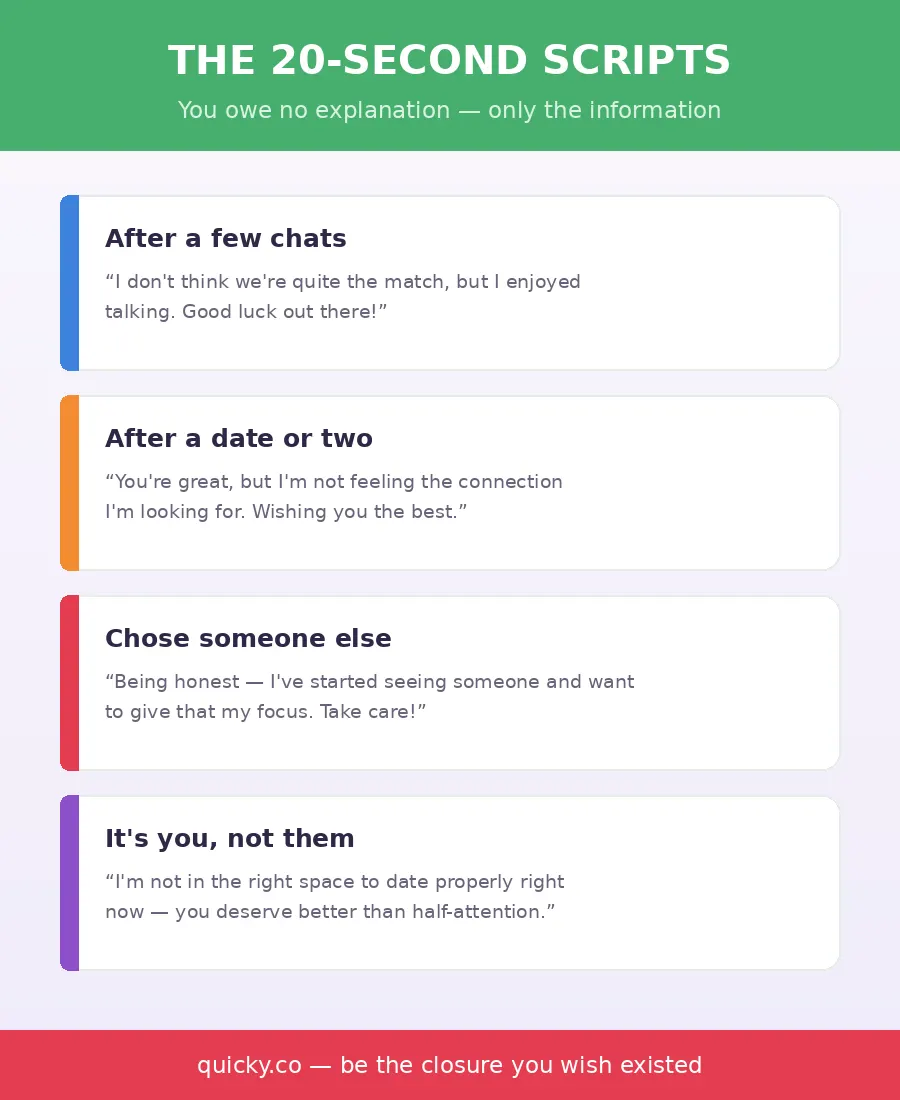
Here’s the liberating truth researchers emphasize: you owe no explanation — only the information that you’re stepping away. That makes closure cheap. Copy, adapt, send:
- After a few chats: “Hey — I don’t think we’re quite the match, but I enjoyed talking. Good luck out there! 🙏”
- After a date or two: “You’re great, but I’m not feeling the connection I’m looking for. Wishing you the best — genuinely.”
- When you chose someone else: “Being honest — I’ve started seeing someone and want to give that my focus. Take care!”
- When it’s you, not them: “I’m not in the right space to date properly right now, and you deserve better than half-attention. Be well!”
Mechanics: keep it short, kind, and final — no essay, no detailed critique, and no obligation to answer follow-up questions (a natural urge you’re allowed to resist). Pre-writing your version before you need it removes the in-the-moment awkwardness that produces ghosts in the first place. Twenty seconds of mild discomfort for you; hours of un-spiraled peace for them. The exchange rate is spectacular.
Building the No-Ghost Habit (and Culture)
- Run fewer, realer conversations. Ghosting thrives on overload — five half-conversations produce four silent exits. Two or three invested chats produce clean endings. (This is the same medicine as our burnout guide prescribes; the cures overlap because the disease does.)
- Decide your dealbreakers in advance. Knowing what ends things for you — and having your script ready — means endings happen by choice, not by drift.
- Praise closure when you receive it. A “thanks for being upfront, good luck!” reply costs nothing and reinforces the behavior community-wide. Norms are built one graceful exchange at a time.
- Match with intent-signalers. Profiles that state what they want (see the profile guide) correlate with people who communicate endings too. Clarity attracts clarity.
When You’ve Been the Ghost: The Repair Option
Since two-thirds of us have vanished on someone at least once, this section is probably for you too. Two honest paths forward:
- The late closure text is almost always welcome. If someone deserving of a goodbye never got one, a short message months later — “Hey, I disappeared on you last year and that wasn’t fair. No response needed; you deserved better than silence” — lands far better than ghosts imagine. It asks for nothing, reopens nothing, and quietly repairs both their file and your self-respect. The rule: make it an apology, not an overture. If it doubles as a re-entry attempt, it’s not closure — it’s fishing.
- Forgive your past exits, upgrade your future ones. Most ghosting came from avoidance under pressure, not malice — extend yourself the same boring, statistically-likely verdict you’d extend a ghost. Then adopt the scripts above as standard equipment. The goal isn’t retroactive perfection; it’s being someone whose endings, from today, don’t require apologies later.
- Watch the pattern, not the incident. One ghost in your history is being human. A trail of them is a habit worth examining — often it points at overcommitting to too many conversations, or at conflict avoidance that’s probably taxing other corners of your life too. Fewer chats, pre-written scripts, and honesty with yourself about interest levels dissolve the habit at the source.
Frequently Asked Questions (FAQ)
Should I message someone who ghosted me?
Once, lightly, after a reasonable gap — a single friendly check-in covers the legitimate-emergency scenarios. If silence continues, that is your answer, and further messages only transfer your dignity to someone avoiding a twenty-second reply. No confrontation essays: they close nothing and reliably feel worse in the morning.
Why did he ghost me if everything seemed great?
The statistically boring answers: conflict avoidance (rejection conversations feel awkward, silence is frictionless), choice overload (he committed elsewhere and skipped the goodbyes), the reciprocal cycle (previously ghosted people ghost defensively), or life events unrelated to you. “Something was wrong with me” ranks far below all of these — the silence describes his exit style, not your worth.
Is it ever okay to ghost someone?
Yes — when someone has been creepy, aggressive, boundary-pushing, or made you feel unsafe, blocking without ceremony is self-protection, not rudeness, and most daters agree. For ordinary loss of interest, though, a two-line closure message is the standard a healthy dating culture runs on — you owe no explanation, just the information.
What is orbiting and what should I do about it?
Orbiting is when someone who won’t respond to you keeps engaging with your social media — watching stories, liking posts — staying in your periphery without offering actual contact. It costs them nothing and reliably confuses you, so treat it as noise rather than signal: it is not a door reopening. Muting or restricting them protects your recovery at zero drama.
Conclusion: Be the Closure You Wish Existed
Ghosting is what happens when avoidance meets abundance — normal people taking frictionless exits at industrial scale, in a community small enough that the ghosts stay visible. You can’t control who vanishes on you; you can control the protocol (one check-in, boring verdict, no audits, proportional grief) and, more powerfully, which side of the statistic you occupy. Keep your scripts ready, run fewer and realer conversations, and spend the twenty seconds. In a village-sized scene, being known as the guy who ends things kindly is both good character and excellent strategy.
And the best revenge on a ghost, as always, is a great next chapter. Quicky is free, ad-free, and built by the Thai LGBTQ+ community — full of guys who text back, and now at least one more person who ends things properly: you.
References
- Fielding Graduate University — Ghosting: How to Deal with Digital Disconnects in Dating
- Delta Psychology — The Psychology of Ghosting in Modern Dating
- Maroon — Ghosting in Dating 101: Psychological Patterns and Coping